


The Taliban moved fast after coming to power, approximately doubling the rate at which contracts were issued in the three years before they took charge, according to an analysis by the Financial Times and the Centre for Information Resilience, a UK-based non-profit group.
Rahimullah Samandar, a former chief executive of the Afghanistan Chamber of Industries and Mines, recalls how the halls of the mining ministry overflowed with would-be miners — including from within the Taliban itself — as the group struggled to keep control.
“Small and big Taliban commanders were coming to my office and asking, ‘How can I get a mine?’” he said. “I was asking them, ‘Do you have any experience in mining?’ ‘I don’t.’ ‘Do you have a partner?’ ‘I don’t.’ ‘Do you have money?’ ‘I don’t.’”
Patchy trade data makes quantifying the scale of activity difficult. Of the 128 contract sites examined by the FT, 88 showed signs of either having been developed or expanded.
Nearly half of contracts issued by the Taliban show signs of activity
Contracts awarded since October 2021, by mineral and development status

Expanded mines
New mines
No mining
Unclear*
Nephrite
Other gemstones
Marble
Other industrials
Chromite
Other metals
Exploration

Expanded mines
New mines
No mining
Unclear*
Nephrite
Other gemstones
Marble
Other industrials
Chromite
Other metals
Exploratory

No mining
Activity unclear*
Expanded mines
New mines
Nephrite
Other gemstones
Marble
Other industrials
Chromite
Other metals
Exploratory

No mining
Expanded mines
New mines
Activity unclear*
Nephrite
Other gemstones
Marble
Other industrials
Chromite
Other metals
Exploratory
Many of the mines are in the early stages of development, but the Taliban initiative has had some results. The World Bank said Afghanistan’s domestic revenue increased 22 per cent year-on-year in April and May thanks to the auction of mines and resources such as oil, emeralds and nephrite, a type of jade prized in China.
If the Taliban can kick-start Afghanistan’s mining sector, the Islamists will succeed where two decades of western-backed initiatives had flopped — one more testament to the failures of America’s $2tn war in the country.
Mining could help the Taliban make new friends, as foreign powers such as China, Russia and Iran step in to fill the vacuum left by the departed coalition and tap Afghanistan’s coveted mineral wealth. The money would also be a lifeline in a country where a quarter of the 40mn population are at risk of famine.
Yet the obstacles are enormous. Miners must navigate Afghanistan’s crisis-hit economy, international sanctions and a regime isolated by the west for its repressive policies towards women and girls.
Success may also bring problems. Western observers fear the flow of funds from a prospering industry will both finance and embolden the Taliban, leaving them with little incentive to temper their most hardline policies.
“When the people of Afghanistan are facing poverty and unemployment, it’s needed that we tap our natural resources,” said Suhail Shaheen, head of the Taliban’s political office in Doha. “We welcome investment from foreign countries in the mining sector.”
Nephrite mine, Nangarhar Province


2021


2024

Machinery
Open
pit
New structures
New road
200 metres
N

Machinery
New road
Spoil from
excavation
200 metres
New structures
Open pit

Machinery
New road
Spoil from
excavation
200 metres
Pooling of water
at excavation
New structures
Open pit

Machinery
New road
Spoil from
excavation
Pooling of water
at excavation
200 metres
New structures
Open pit
2024
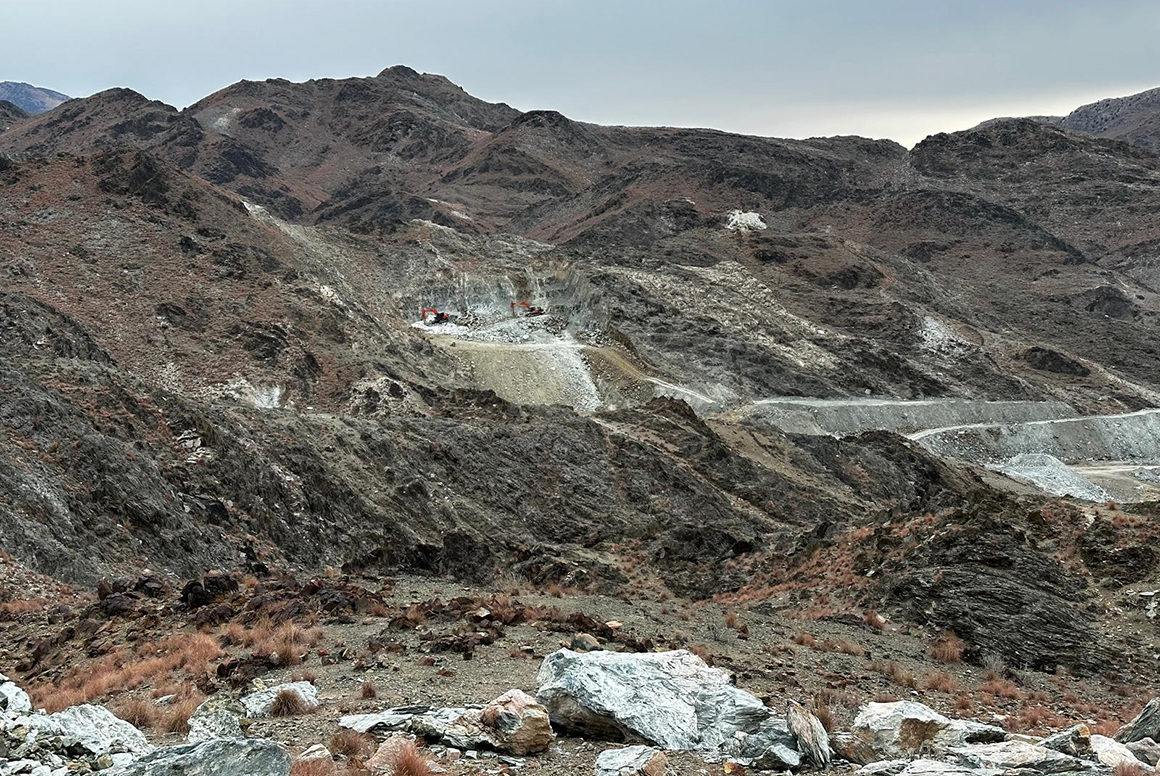
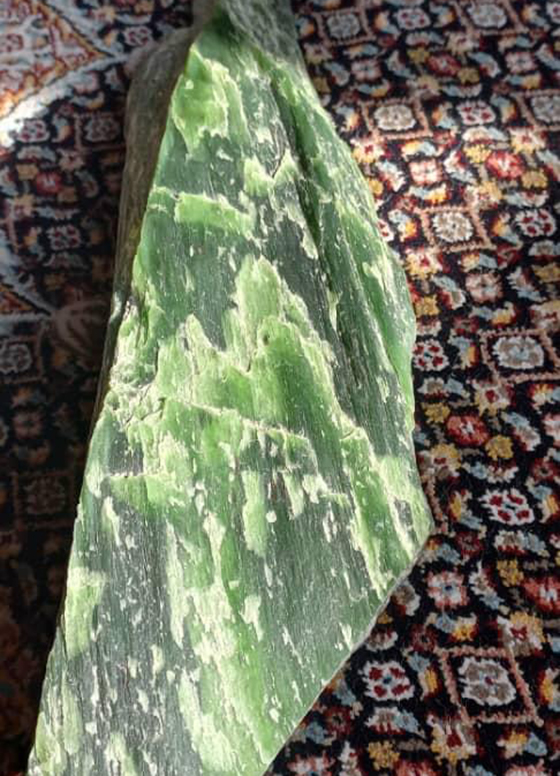
One of the Taliban’s first priorities was to take control of the market for nephrite, a gemstone used for thousands of years in Chinese jewellery and ornaments that was mined by warlords in the Pakistan borderlands and smuggled out of Afghanistan.

Small scale mining licence
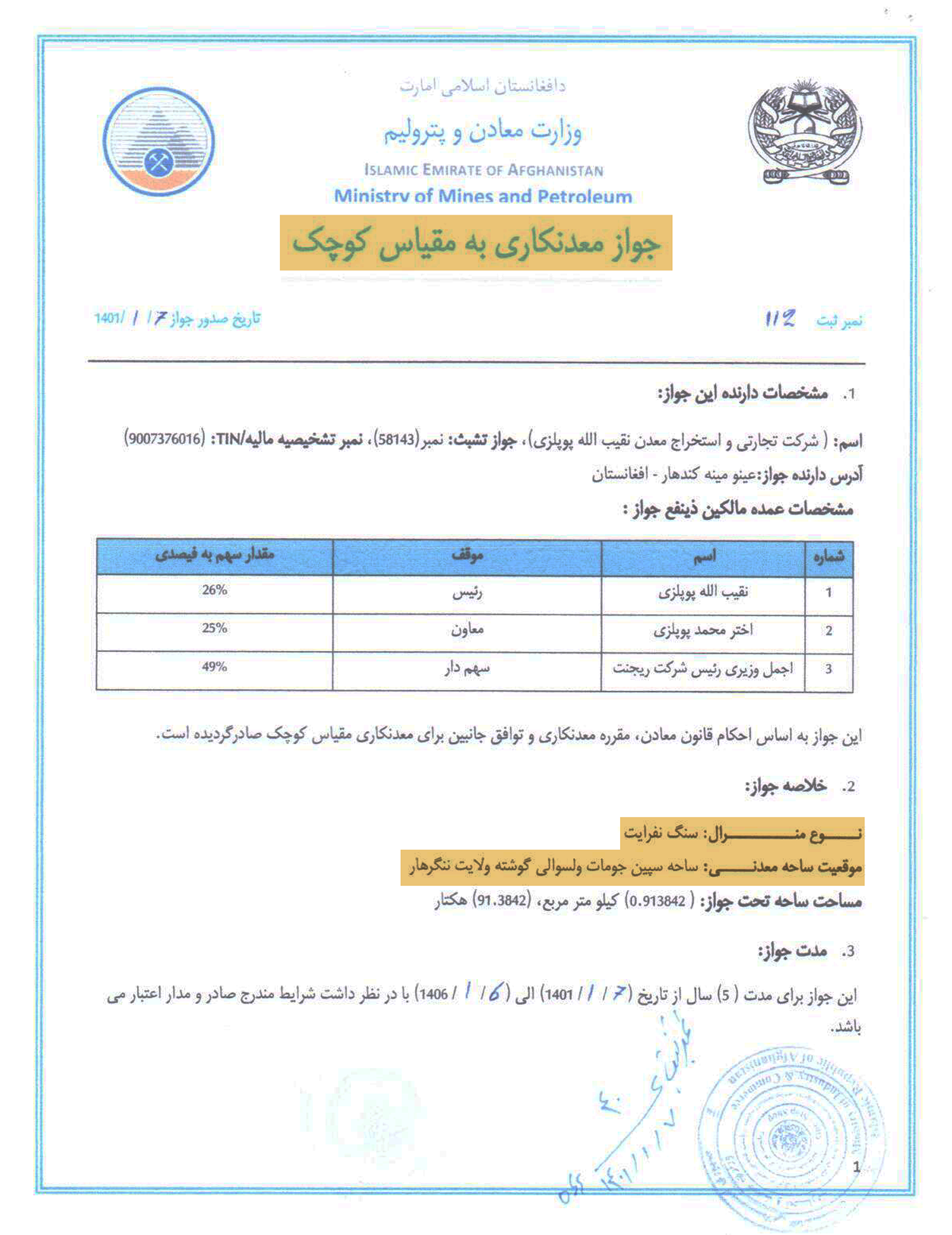
Mineral type: Nephrite
Location of the mining area: Spin Jomat area, Goshta District, Nangarhar Province
Experts estimate that during the war, the majority of mining in Afghanistan was carried out illegally, often overseen by corrupt officials and militants including the Taliban themselves, who used it to fund their insurgency.
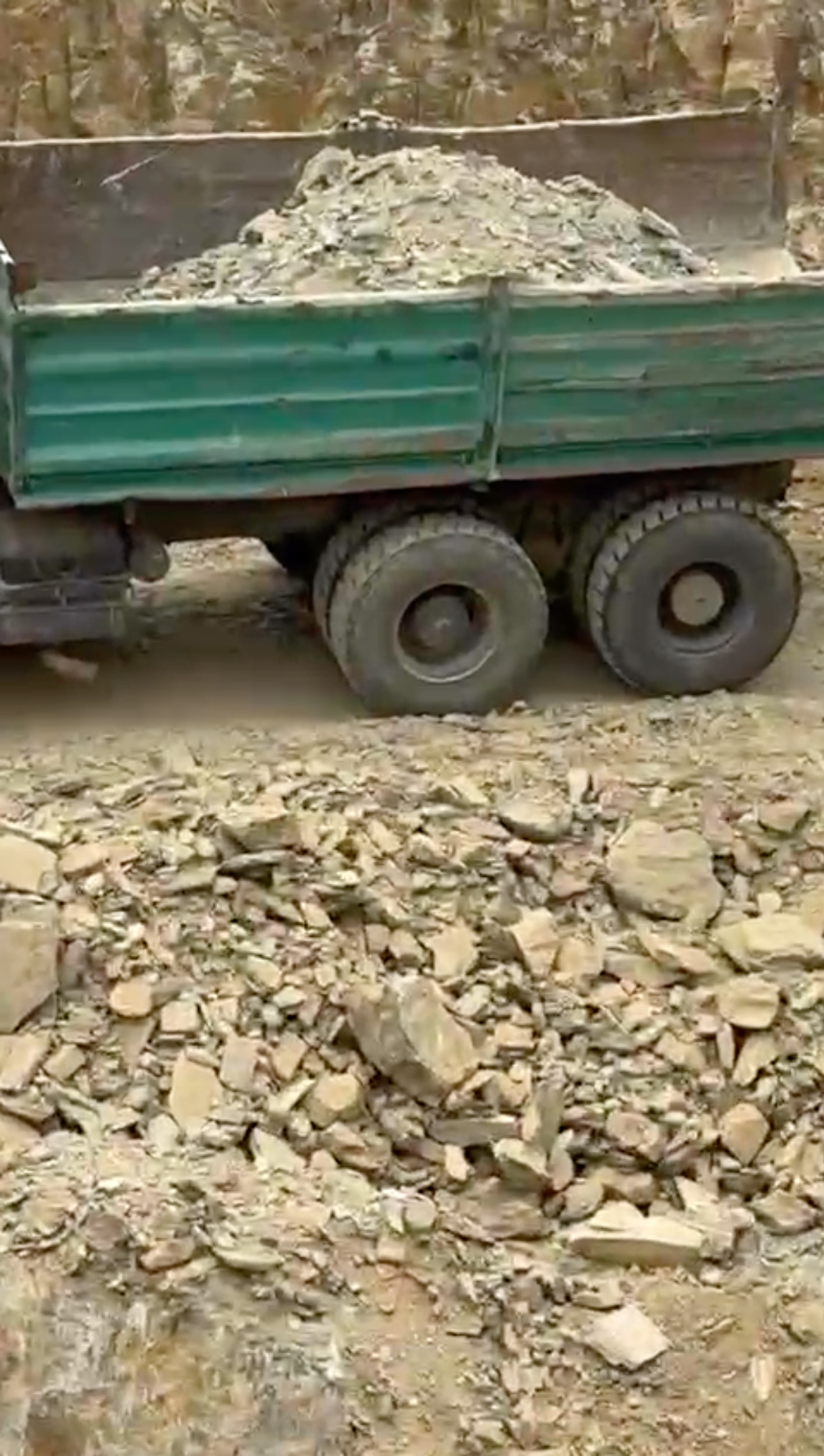
After crushing their local enemies in the wake of the west’s calamitous exit, the Taliban began issuing small-scale contracts to Afghan entrepreneurs to mine nephrite, accounting for a third of the mining deals announced so far. To control trade, the Islamists cracked down on corruption, raised taxes and deployed loyal officials to oversee highway and border posts, according to a UK Foreign Office-funded study in April.
Before “there were huge bureaucratic problems, there was lots of corruption and lots of regional warlords”, said Mansour Ahmadzai, an Afghan partner in a nephrite mine in Nangarhar whose stones are sold by middlemen to China. The takeover was “a golden chance to come forward and invest”.
Nephrite mines, on the border of Kunar and Nangarhar provinces


New road
networks
Mounds of spoil
from excavation
Built structure
300 metres
New road
Open pit
Open pit
Mounds of spoil
Open pit
New road
Spoil from
excavation
Machinery
Pooling of water
at excavation
Open pit

New road
networks
Mounds of spoil
from excavation
300 metres
Built structure
New road
Open pit
Open pit
Mounds of spoil
Open pit
New road
Spoil from excavation
Machinery
Pooling of water
at excavation
Open pit

300 metres
New road
networks
Mounds of spoil
from excavation
Built structure
New road
Open pit
Open pit
Mounds of spoil
Open pit
New road
Spoil from excavation
Machinery
Pooling of water
at excavation
Open pit
2024
The regime turned to creative methods to scale up the industry. Shirbaz Kaminzadeh, co-founder of a company launched under the Taliban in 2022 called Afghan Invest, said the cash-strapped rulers gave him a mining block in lieu of payment for a deal to finish an incomplete power transmission project.
“Nowadays we can go and work,” said Kaminzadeh, who holds the rights to several mines, including for marble, lead and zinc. “No one will touch us, no one will kidnap us. If we did 10 tonnes before, now we can do 100 tonnes.”
But the Taliban, reeling from an exodus of experts following their takeover, cut corners in order to show results.
Samandar said authorities bypassed the sorts of technical, financial and environmental checks essential to a modern mining sector. Many new licence holders soon realised, for example, that royalties on their products were unrealistically high, forcing them to return to the ministry to renegotiate.
“Afghanistan is likely to be looking at trying to maximise the revenue and not only maximise it but get it as soon as possible,” said David Chambers, founder of the Center for Science in Public Participation, a non-profit providing technical assistance on mining to public interest groups and tribal governments. “So they’re liable to look the other way, which is going to come back and bite them.”
“If they’re really going to make money in the long run, they need to do it on a much bigger and more professional scale,” he said.
Afghanistan continues to teeter near collapse, with its economy shrinking nearly 30 per cent since 2020 and in effect cut off from the global banking system. Isolation has only deepened since the Taliban barred women and girls from education and work.
Mining income is often the only thing separating local communities from destitution, but comes at a heavy price. Mines consume scarce resources such as water and are notorious for child labour. In 2022 the FT found miners as young as eight working at a coal pit in northern Afghanistan, with no machinery or safety gear.
The Taliban have become more ambitious. Since August 2023, they have announced at least 15 “large-scale” mining deals worth more than $6.5bn, according to CIR.
Many of these have gone to foreign investors, with Chinese companies securing at least four licences. This includes the China-Afghanistan Dayunlong Zeren Mining and Processing Company, a joint venture to mine gold in Takhar, a province bordering Tajikistan in northern Afghanistan.
Gold mine, Takhar Province

2021

2024
2024
Satellite imagery of the site shows rapid changes including tracks for diggers and exploratory holes that Richard Brittan, managing director of geospatial company Alcis, said were indicative of mining company work rather than artisanal mining. The company has advertised online for everything from engineers to translators, according to CIR.
The work indicates that, while likely early in the exploration phase, it has the potential to become a significant mine, according to Chambers. “When you start seeing drill pads at that density then you know that they’re getting pretty serious,” he said.
The Taliban are banking on China to ease their isolation, with Beijing last year saying it would expand its Belt and Road Initiative into Afghanistan and sending an ambassador to the country.
Afghanistan is “an important partner”, China’s Ministry of Foreign Affairs told the FT. “China encourages Chinese companies to invest and start businesses in Afghanistan . . . [and] supports Afghanistan in making full use of its natural endowment of rich mineral resources.”
“The big question is, is the Chinese push real or not?” said Graeme Smith, a senior consultant at Crisis Group. But he added that China appeared to be “thinking about long-term supplies”.
The Taliban have also auctioned the Ghoryan iron ore deposit, a vast trove of metal bordering Iran, to Afghan, Turkish and Iranian companies, though satellite imagery shows little evidence of development yet.
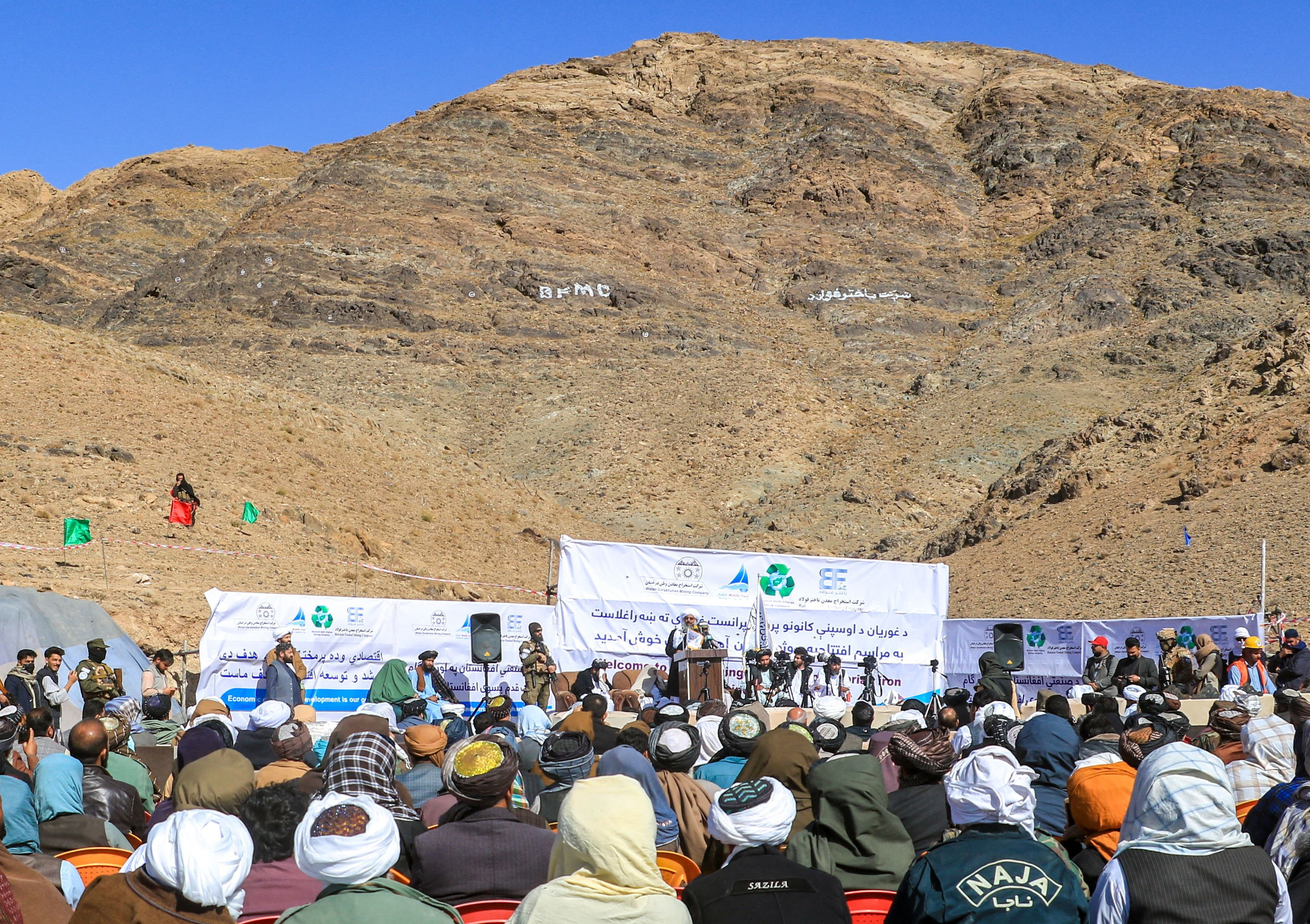
Many analysts are sceptical that the Taliban has the competence to oversee an internationally competitive mining sector. The group surprised observers last year by announcing that a British company called GBM was among those involved in the Ghoryan iron ore development.
But when contacted by the FT, Michael Short, founder of UK-based GBM Ltd, said he had never heard of the project. He had tried to mine a separate site under the previous government but pulled out before the Taliban’s takeover. “We gave up in the end,” he said.
International miners looking to Afghanistan face a list of challenges that would put off all but the most determined company, from war-ravaged infrastructure to the spectre of US sanctions. Though the US Treasury announced an exemption to shield commercial transactions, analysts say few banks would risk dealing with the regime.
One international official said that while companies from China and elsewhere were eager to secure long-term mining rights in Afghanistan, they appeared reluctant to start pouring money into the country yet.
Afghanistan’s mines were “interesting enough for people to put in money to hedge on contract licences”, the official said. “But in terms of actually putting boots on the ground, and machinery on the ground . . . the legal framework, the political framework, the potential of falling foul of sanctions all makes it very high risk.”
The country’s new prospectors are undaunted. Ahmadzai, the gemstone miner, said he recently received a sample of higher-quality nephrite from the country’s remote north-east, and was hoping to expand. “If Afghanistan’s mines are not extracted now,” he asked, “when?”
Additional reporting by Wang Xueqiao, Edward White and Jyotsna Singh.
Analysis by the FT and Afghan Witness, a project run by the Centre for Information Resilience. Highlighted areas on satellite images show FT analysis of mining activity, not licensed areas.