


China is comfortably the world’s trading superpower.
Its trade surplus — the difference between imports and exports — rose to almost $1tn last year. Beijing’s exporting machine is one of the main reasons President Donald Trump has launched the opening shots in his new global trade war. But it is not just the US that is alarmed.
Emerging economies and established rivals are also concerned about their industries being crushed by cheaper Chinese goods — a situation that could be exacerbated if products once destined for the US end up in their markets instead. China’s trade surplus affects the whole world.
Surplus
$1tn
According to Chinese customs data, Beijing sells more to regional neighbours Vietnam, Thailand and India than it buys, the majority electronics, metals and chemical products — though much of this is turned into finished products and exported again.
Vietnam
$99bn
+63
$162bn
Thailand
+38
India
+102
Singapore
+47
With the UK, Beijing exports four times more goods than it imports.
UK
19
+59
79
UAE
+29
China has also built up a massive trade surplus with Mexico, where it sends an increasing number of cars and automotive parts.
Mexico
+71
Philippines
+33
It has a fairly even trade balance with Japan, with the countries mostly trading high-tech goods.
Japan
156
-4
152
Indonesia
+6
With Russia, which is subject to western sanctions, Beijing swaps oil and gas for cars and electronics.
Russia
129
-14
115
Malaysia
-9
Saudi Arabia
-7
Canada
0
It is not entirely one-sided: China imports more than it exports from a few nations, with raw materials, rather than finished products, typically responsible for these deficits.
China’s negative balance with Australia is down to Beijing importing almost half the world’s iron ore from the country’s western coast . . .
Australia
141
-70
71
Switzerland
-48
Brazil
-44
Chile
-20
. . . while more than a third of China’s imports from Brazil are soybeans.
With Taiwan and South Korea, high-tech chips make up almost half of China’s imports and largely drive the deficit with both countries.
Taiwan
-143
South Korea
-35
But with its biggest markets, Beijing has a huge trade surplus.
The value of China’s exports to the EU is double its imports.
EU
269
+247
516
US
164
+361
525
The trade balance with the US is three to one.
Rest of world
+329
No country has escaped Trump’s tariffs, but China’s massive trade surplus has seen it hit with the steepest measures. The US and Beijing are locked in an escalatory row that has seen Washington place levies of more than 104 per cent on Chinese goods entering the US.
The US president hopes that his tariff regime will erode China’s surplus and enable American manufacturers to compete again. But Beijing’s trade juggernaut is built on deep competitive advantages built up over decades that will not be easily dislodged.
“The sheer scale of China’s dominance is unprecedented; no other country in recent decades has matched this level across such a broad range of products,” says Vincent Vicard, head of the International Trade Analysis programme at economic think-tank CEPII.
The battery sector is a clear example of China’s prowess in capturing industries and squeezing efficiencies until foreign rivals can no longer keep up. This is usually achieved by combining comprehensive government support with the entrepreneurialism of Chinese businesspeople like Wang Jiang.
Wang, a former factory worker who now runs a recruitment business, moved to the dusty industrial hub of Sanhe in southern Guangdong province two years ago, drawn by its efforts to build a complete supply chain for battery production, or in Chinese factory parlance, “the whole dragon”.
“There are a lot of plastic parts in a battery, as well as hardware parts and some packaging consumables,” he explains from his office on the ground floor of a former housing unit.
“There are material factories, plastic factories, electronics factories, and product factories. All of them are involved in the clean energy industry chain.”
This region of southern China is a hotbed for battery production. It is home to a research centre for the world’s third biggest lithium producer, Ganfeng Lithium, as well as a production base for Contemporary Amperex Technology (CATL), the world’s largest battery maker, and EV producer BYD. In Sanhe, restaurants and homes are plastered with advertisements for jobs in green tech.
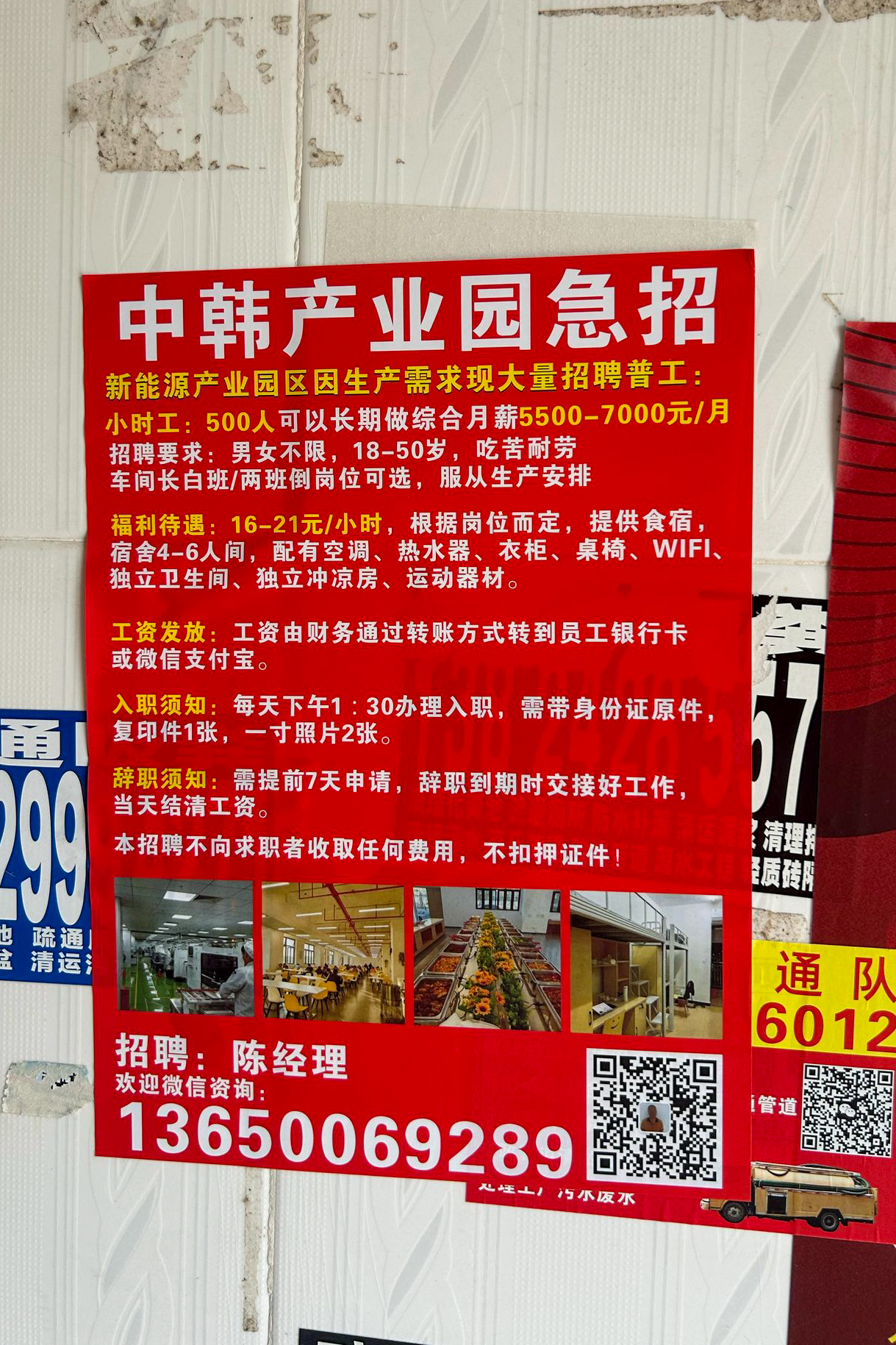
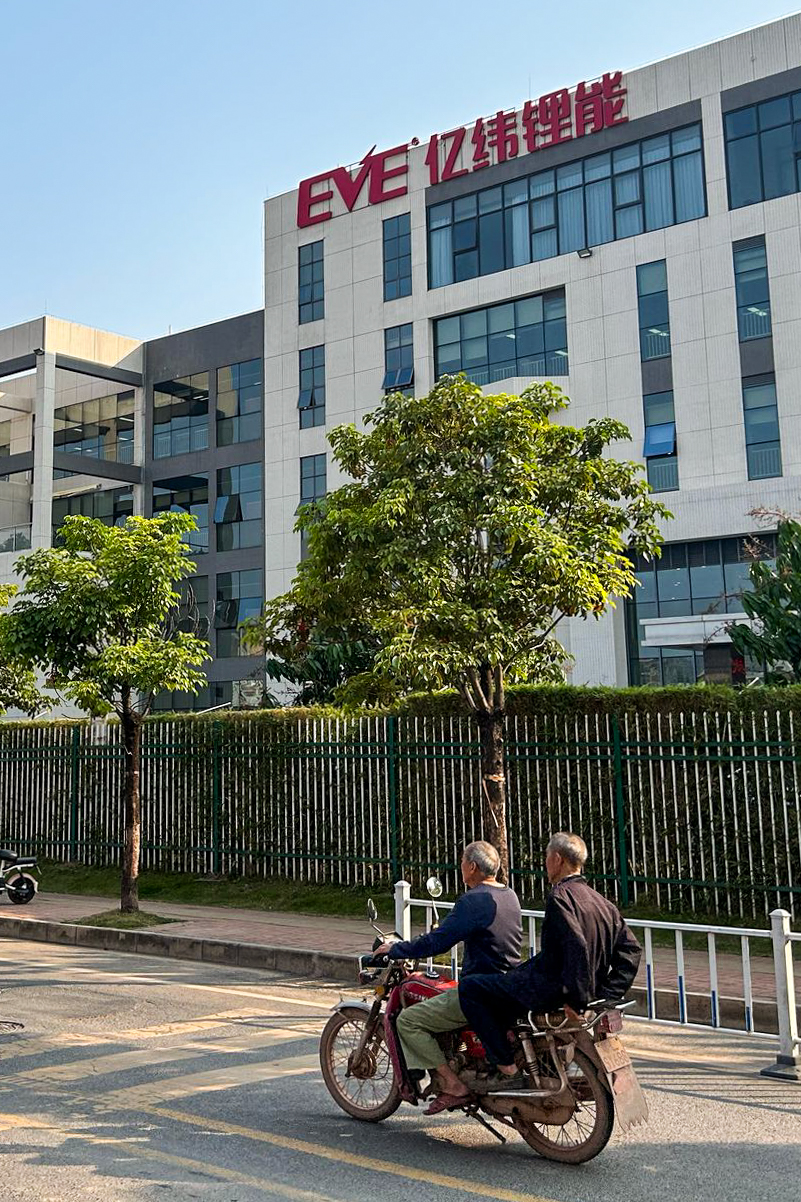
The area’s booming lithium-ion battery industry encapsulates the benefits manufacturing industries in China enjoy when building “the whole dragon”.
Raw materials critical to battery production are found in only a few locations, with Australia, Chile, Indonesia, and the Democratic Republic of Congo (DRC) among the top producers — and China has a presence in all of them.
China produces three in every four lithium-ion batteries sold globally, according to the International Energy Agency (IEA).
Battery prices in the country have also been falling at a faster rate than the rest of the world, thanks to a fiercely competitive local market counting almost 100 producers.
Unrivalled government backing has been crucial in establishing the industry and driving down costs. Last year, the average Chinese battery pack was more than 30 per cent cheaper than those made in the EU and 20 per cent cheaper than in the US.
China controls the lithium-ion battery industry
Geographical distribution based on share of production capacity


Graphic: A chart showing the share of China production capacity in four industries: mining, material processing, cell components and battery cells.
Having all the components required to make a battery located within a radius of a few hundred kilometres has not only helped reduce prices and lead times, it has also fostered innovation.
China has a commanding lead in the global share of patents filed for lithium-ion batteries, in recent years accounting for around 80 per cent of the annual total, according to analysis by Simon Lux, a battery researcher at the University of Münster in Germany.
“No other region globally provides the same unique combination of resources, advanced manufacturing capabilities, skilled labour, investment capital and substantial governmental support for the battery industry,” says Lux.
If any company exemplifies why it will be hard for other countries to rival China’s battery sector dominance, it is CATL. Founded in 2011, the battery maker rode the initial wave of China’s EV boom, recording a compound annual growth rate of 110 per cent from 2014 to 2022.
CATL’s autonomy is the envy of rivals. By late 2023, half of the company’s required cobalt, nickel, phosphate and lithium refining was handled internally. It has been targeting, by this year, to boost its self-sufficiency in cathode and precursor material to around 35 per cent and 45 per cent respectively. Most worryingly for competitors, the company is building new factories at about half the cost of its foreign rivals.
“CATL is not only the largest scale player in the industry but it also has the best technology and the highest utilisation levels,” says Neil Beveridge, who leads investment group AllianceBernstein’s energy research in Hong Kong.
Batteries are just one high-profile example among hundreds of products, including PCs, smartphones and steel, where China exerts a stranglehold on the global market.
Other critical sectors include vitamins, pharmaceutical raw ingredients, household appliances and personal items such as wigs, where China accounts for around 75 per cent of the export market.
Overall, the country supplies at least 50 per cent of global exports for 730 of 5,000 classified trading products, three times higher than the EU and almost eight times as many as the US, according to CEPII.
And while the EU and the US have held comparable export market shares in the past, trade now makes up a significantly larger part of the world economy — around 60 per cent of global GDP.
Even with US tariffs on China’s exports exceeding 100 per cent, the country’s superiority in so many sectors will make it challenging for importers to switch suppliers, at least in the short term.
This is especially true for emerging markets, many of which have strengthened their trade relationships with China in recent years.
As the share of Beijing’s direct exports to the US has declined since Trump imposed tariffs during his first term, China’s trade with fast-growing economies like Vietnam, Thailand, Indonesia, Mexico, and Brazil has grown.
Those countries have in turn increased their own exports to the US, often turning components imported from China into finished products destined for the American market.
“The US trade deficit with China improved marginally, but this was offset by a significant deterioration with the rest of the world,” analysts at financial services group Nomura wrote.
Brad Setser, of the Council on Foreign Relations, said in a recent post: “The US bilateral balance with China, Southeast Asia and Taiwan is probably a better base for estimates of true US imports of Chinese content these days than direct imports from China.”
Although they are calculated using a crude formula, Trump’s tariffs on Vietnam, Thailand, Indonesia and other south-east Asian countries might well be intended to stymie this diversion of Chinese goods.
Concern about China’s exporting might is not confined to Washington. Beijing’s sustained push to boost manufacturing output, combined with a drawn-out period of tepid domestic demand, has flooded global markets with Chinese goods. And countries are fighting back.
China accounts for only 15 per cent of global consumption — less than its 18 per cent share of world GDP and far below its 30 per cent share of manufacturing. That means it needs demand in other countries to absorb its enormous excess production.
China shipping more goods than it brings in is far from a recent development — Beijing has recorded an overall trade surplus for 30 years. However the gap between its exports and imports has more than doubled since 2019, climbing to almost a trillion dollars last year.
Trading partners beyond the US have levelled criticism at Beijing that these large trade imbalances are not sustainable, posing a real threat to their economies as they struggle to develop, or maintain, their own domestic industries in the face of cheaper Chinese products.
Industrialised nations as well as fast-growing economies have expressed unease at the negative impact this is having on their manufacturing sectors. But Chinese officials have mostly denied the existence of any problem with oversupply.
Mexico’s president, Claudia Sheinbaum, has blamed the decline of the country’s textile and footwear industries on cheap Chinese imports, and said it will review the tariffs it has on China.
In Indonesia, officials worry that hundreds of thousands of jobs could be lost in the critical textile industry because of an influx of cheap Chinese goods. Even China’s close partner Russia has introduced levies on car imports from its neighbour after it took almost two-thirds of the local market.
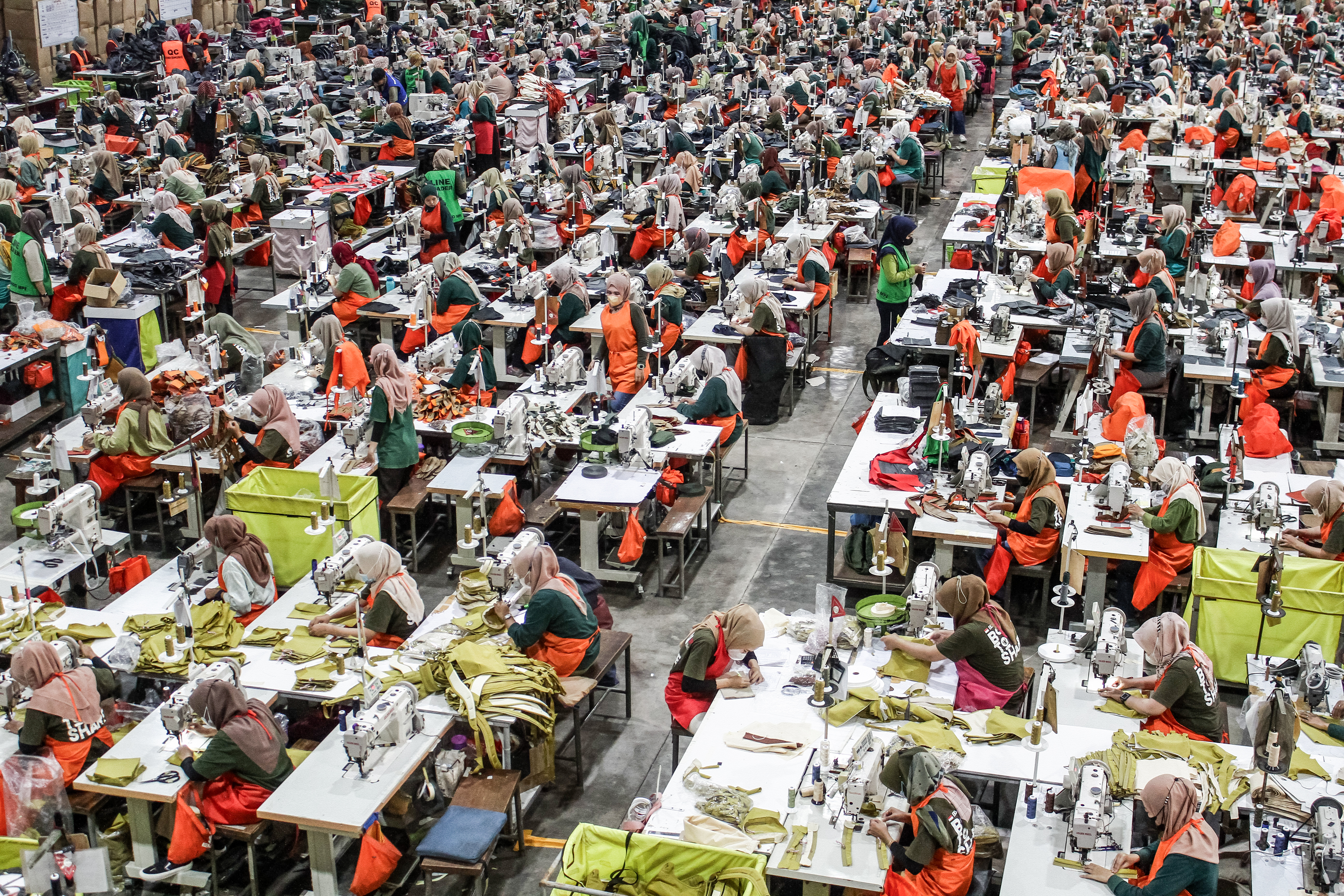
The US and EU — which make up almost two-thirds of China’s trade surplus — have been vocal in chastising Beijing on its industrial overproduction. But the majority of complaints filed against China at the World Trade Organization in 2024 came from developing countries, according to figures from Peking University economics professor Lu Feng. India and Brazil opened multiple probes into the alleged dumping of Chinese industrial products like metal sheets, chemicals and tyres.
Other nations are introducing regulations in an attempt to develop domestic processing of their own resources, rather than primarily sending raw materials to China as they do now. Indonesia has banned exports of nickel ore, for example, forcing companies to refine the material locally. It is also trying to persuade battery makers, including CATL, to set up plants in the country.
Economists argue trade imbalances are also bad for China. Beijing has signalled a swath of measures to help household consumption but so far has not backed these with large fiscal spending. China may also need to launch a stimulus package to shore up internal demand, or devalue its currency to mitigate the impact of tariffs.
China’s ongoing domestic economic slowdown has also reduced the need for imported raw materials in construction of real estate and infrastructure, while an anticipated surge in demand for foreign products in China has failed to materialise.
“China’s move up the global value chain was expected to create massive [domestic] demand for low value-added manufactured goods,” according to analysts at Rhodium Group examining the impact China’s trade surplus was having on developing nations.
“This underpinned expectations of industrial development in emerging economies, but that assumption is now undermined by China’s weak domestic demand and the growing gap between its manufacturing exports and imports.”
More than any other event in recent years, Trump’s so-called liberation day tariffs, in which he applied a 10 per cent “reciprocal” tariff to all trading partners and much higher additional levies on China and many south-east Asian countries, will test China’s export juggernaut.
Some analysts think the measures, which combined take US duties on all Chinese imports to at least 104 per cent, might finally persuade Beijing to restructure its production-orientated economy to allow for more domestic consumption.
Not only will China find it harder to export to the US, other countries may put up their own trade barriers to avoid being swamped by Chinese products no longer heading for America. Chinese companies could be forced to restructure supply chains and invest more in plants overseas.
But some believe China’s export machine can still weather this phase of the trade war. Michael Pettis, a Beijing-based associate of the Carnegie Endowment for International Peace, argues that Trump’s tariffs do not address the root causes of the trade deficit: China’s excess savings and America’s fiscal profligacy.
China’s savings — the product of its industrial and financial policies — are ultimately reinvested in US assets like Treasury bonds, helping to finance America’s fiscal deficits, strengthening the dollar and fuelling the purchase of more imports.
“If the strategy behind the tariffs is to resolve the US role in accommodating global trade imbalances, I don't think it’s going to make much of a difference,” Pettis says.
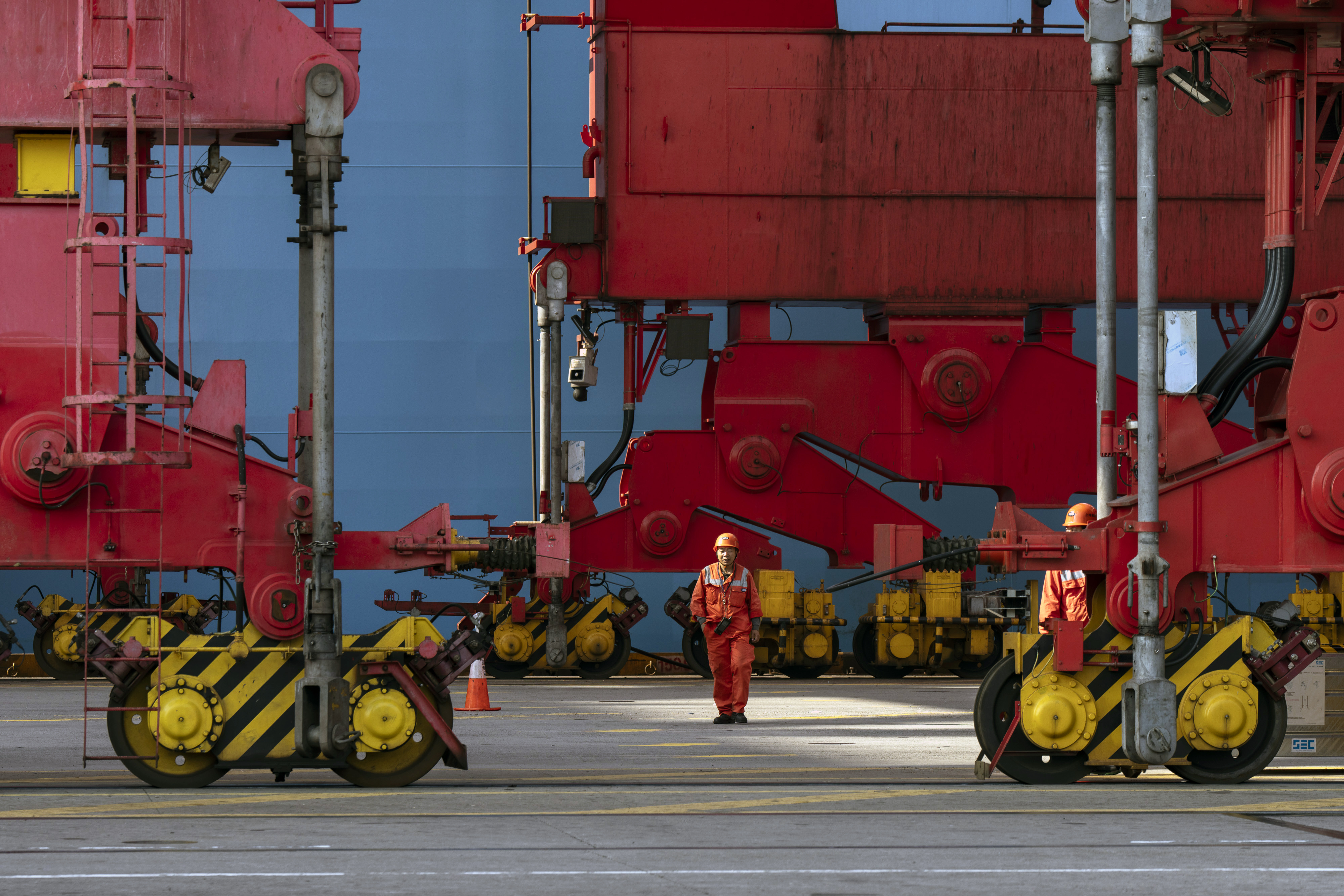
An added complication is that more than a quarter of Chinese exports — worth almost $1tn — are produced by foreign companies operating in the country, according to official data.
This risks leaving scores of multinational corporations, including Apple and Nike, directly exposed to Trump’s tariffs. In previous bouts of the trade war, US companies were able to negotiate exemptions for their Chinese operations, but analysts say this is far from guaranteed during Trump’s second term.
Unless the US also reduced its budget deficit and expansionary fiscal policy, American consumers would continue to buy imports, if not from China, then from somewhere else, probably with Chinese inputs, other analysts say.
“You have a little bit of a musical chair situation — as long as there is end demand, then there will be supply to meet that demand, whether it’s directly from China or indirectly from China,” says Hui Shan, chief China economist at Goldman Sachs.
Some of the tariffs could eventually be renegotiated, sustaining China’s export juggernaut. Hui is sceptical of the idea that this moment represents the high-water mark of China’s trade surpluses.
“At the micro-level, Chinese manufacturing competitiveness is enormous and so I think it’s too early to say that we have reached the peak.”
Back in Guangdong, the ructions from Trump’s latest tariffs have been enormous.
They were like an “earthquake” that producers had been expecting, just not on this scale, says Ken Huo, supervisor at the Foshan Foreign Trade Association.
“Maybe I only expected it to be four, maybe five, on the Richter scale. But now it has come in at eight,” he says. “The shockwaves are huge so I would expect there could be some negative impact on the overall manufacturing sector here.”
Additional work by Haoshiang Ko, Steve Bernard and Chris Campbell.
Sources: Import and export data from China’s General Administration of Customs. Some countries may report slightly different totals. Locations and ownership information for mines, mineral processing facilities and battery production factories from Benchmark Mineral Intelligence, 1019 Technologies and FT research. Satellite images from Planet Labs and Google Earth.