
Haiti is one of the most violent places on the planet. Armed with guns imported illegally from the US, gangs have turned into militias.
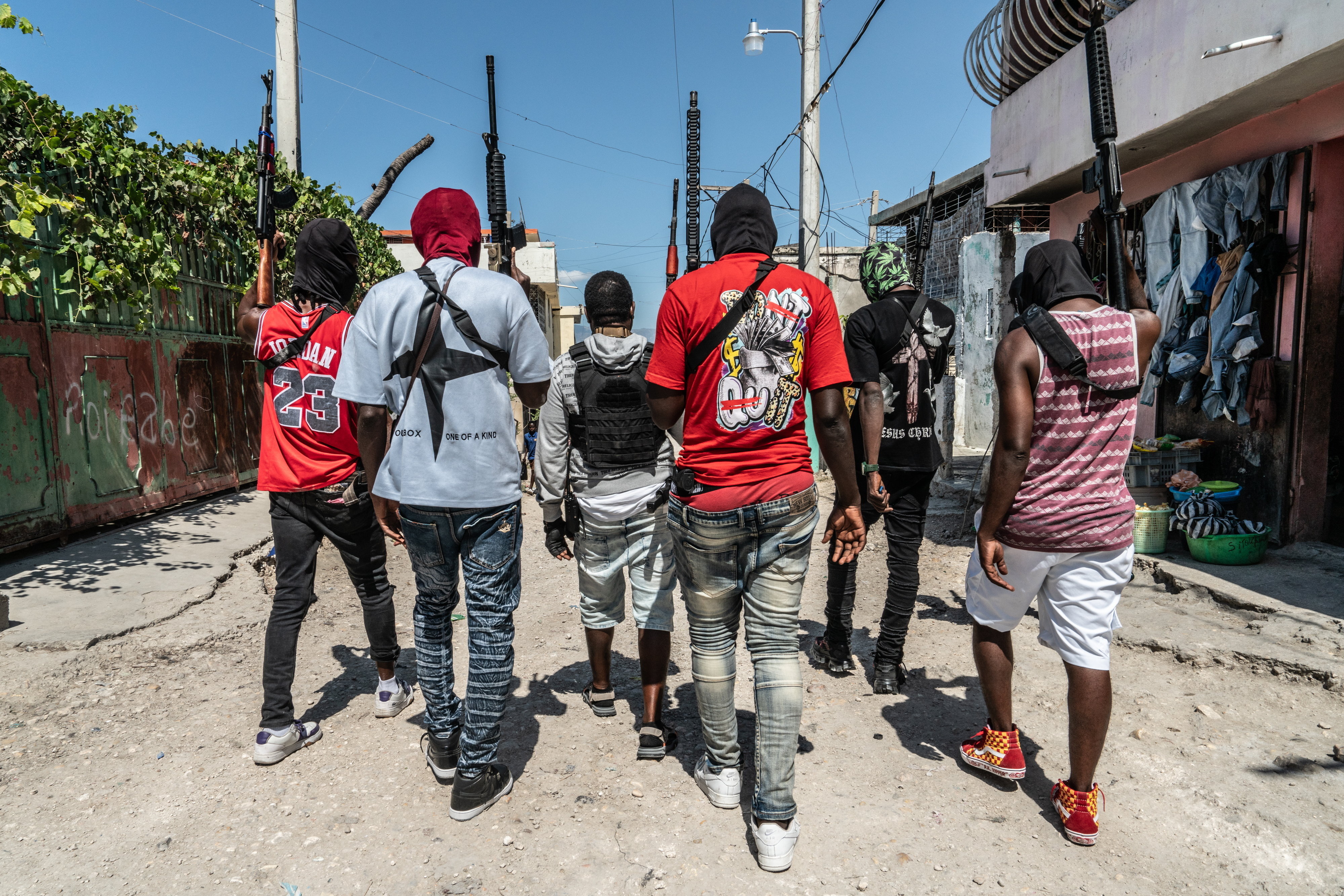
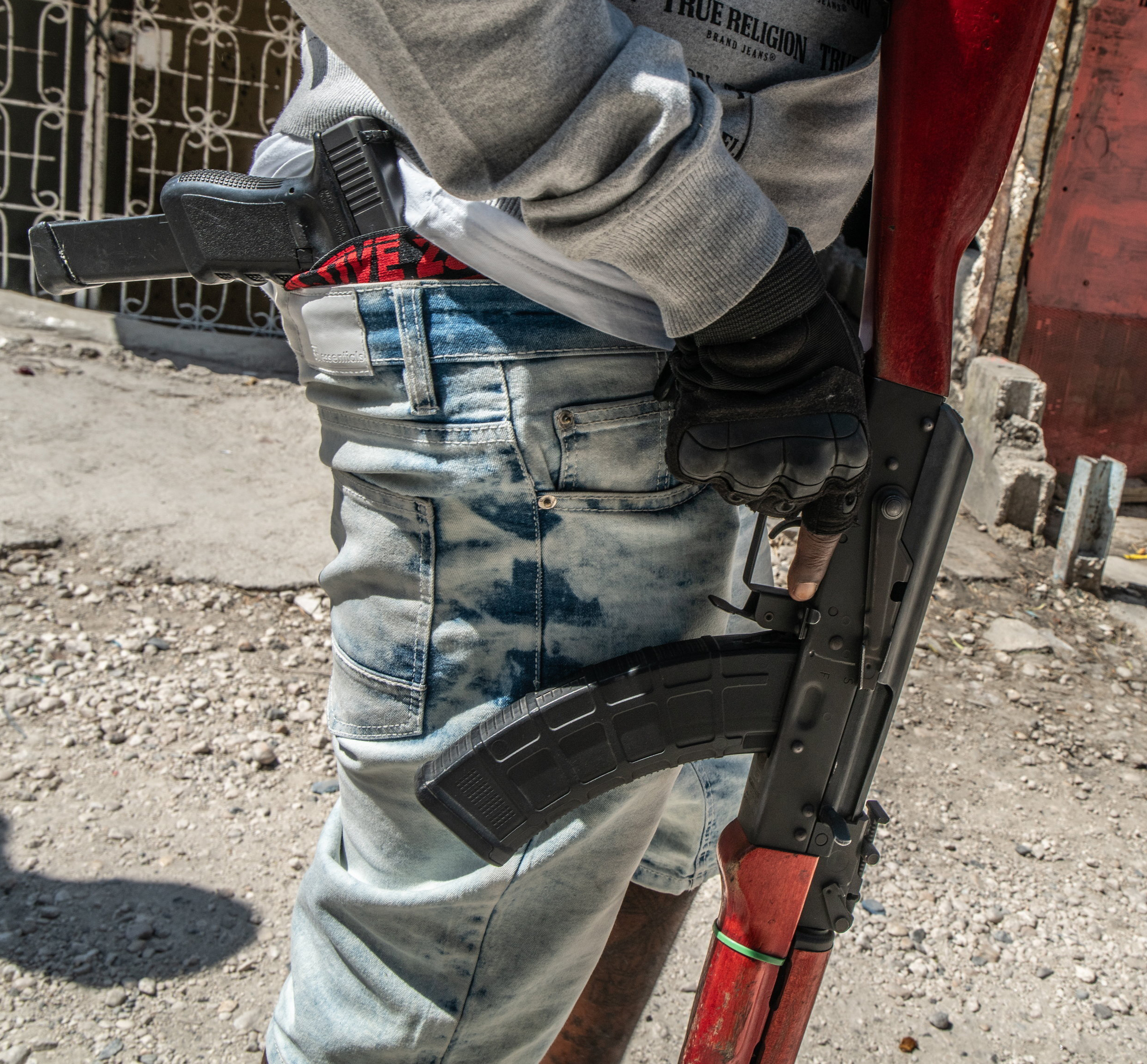

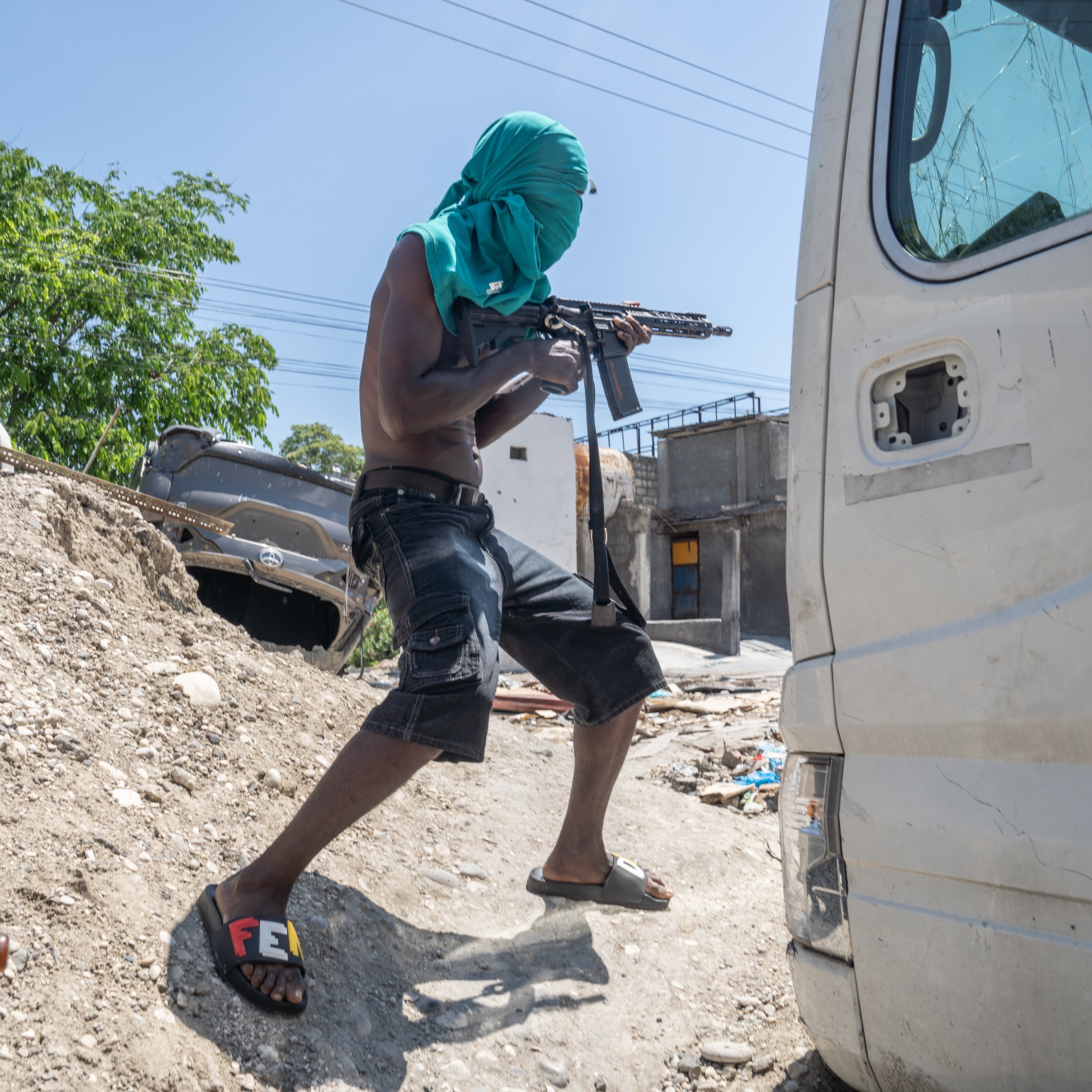
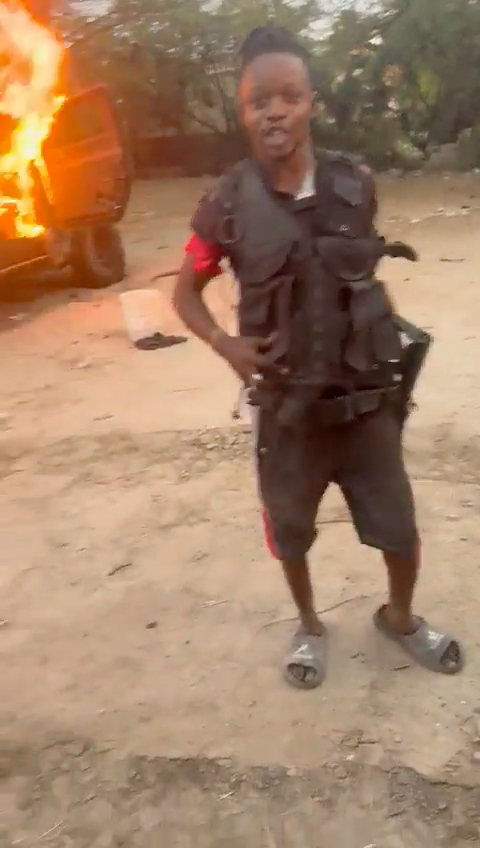
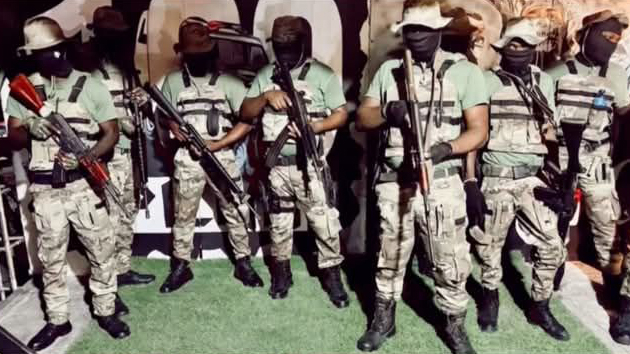
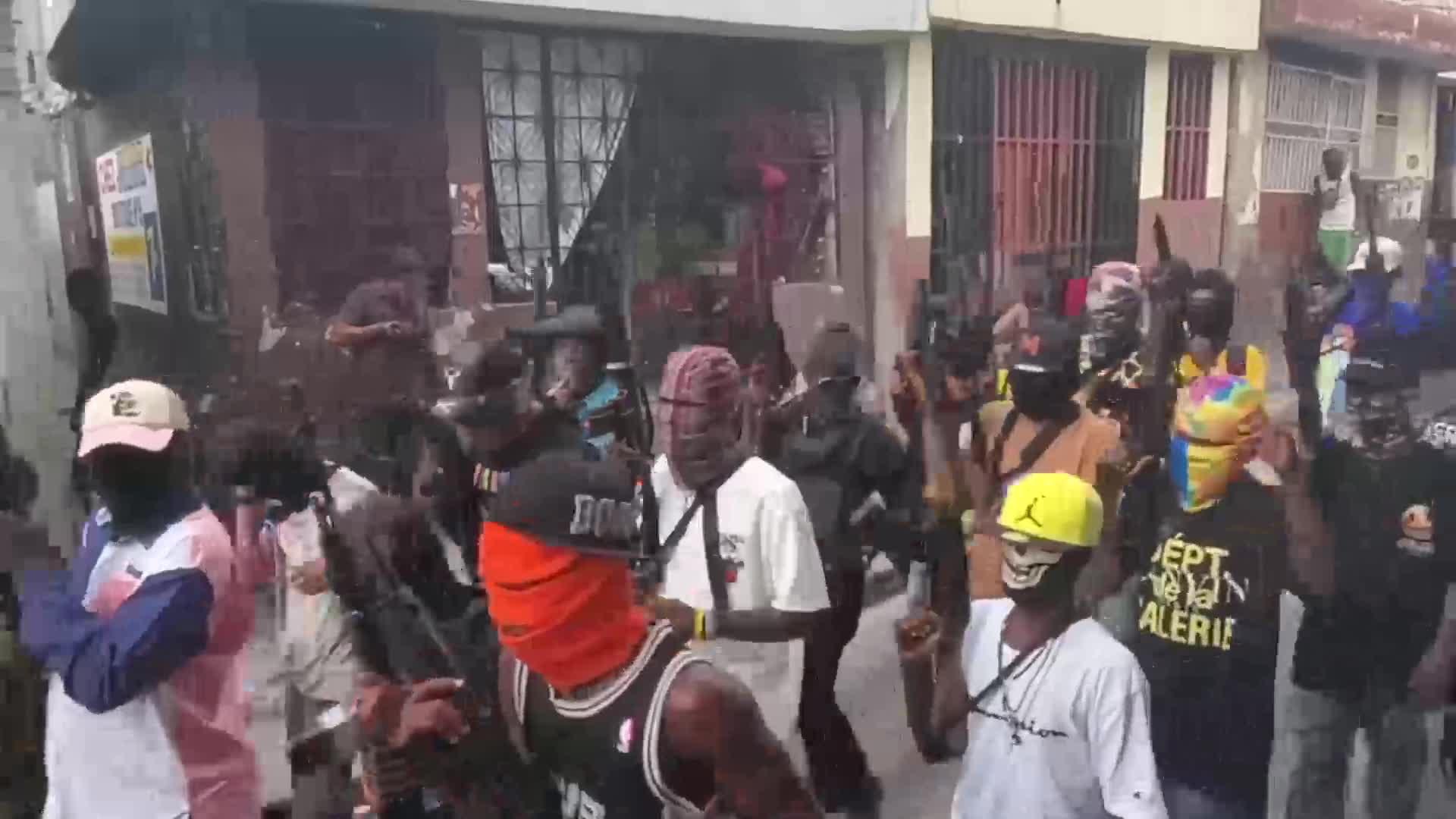
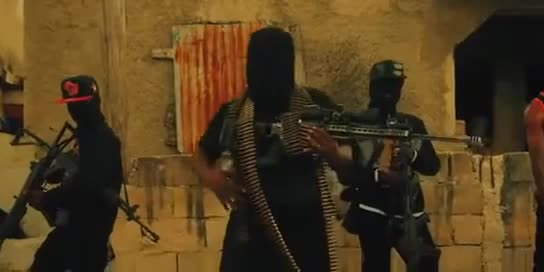
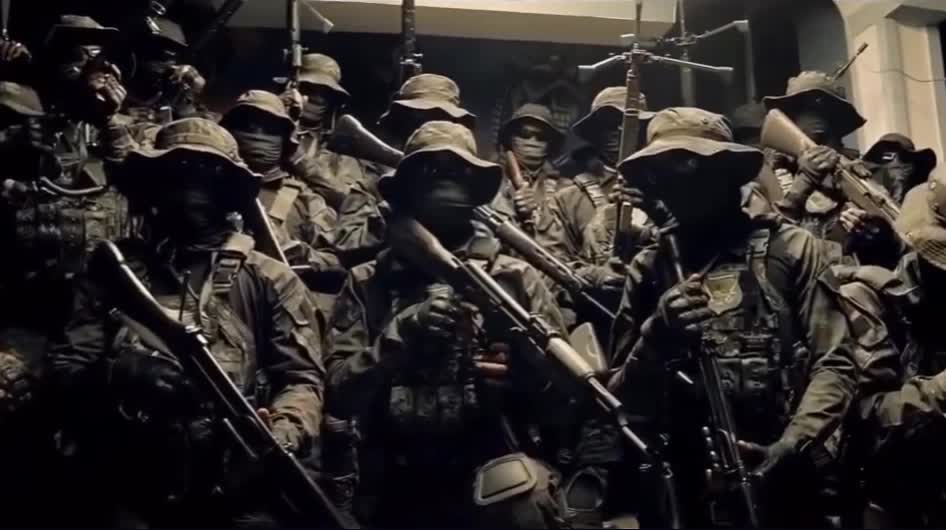
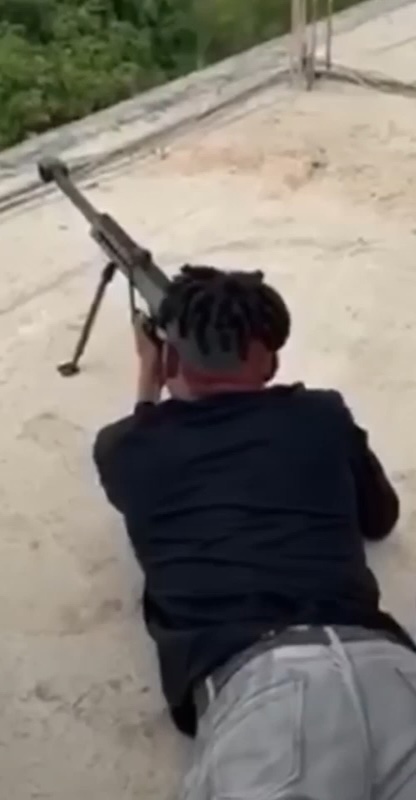

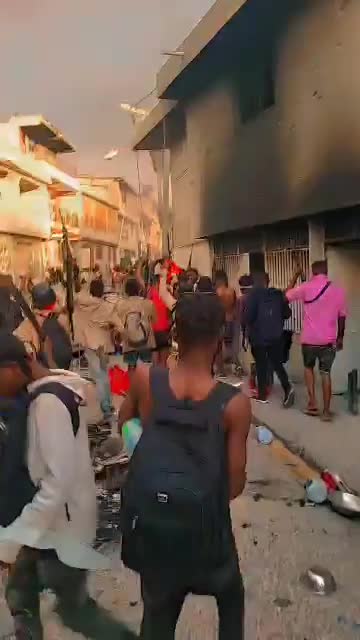
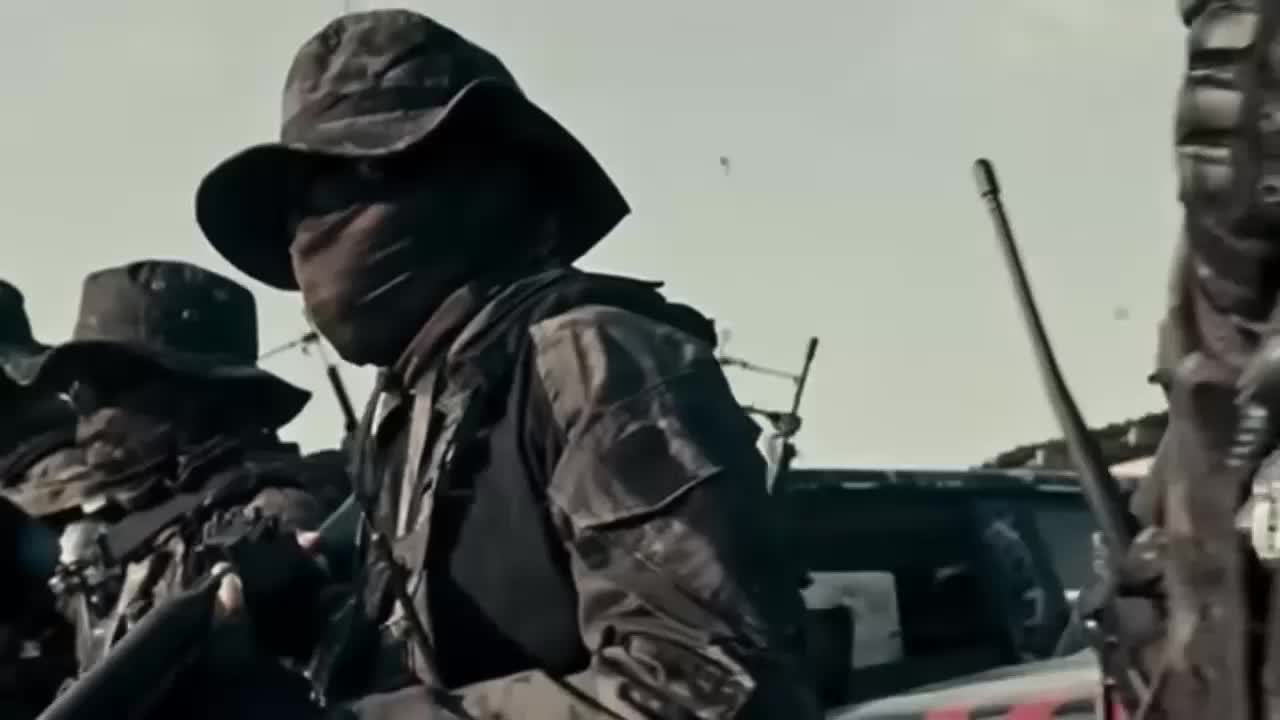
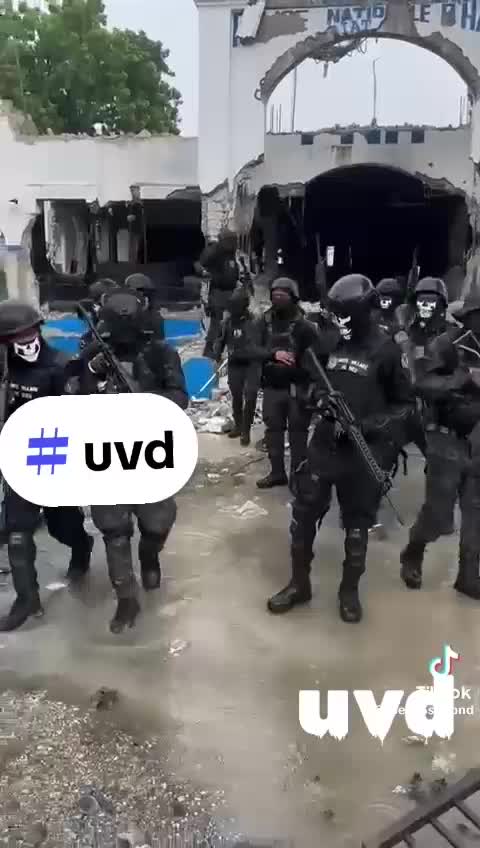
Brandishing military-style weapons, these groups control most of the capital, Port-au-Prince. The UN says they now have greater firepower than the Haitian police.

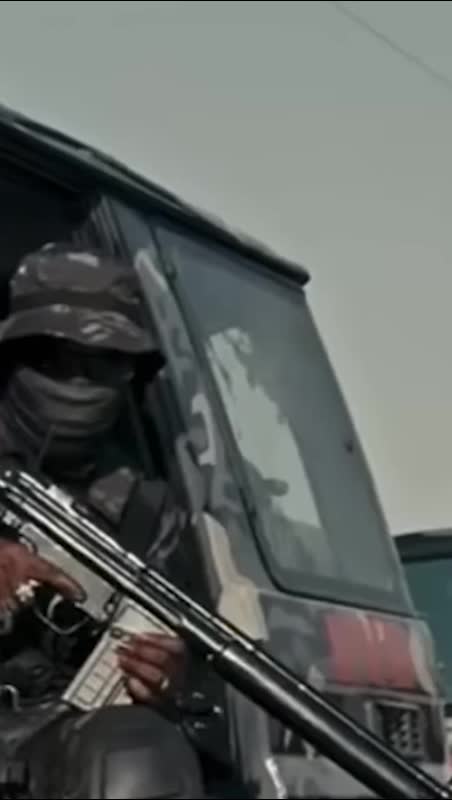
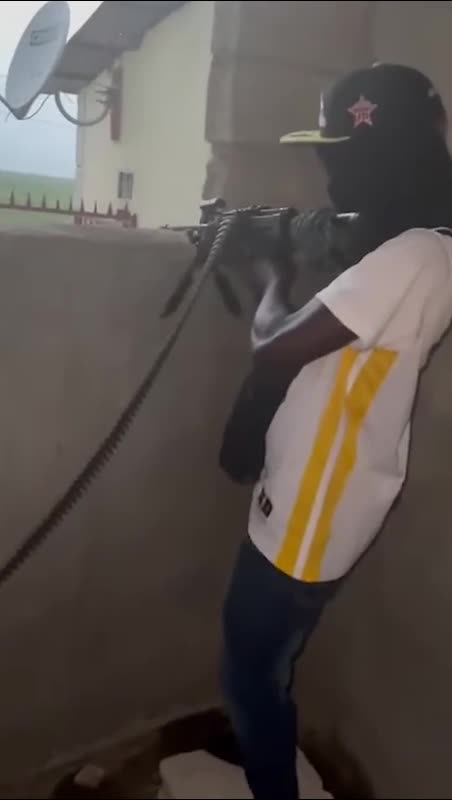
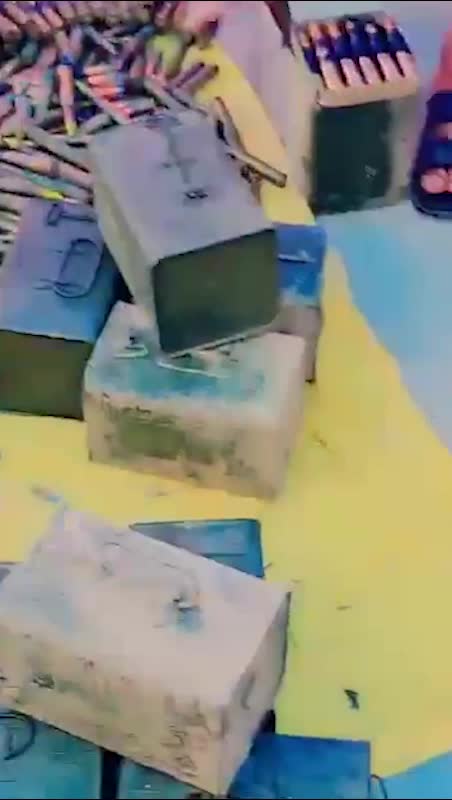
A Financial Times investigation shows many of these firearms are smuggled from Florida, where they are easily obtained due to the state’s lax gun laws.
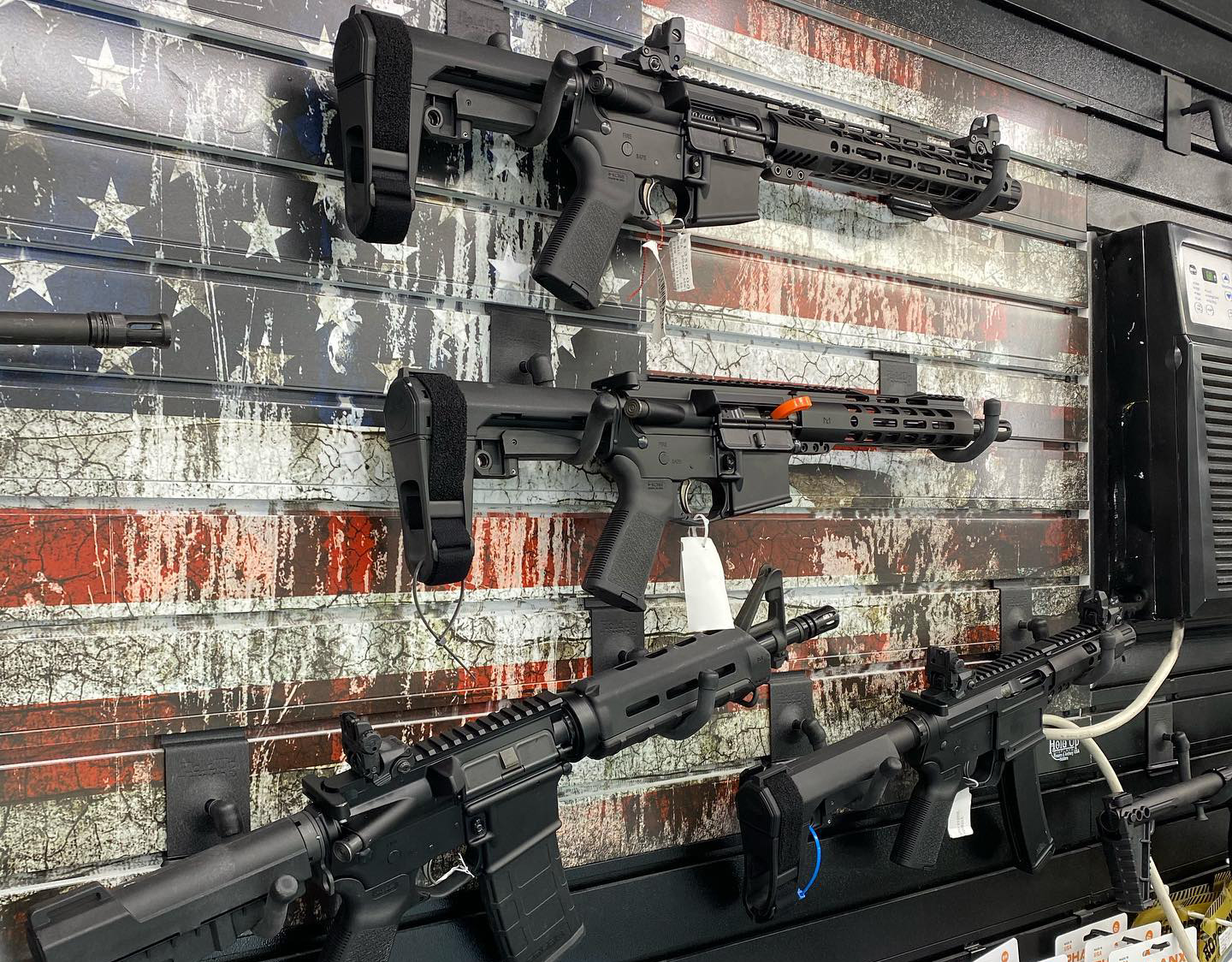
The weapons are hidden in containers carrying household goods and transported to Haiti or neighbouring countries using loosely regulated shipping companies.

“Be careful,” Jimmy “Barbecue” Cherizier, Haiti’s most powerful gang leader, said in a chilling message to the authorities after a drone attack failed to kill him.
“I can buy what you bought.”

The American guns turning Haiti’s gangs into an army
Weapons smuggled from Florida are empowering the country’s militias and enabling them to challenge a fragile government
It was 5am on Tuesday, February 25 when members of Viv Ansanm, a coalition of Haiti’s gangs, announced their advance through the densely populated neighbourhood of Delmas 30 in the capital Port-au-Prince with bursts of gunfire.
Wielding assault rifles, handguns and machetes, they looted homes and put them to the torch. Some people were burned alive in front of their children. Women were raped. Two off-duty soldiers, who were brothers, were killed in the onslaught.
Among those who fled were Johnise Grisaule and her three-year-old son, who are now staying a few kilometres away in a clinic repurposed as a refugee camp, alongside more than 4,800 of their neighbours.
“The police couldn’t do anything,” Grisaule says, on a recent sweltering afternoon, swatting away flies. “There were so many more bandits and with much bigger guns.”
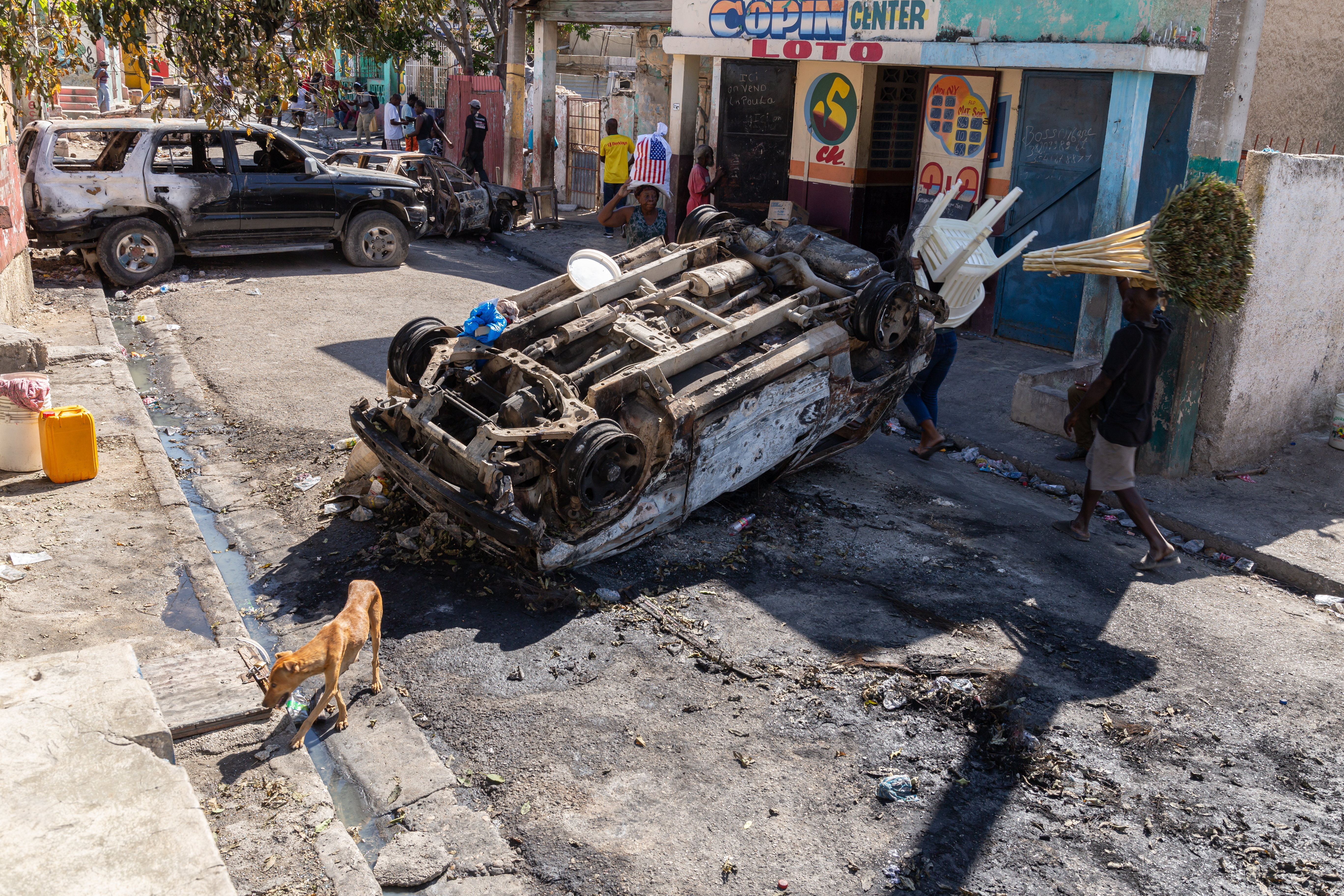
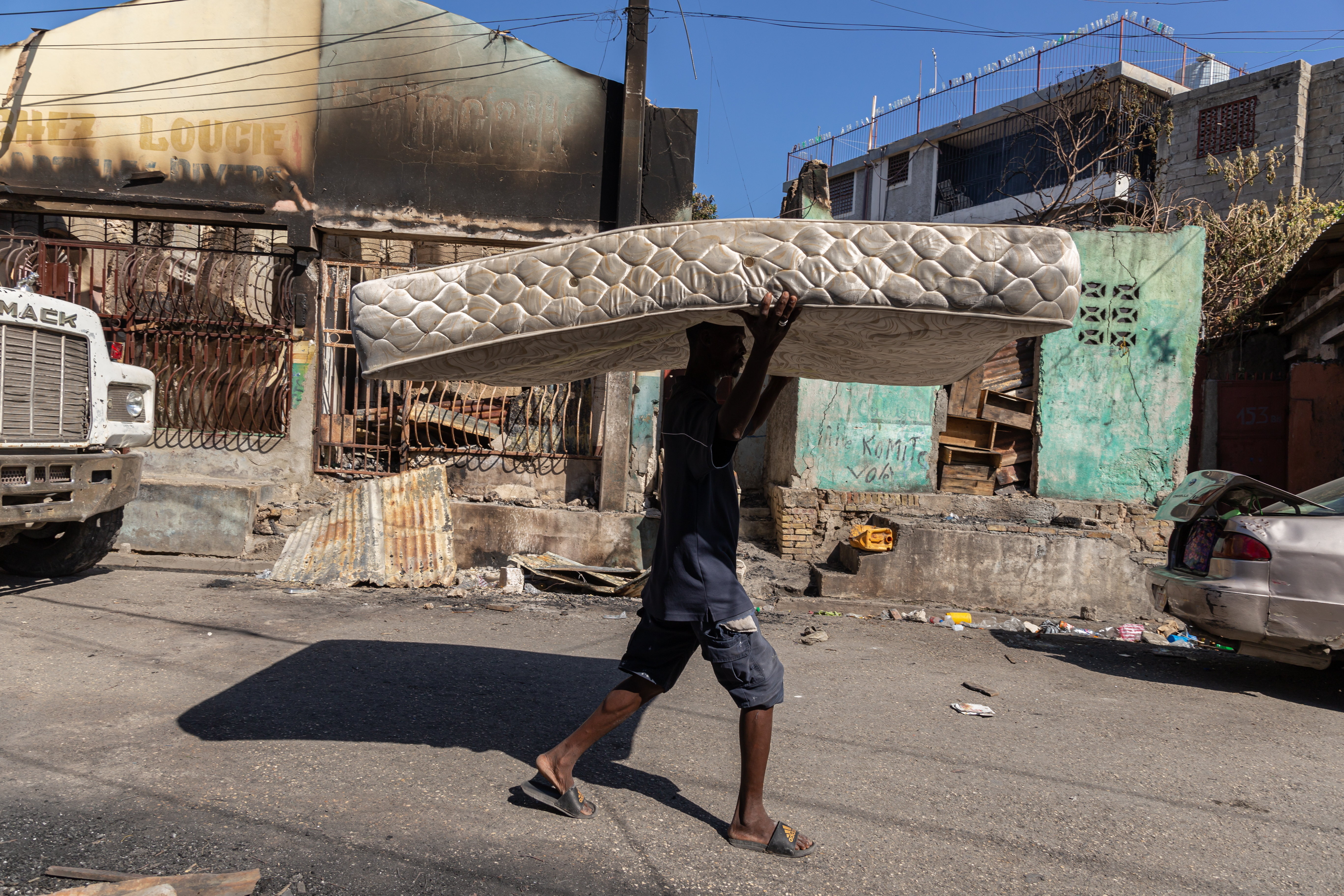
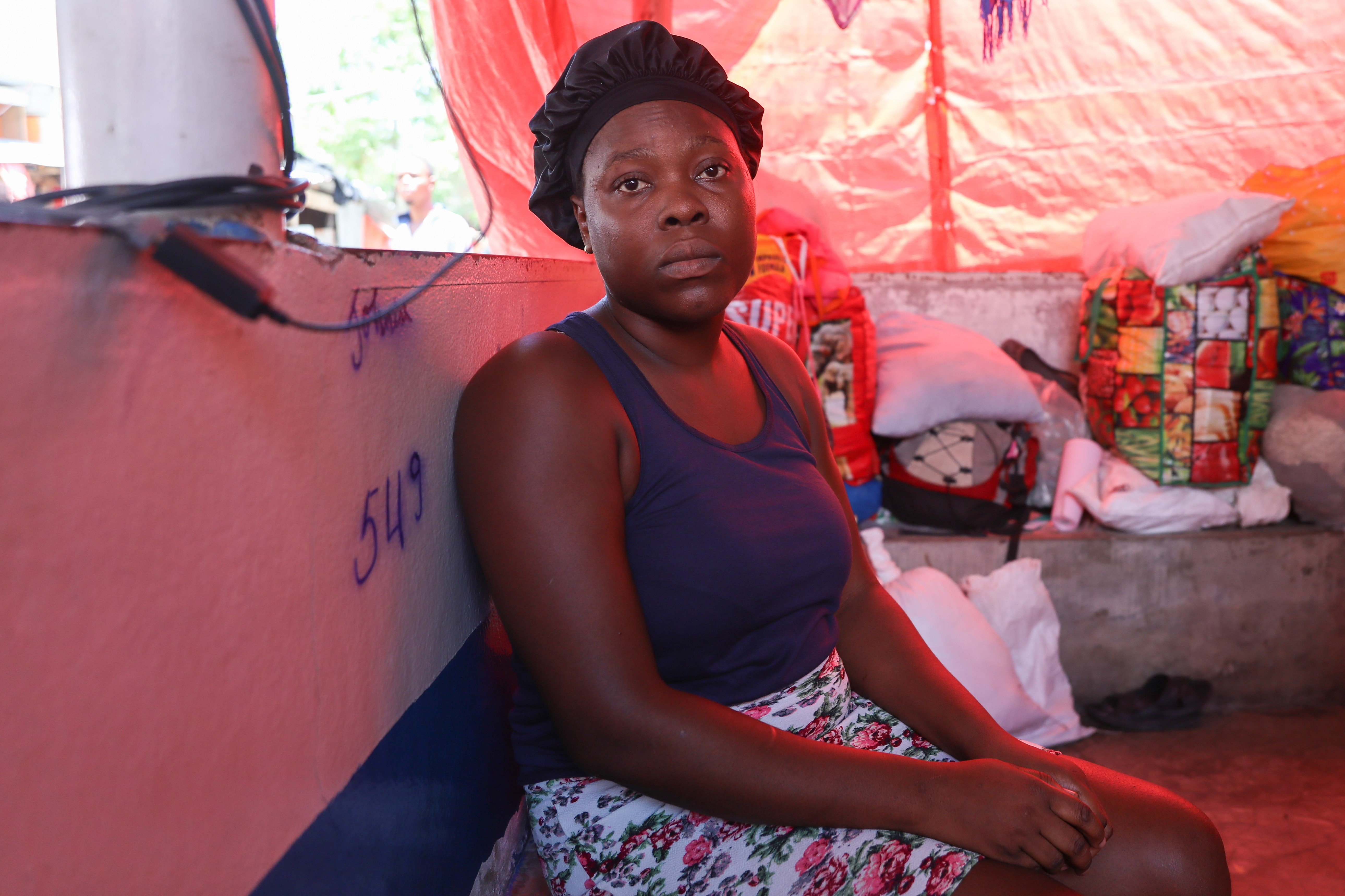
Haiti, the poorest country in the western hemisphere, is mired in a political, economic and security crisis that exploded with the assassination of President Jovenel Moïse in July 2021. Gangs now control 90 per cent of metropolitan Port-au-Prince, according to the UN, encircling the transitional government’s last redoubt in the upscale suburb of Pétion-Ville.
Services from healthcare and electricity to rubbish collection have collapsed, while gangs control the ports and all roads into the capital, extorting fees for goods that enter. Unable to flee, residents are crammed into safe zones.
Countless neighbourhoods around the city, often deserted, show the aftermath of battle, with rubble lining the streets and bullet holes pockmarking the charred remains of buildings.
“There is a real risk that Port-au-Prince will fall to the gangs, granting them political power across the country,” Haiti’s finance minister Alfred Métellus tells the FT.
Gangs control most of Port-au-Prince and have expanded into other regions
Outside the capital, gangs have continued their expansion. There were 5,626 murders recorded across Haiti last year, up 1,000 from 2023. The UN has reported a further 2,700 in the first five months of 2025. Around 1.3mn people, out of a population of 11.5mn, have been displaced, while 5.7mn people lack access to adequate food.
Murders in Haiti continue to rise
Cumulative killings per year
Fuelling the bloodshed is the gangs’ growing arsenal of military-style weaponry, much of which originates with purchases from US gun shops and ends in the slums of Haiti.
“The problem is that in the USA, anyone can buy a weapon,” Metellus says. “Then they are shipped in [cargo] boxes from the Miami River.”
The rise of the gangs
The origins of Haiti’s gangs can be traced back to the 1960s and the feared Tonton Macoutes paramilitaries of the Duvalier dictatorships which lasted until 1986.
Romain Le Cour Grandmaison, a researcher with the Global Initiative against Transnational Organized Crime, says the gangs grew out of militias formed by politicians and business owners wishing to rule areas informally and intimidate and disrupt their competitors, but that the money the groups made from extortion and smuggling gave them autonomy from their paymasters.
The assassination of Moïse then created a power vacuum which they swiftly filled. The creation of Viv Ansanm at the start of 2024 — ending years of feuding between rival gangs — was a decisive turning point, say politicians and analysts.
“It's a coalition of interest groups that has constructed the chaos that we are living through,” Fritz Jean, who chairs the transitional presidential council currently governing Haiti, tells the FT.
Diego Da Rin, a Haiti analyst with the International Crisis Group, says that “there is a reason why the gangs started working together: to derail the security mission that could be stronger than them.”
He adds that Viv Ansanm’s goal “is to reach the offices of the prime minister and the presidential council and topple the government, without offering a clear plan for what would follow.”
The gangs’ metamorphosis into heavily-armed militias more akin to swat teams can be seen in the videos they post of themselves on social media.
In one slickly produced clip, the leader of the 5 Segonn gang, Johnson Andre — better known by his nom de guerre ‘Izo’ — flaunts weaponry and armour, which includes SUVs painted in camouflage colours and rifles fitted with scopes.

In another post, Izo wears body armour and a ballistic helmet while taunting the Multinational Security Support Mission in Haiti (MSS) — a UN-approved and Kenyan-led force designed to bolster the country’s outmatched national police.
The gangs are increasingly using these higher calibre weapons, says Robert Muggah, co-founder of the Igarapé Institute, a Brazil-based security thinktank that has been studying Haiti’s gangs. “Pistols and revolvers are one thing but an AR-15, or an M10, or a sniper rifle is another.”
Muggah adds that even a relatively small number of guns — around 100 — “makes a massive difference in the calibration of force and the violence that can be generated”.
An FT analysis of US court documents, shipping records and statements by Haitian and Dominican authorities shows how these guns are smuggled into the country.
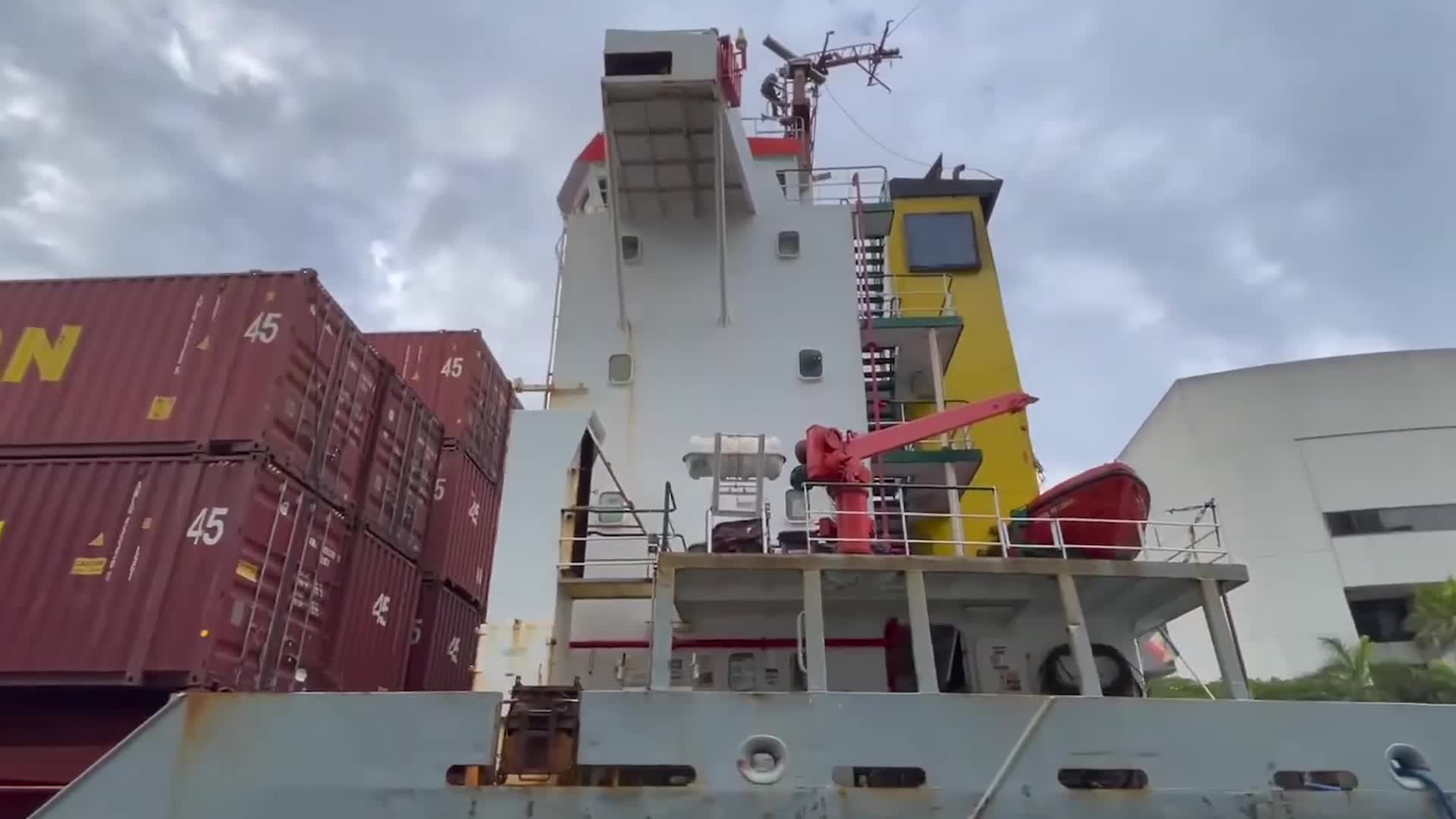
In February, the Sara Regina, a hulking 90m cargo ship, journeyed from Miami to Haina Occidental Port in the Dominican Republic — which shares the island of Hispaniola with Haiti — bringing with it a cache of weapons.
The vessel was transporting a container with second-hand goods, including bicycles and refrigerators. Such items are frequently sent by Haitians in Florida to friends and relatives in their homeland, where even basic necessities are difficult to obtain.
Hidden on the Sara Regina were nearly two dozen firearms and 36,000 rounds of ammunition.
The haul included boxes of cartridges made by Houston-based PMC Ammunition. The company’s slogan is, ‘America’s company. America’s ammunition’.
Bullets manufactured by Fiocchi of America were also found. A video posted by a gang shows they already have large stocks of Fiocchi cartridges.
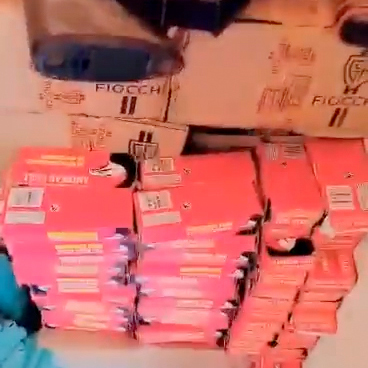
Among the firearms were Glock pistols and 16 AK-type rifles, a weapon that often appears in gang videos.
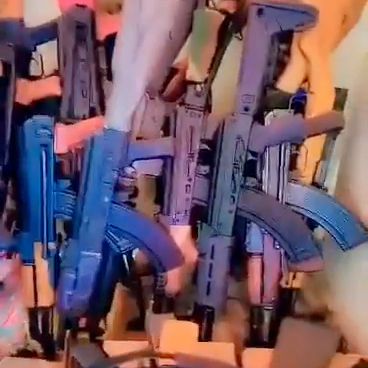
A UN report states that some were VSKA and WASR AK-variants. These are sold in the US by Century Arms. AK-type rifles are increasingly sought after by the gangs.
Also in the haul was a US-manufactured Barrett M82, able to penetrate lightly armoured vehicles. A video shows a gang posing with another M82 and belts of .50 calibre rounds.

The seizure by the Dominican customs officers showcases the firepower Haiti’s gangs are attempting to import from the US. Haiti does not manufacture firearms or bullets, with other guns wielded by the groups stolen from the Haitian military and police.
In the first half of 2022, officials at Haina Occidental Port seized more than 112,000 “units of firearms and ammunition”, with much of it shipped from Miami, according to a UN report.
Analysis of data from trade platform CargoFax reveals that between July 2020 and March 2023, 34 shipments were sent from US ports to Haitian individuals now on the US sanctions list.
It included 24 shipments for Prophane Victor, a former member of parliament who has long been accused by the UN and US of arming gangs. The goods he received were described as personal effects — thrift store items and used shoes.
Easy access to American weapons increases violence across the whole region, says Evan Ellis, professor of Latin American studies at the US Army War College. An October report by the US firearms enforcement agency says that 73 per cent of guns recovered in crimes in the Caribbean between 2018-22 were from the US, mainly Florida, Georgia and Texas. Ellis adds that Haiti’s gangs also acquire body armour and other combat equipment from China.
The Miami River
Miami has become the main hub for smuggling weapons to Haiti for a number of reasons: it has a large diaspora swelled by refugees; there is a loosely regulated export industry which sends small shipments to the country; and Florida’s lenient gun laws.
Florida does not require a permit to purchase firearms and there is no limit on the number that can be bought in a single transaction. In 2023, Florida scrapped the mandatory training, licensing fees and background checks required to carry a concealed weapon. There are also few restrictions on buying ammunition.
“It's a huge issue,” says Sheila Cherfilus-McCormick, a congresswoman representing South Florida in the House of Representatives and the only sitting Haitian-American lawmaker. “Maybe 80 to 85 per cent of the guns in Haiti come from the US — and they’re directly coming from the Miami River.” She adds that with Florida regulations making it even easier to buy guns, anybody “in cahoots” with the gangs is able to purchase weapons and send them to Haiti.
“Lax US gun laws allow gangs to source military grade weaponry almost freely,” says Louis-Henri Mars, executive director of Lakou Lapè, a Port-au-Prince-based peace-building organisation.
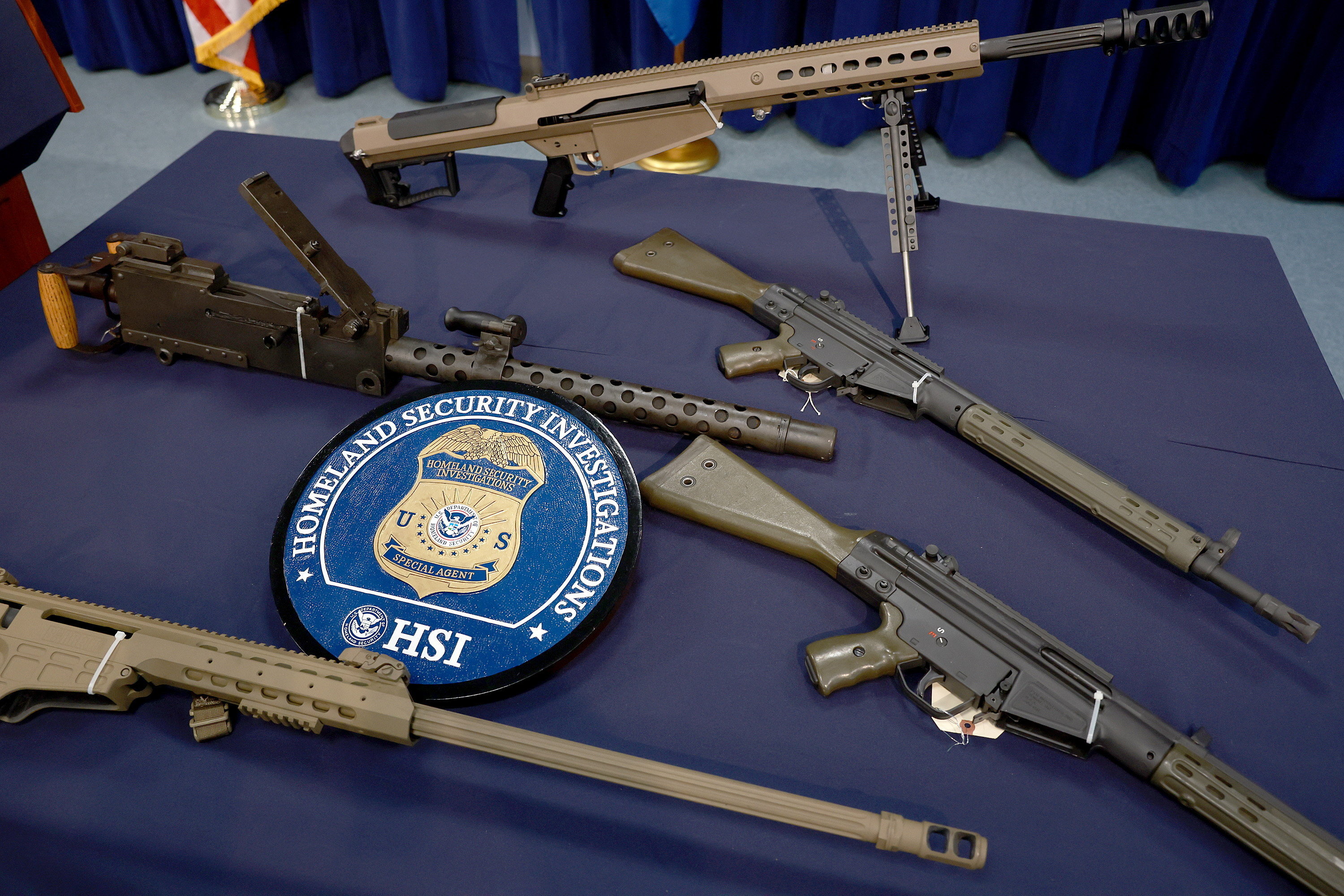
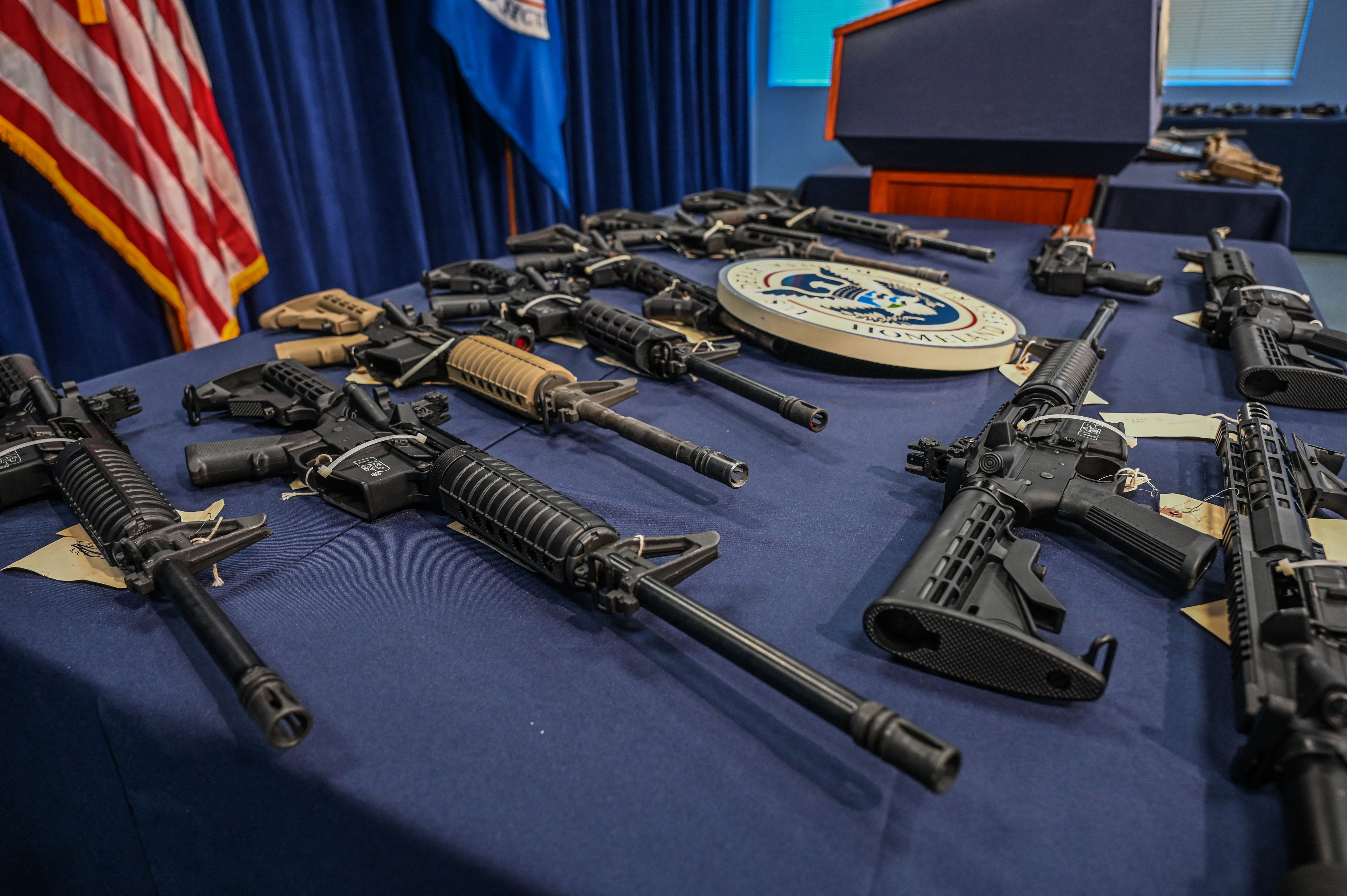
Joseph Lestrange, a former senior official investigating transnational organised crime at the US Department of Homeland Security (DHS), says that the purchases begin with the gangs finding people who are eligible to buy them on behalf of those who are not.
“You have transnational criminal organisations who pay recruiters to find straw buyers with clean criminal records”, Lestrange says. They can then “easily go into a federal firearms license dealer and buy one, two or a few firearms, depending on the laws that apply to that state.”
Analysis of US court records from an earlier arms seizure sheds light on how this process works.
In 2021, Joly Germine, a leader of 400 Mawozo, one of Haiti’s largest gangs, organised the purchase of guns from his jail cell in Haiti. Court documents state that Germine used WhatsApp to instruct Florida-based straw buyers to obtain military-style rifles — weapons he said would give him dominance over the Haitian police and enable him to inflict huge casualties.
From March to November, two Florida-based Haitians bought 24 weapons from gun shops in the state, including a Barrett M82 .50 calibre anti-materiel rifle and 9 Century Arms AK-type rifles, court documents show. Assisted by Germine’s girlfriend, Eliande Tunis, the group planned to hide the guns in barrels and transport them to Haiti. The conspirators completed two weapons shipments, with a third seized in an FBI raid on a lock up in Orlando.
The money to buy the guns had come from a series of kidnappings carried out in Haiti by 400 Mawozo, prosecutors say. In June and July 2021, $25,000 was paid to the gang to secure the release of two US citizens, with $50,000 paid to free a third American hostage the next month.
The gang often used money transfer services, breaking large amounts down into smaller transactions and using multiple services on the same day to avoid suspicion. In this way, the gang sent $37,500 to the US between March and October 2021.
Germine, who was extradited to the US in 2022, pleaded guilty to the gun trafficking charges in 2024 and was found guilty in May for his involvement in the hostage taking of American citizens in Haiti.
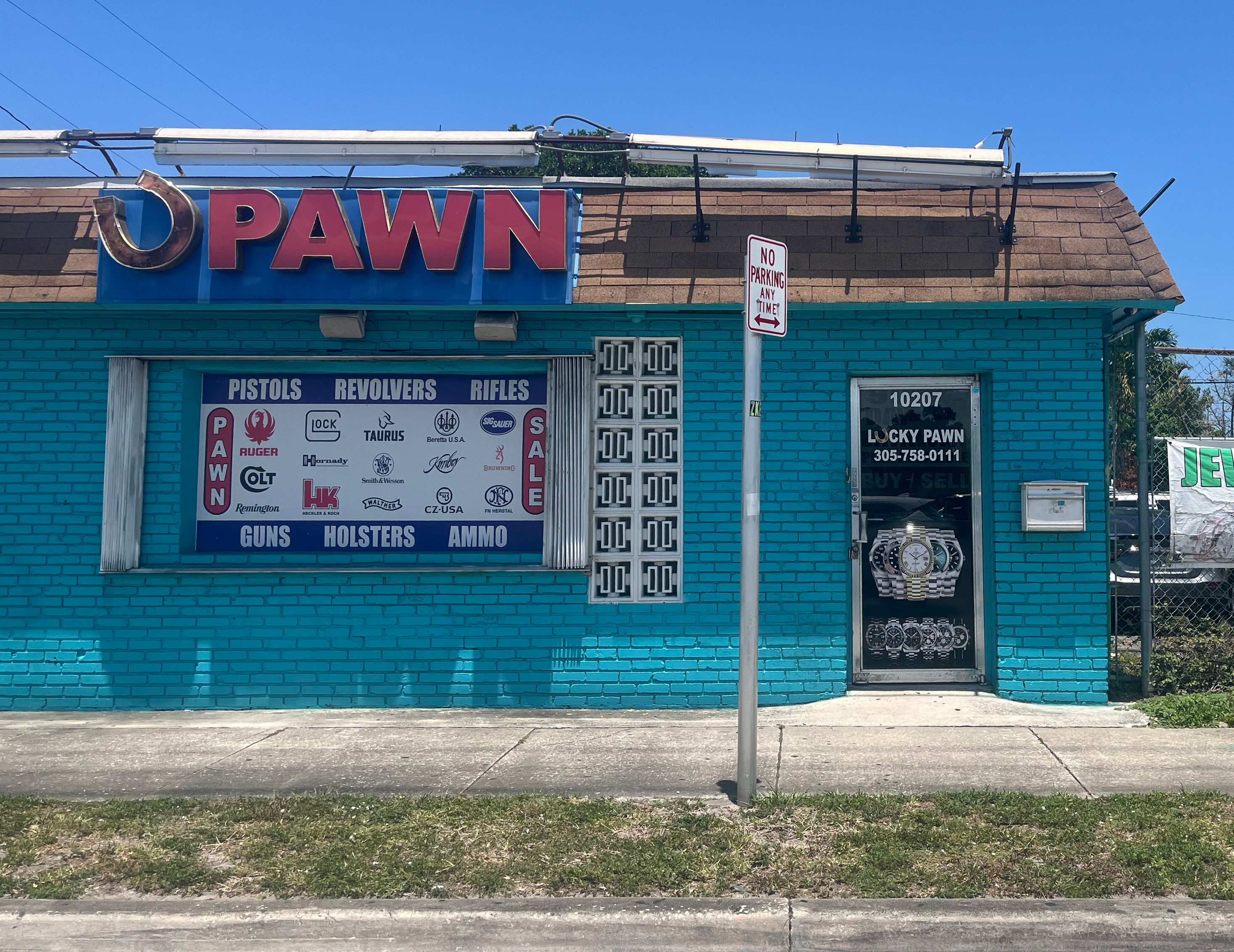
One of the shops used by Germine’s straw buyers was Lucky Pawn, a small pawnbroker that sits on the side of a highway in the north of Miami and purchases and sells cars, jewellery and guns.
When approached by the FT, an employee named Frankie, the store’s jeweller, declined to provide details on what checks are carried out on customers, dismissing the volume of guns shipped from Florida to Haiti as insignificant compared to US military support for Israel. “This is shit compared to what’s being sent to Gaza, paid for by American taxpayers,” said Frankie, who declined to give a surname.
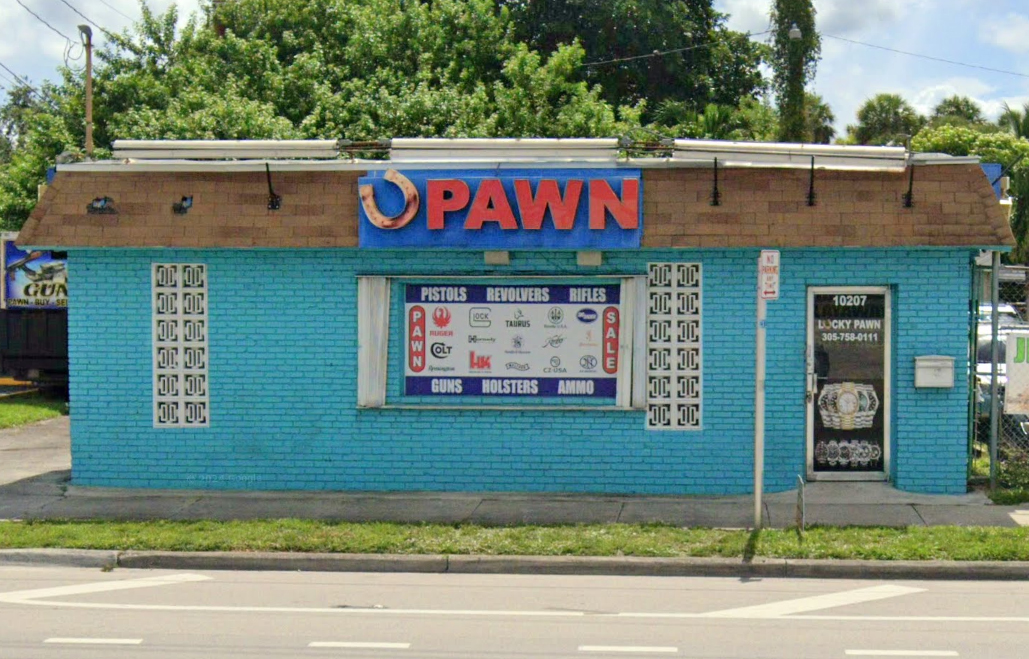
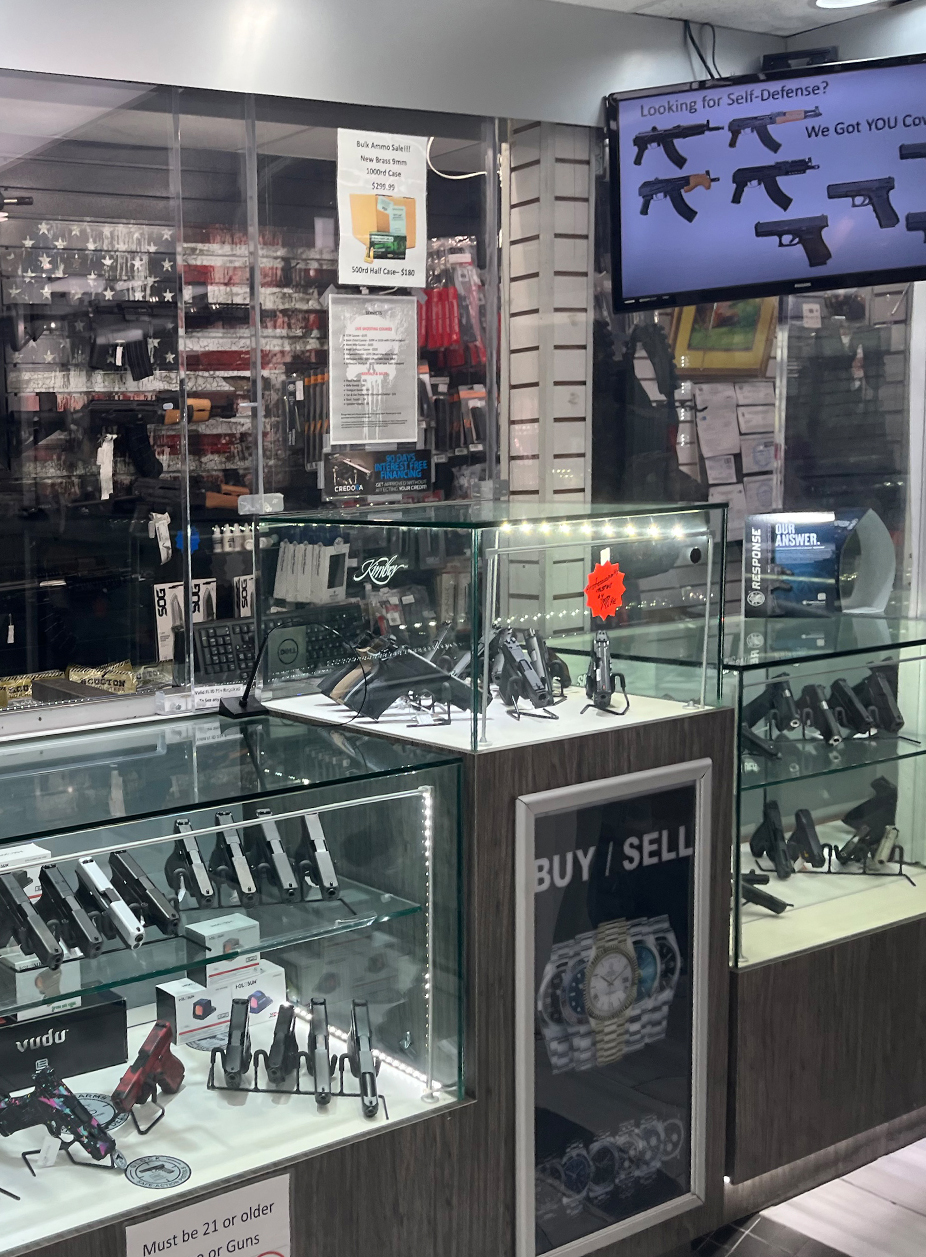
Once the weapons have been purchased, freight forwarders — companies that consolidate and package shipments into container loads — are the next step in the illicit supply chain.
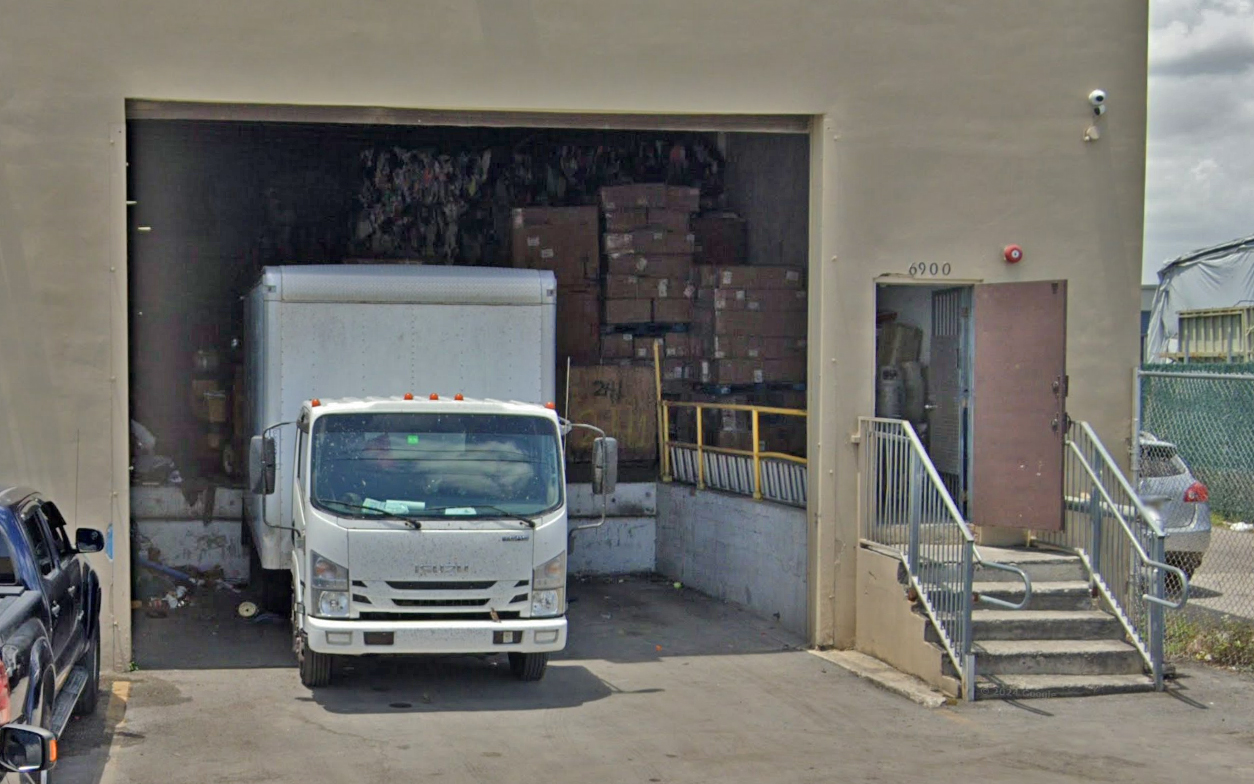
The container aboard the Sara Regina, the ship which was seized in February in the Dominican Republic, originated with a freight forwarding group called Eugenio Trading, located in a non-descript Miami warehouse in an industrial district north of the city’s airport. The group specialises in sending clothing to the Caribbean.
The company’s owner, Urbano Eugenio Garcia, is now in pre-trial detention in Santo Domingo in connection with the seizure of the vessel. But his son Sergio says his father was “used” by gun smugglers after a Haitian woman approached him last year to send an empty container to Jacksonville for a supposed furniture shipment to Haiti.
“We don’t usually do this for anybody,” Eugenio Jnr told the FT. “We did it as a favour . . . we were used.”
But Eugenio Jnr says there is little that can be done by freight forwarding companies like his to prevent such shipments given the scale of the operations. “The weapons are so micro compared to a container,” he says. “I cannot go and sit and watch them load the container all day.”
In a report published last year on the escalating violence in Haiti, the UN Security Council provided another example of freight forwarders being used by smugglers.
In this case, a container was filled with boxes of household goods from more than 100 individuals. Hidden in two of them were 26 firearms as well as ammunition. One box was collected by a port customs officer who was later arrested and removed from his position.

The freight forwarder denied being involved in the smuggling and told the UN that typically clients hand over goods that are already packaged and sealed. He went on to say that the client — who paid $150 for the delivery — had provided a copy of his ID via WhatsApp, and deleted the message shortly afterwards. The UN report added that the shipping company was unlikely to be aware it was transporting illicit firearms.
For law enforcement trying to enforce export regulations, a lack of resources is a core part of the problem, says Lestrange, the former DHS official. He adds that US Customs and Border Protection agents checked less than 5 per cent of exports when he left DHS three years ago. In the majority of cases, paperwork isn’t required for exports valued at $2,500 or less, further reducing oversight.
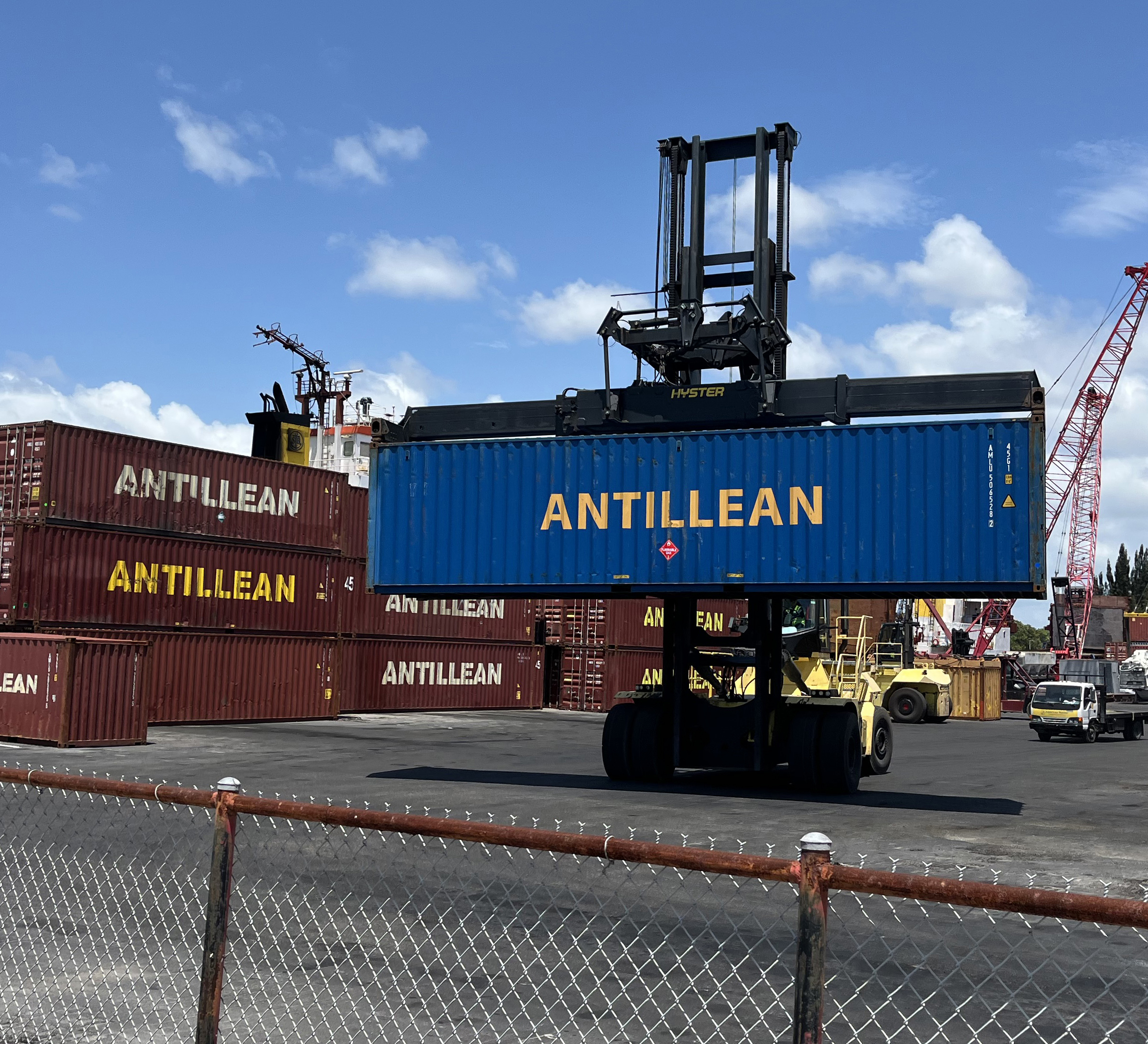
From the freight forwarders, the cargo is transferred to carriers who transport the goods to Haiti. Three miles from Eugenio Trading’s warehouse, on the Miami River, is Antillean Marine, the largest shipping carrier for cargo travelling between Miami and Haiti and the group that operates the Sara Regina. The company declined to speak to the FT about the cache of guns on the vessel.
The danger posed by gangs at Haiti’s ports means shipments to the country increasingly arrive via the Dominican Republic, with goods then driven across the border.
The weapons seized on the Sara Regina were meant to take this route. Shipping records show they were to be received in Haina Occidental Port by a man based in the Dominican border town of Elias Pina, before being transported to the Haitian town of Belladere.
The 400 Mawozo gang are active in the area and control the road that connects Belladere to Port-au-Prince, making the gang or one of its allies the potential recipients.
400 Mawozo are adept at acquiring arms, says security expert Muggah, which they sell on to other gangs. The fact that several of their members have served time in US prisons has enabled them to develop the skills and network needed to procure these weapons, Muggah adds.
While handguns might go for $400-500 at federally-licensed firearms outlets in the US, they can command as much as $10,000 in Haiti. Prices go up for sought-after, high-velocity weapons such as AKs, AR-15s and Galil rifles. A Barrett M82 could sell for $22,000, according to the UN.

Métellus, the Haitian Finance Minister, says the country plans to step up checks at its land border with the Dominican Republic in an attempt to reduce the gangs’ revenue streams.
Gangs on the Haitian side of the border charge $2,000 for each container that passes through, Métellus says. With 5,000 containers crossing the border a month, the trade could be worth $120mn a year. The government, meanwhile, is losing $3.8million per day in customs duties from the now gang-controlled port in the capital, Port-au-Prince.
“The national police is not well-equipped,” Métellus says. “Their budget annually is around $51m, so you see the challenge. The strategy is to block the flow of money.”
A heavy toll
Efforts to stem the flow of weapons — including a UN-imposed arms embargo in October 2022 and the US declaration of Viv Ansamn as a foreign terrorist organisation — have so far failed to yield results in Haiti, where the security crisis continues to worsen.
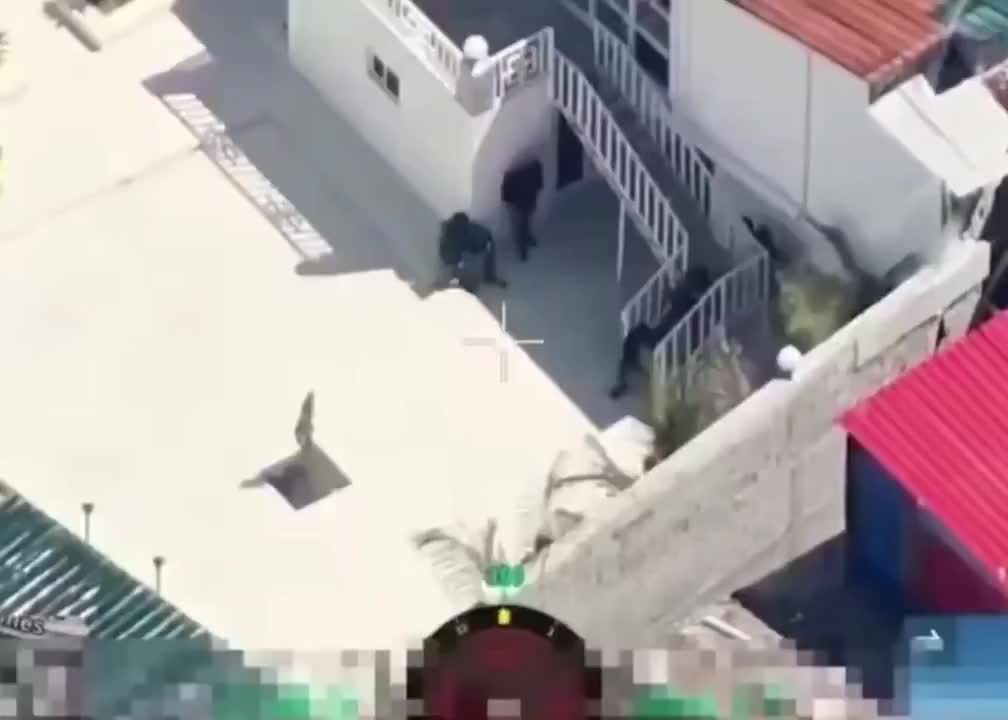
On the ground, MSS, the Kenyan-led security mission, has made little gains since it arrived in June last year. In a desperate bid to change the tide of battle, Haiti’s presidential council has turned to employing US mercenaries and attacking the gangs with explosive-laden “kamikaze” drones, like the one sent in March, unsuccessfully, to kill Cherizier, head of the Viv Ansanm alliance.
“The Haitian government cannot now tackle the gangs without international support, and I’m not talking about the farce of the MSS,” says James Boyard, a security analyst based in the capital.
At the end of May, Haitian media reported that the leader of the 5 Segonn gang had been seriously injured and several members killed in a drone attack. At least 345 gang members have died following drone strikes since March, data from conflict monitoring group Acled shows.
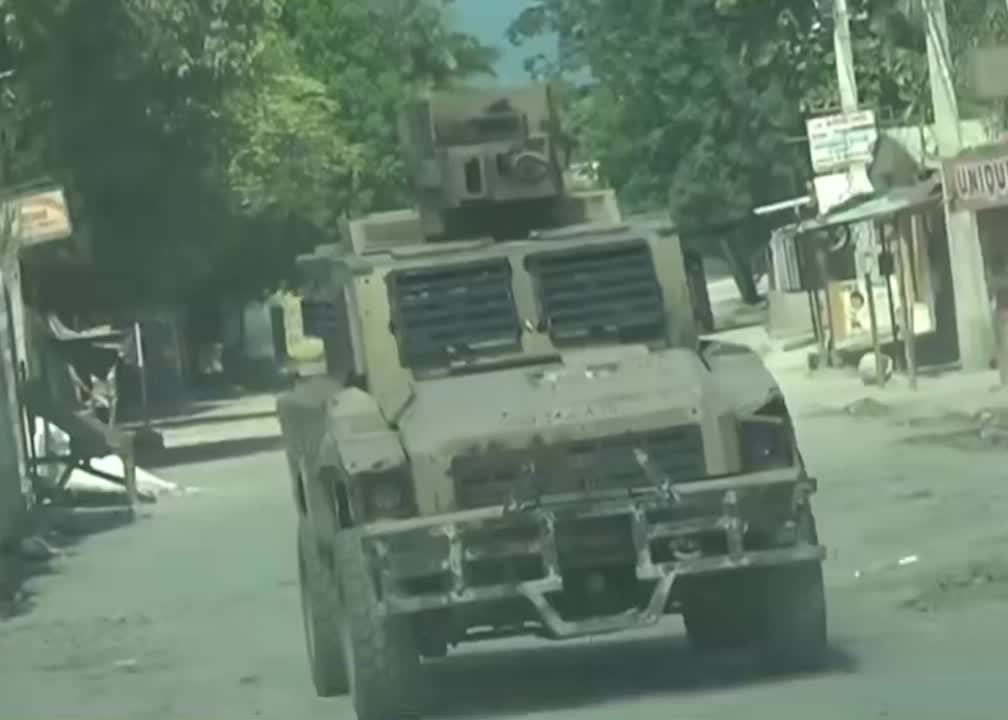
In contested neighbourhoods, local resistance fighters and vigilante groups engage the gangs in shootouts using guns believed by humanitarian workers to also be supplied by Haiti’s US-based diaspora. Gang members now avoid exposing their positions in the open streets and are increasingly fighting house-to-house, blasting through walls as they go.
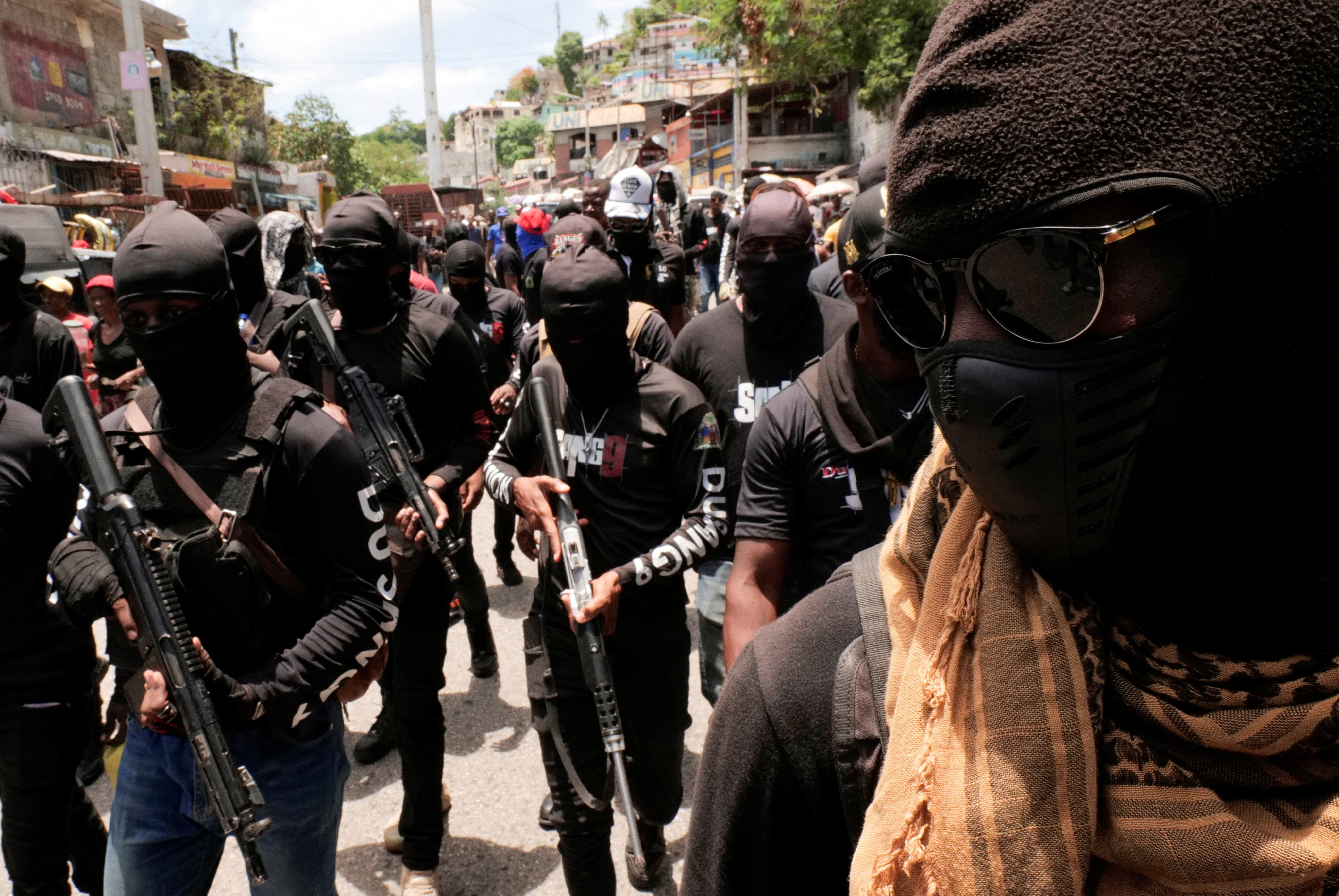
“It’s all about staying alert, and closely monitoring the gangs’ movements,” says one resident. “The self-defence force works in close communication with the police, and on operations they are there guiding them.”
In the political sphere, the transitional presidential council — installed after the collapse of the government of Moïse’s successor Ariel Henry in April 2024 — has been wracked with infighting and corruption allegations, and is unlikely to convene Haiti’s first elections since 2016 before its mandate expires in February. If elections are held, observers worry yet more violence could flare.
“When you do this, you have an immense number of extremely [well] armed and violent actors that will start bargaining again for political power, for political favors, for seats, for allies,” says researcher Le Cour Grandmaison.
At the refugee camp in Port-au-Prince — one of more than 200 nationwide and 80 in the capital — the humanitarian consequences of the gangs’ onslaught are clear.
Children miss meals and latrines overflow. Some residents have set up charcoal stoves indoors, the smoke billowing around the stuffy, unventilated living space. Health workers have documented cases of cholera and tuberculosis.
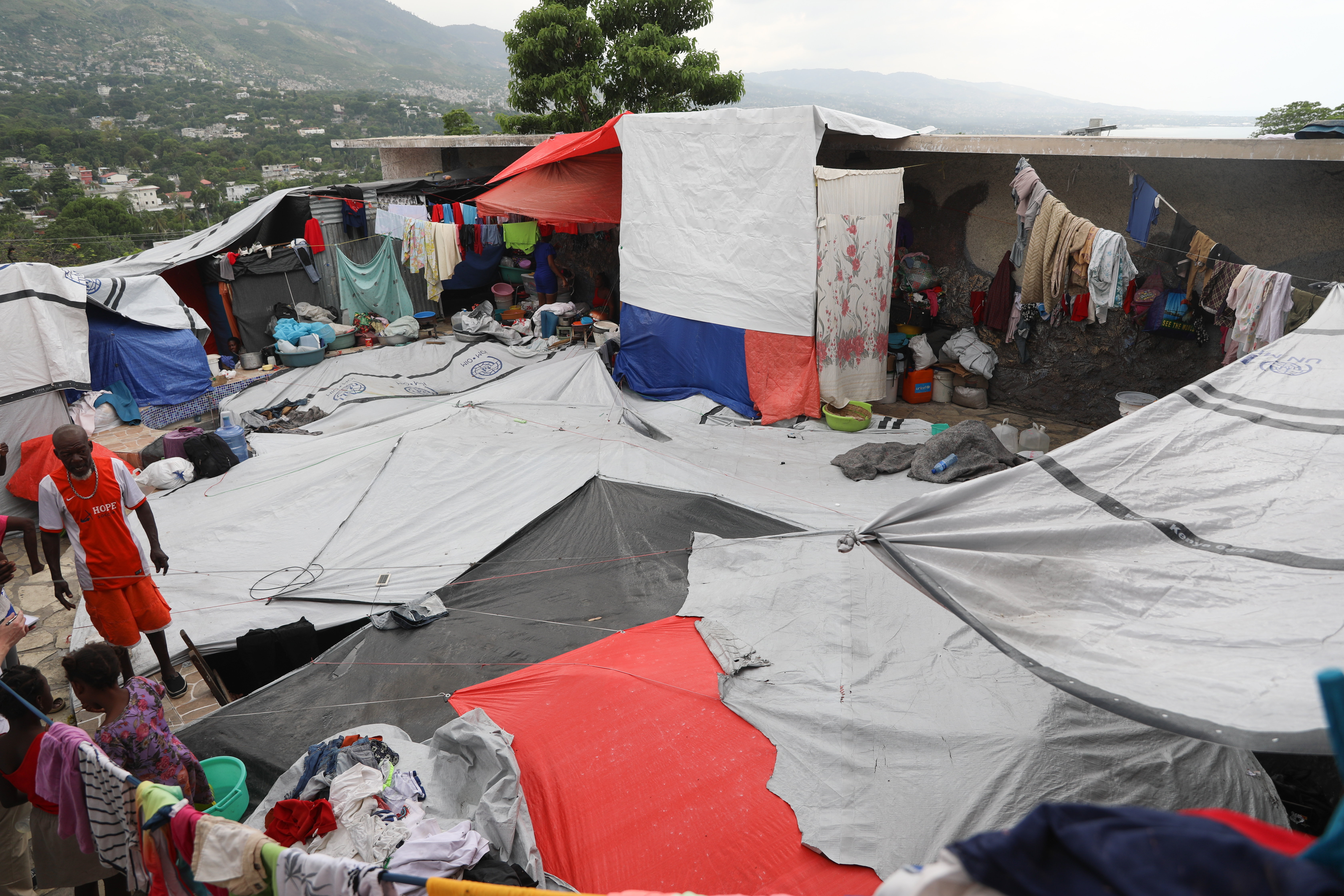
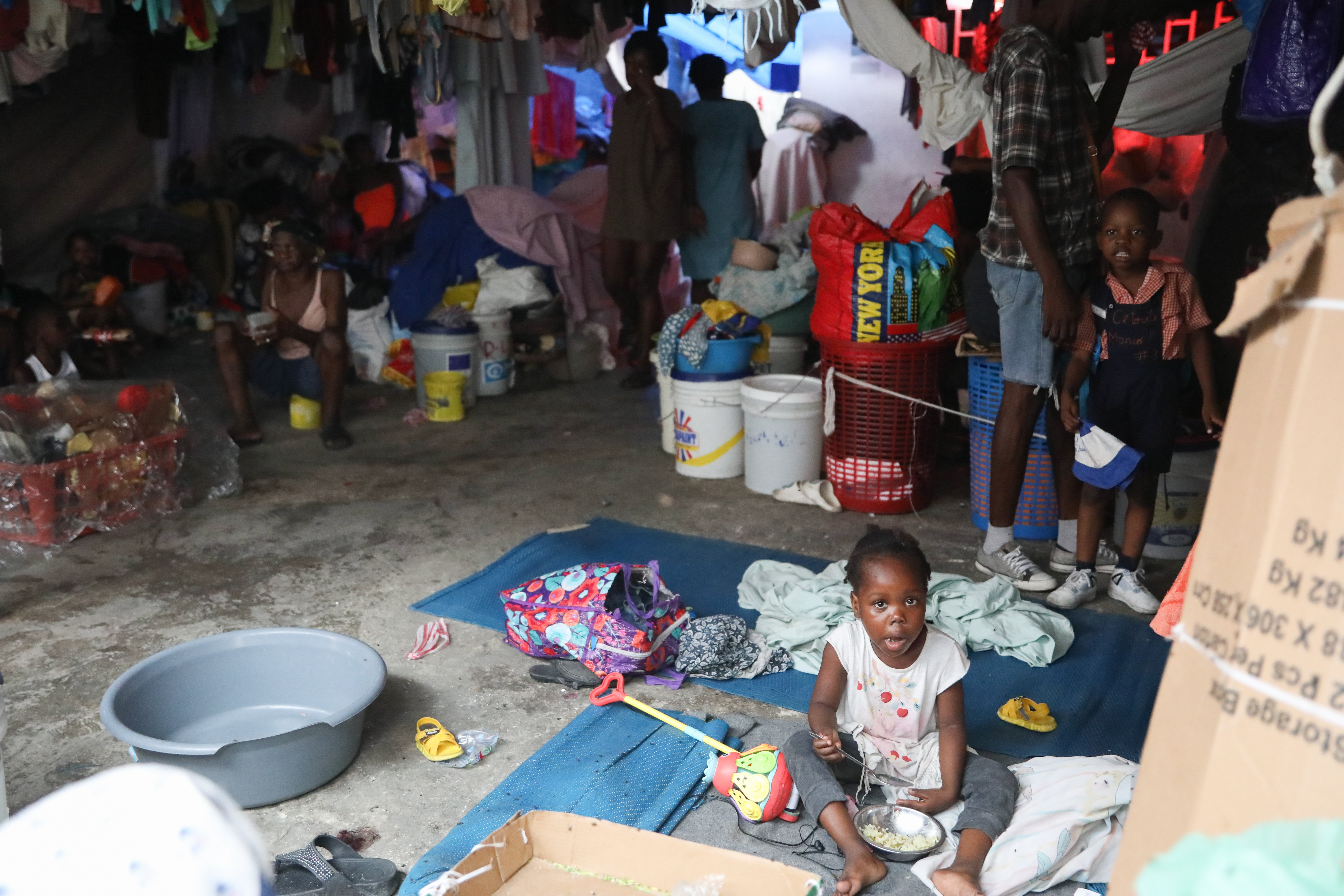
“There is no chance for Haiti without security,” says Medelaine Ernst, who is living in the camp with her three young children after fleeing the Delmas 30 neighborhood. “Things will only get worse for us.”
Leonard Fritz, a community leader in the camp, estimates that tens of people lost their lives in the massacre from which he ran. “It was chaos and panic,” he says, raising his voice above the whirring from an aid helicopter flying overhead.
Volker Türk, the UN High Commissioner for Human Rights, said in June that the “crucial” coming months will “test the international community’s ability to take stronger, more coordinated action” to determine the country’s future stability.
“No more illegal weapons should be allowed to facilitate the horrors unfolding in Haiti.”
Additional research by Casper Baehr, Lars Brull, Alix Convent, Constanza Mottin and Ronan Verbeek of Utrecht University Open-Source Global Justice Investigations Lab.