
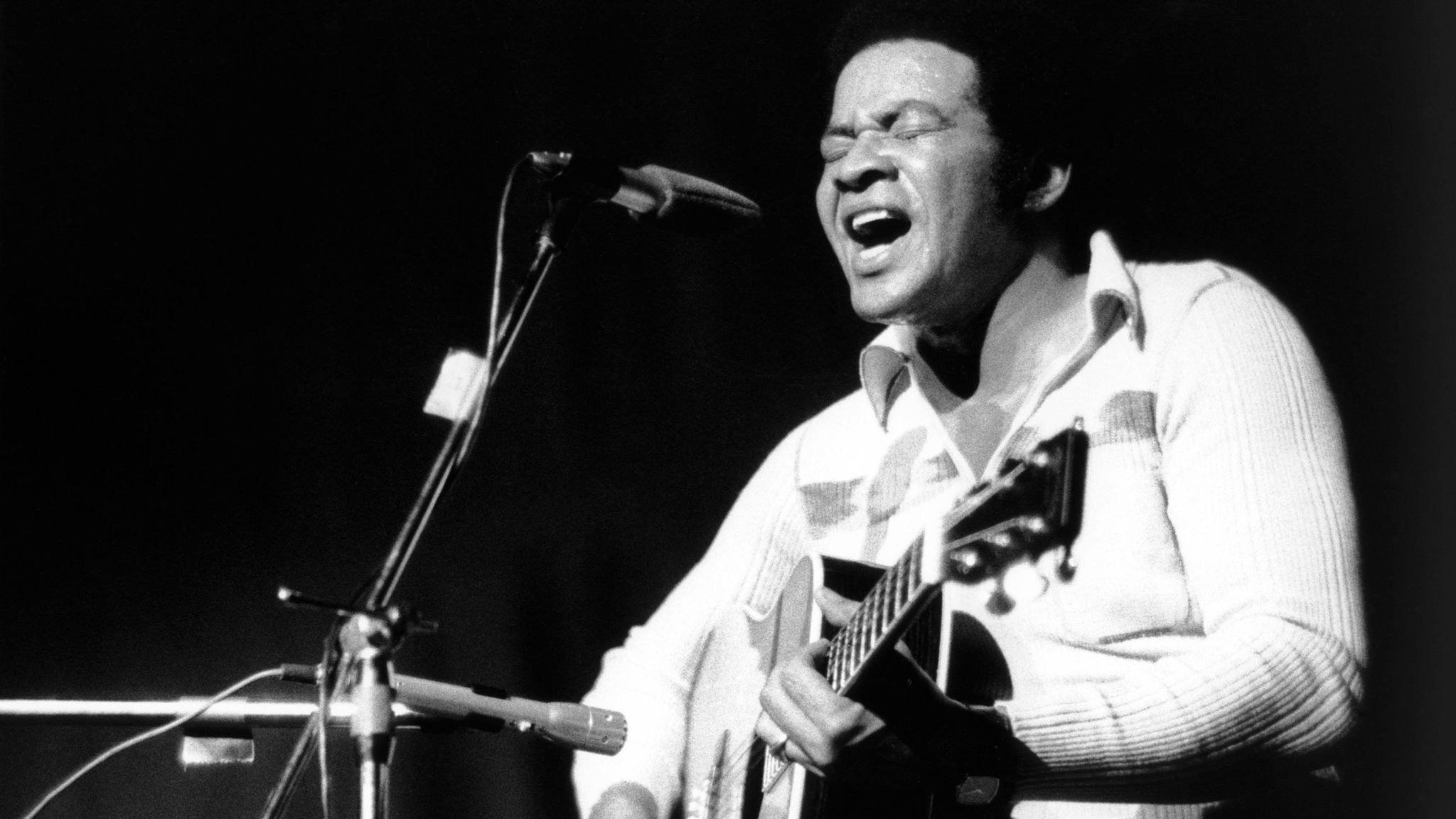
Bill Withers was a late starter by music business standards. At the start of the 1970s he was making aircraft toilet seats in a Los Angeles factory. In his spare time, he enjoyed watching movies on TV and writing songs on guitar. When one inspired the other, Withers, at the age of 32, made a breakthrough as a professional musician, a development even he had not expected. The song that made his name was ‟Ain’t No Sunshine”,and it was riveting, slightly eccentric, in a style all his own. Which perhaps made it odd that dozens of other artists saw fit to cover it. As a result, Withers was never obliged to lay hands on another toilet seat — apart from a gold one.
Withers wrote ‟Ain’t No Sunshine” after watching the 1962 Blake Edwards movie Days of Wine and Roses, in which Jack Lemmon and Lee Remick play a couple who slide into alcoholism. The drama had already inspired one classic melody, Henry Mancini and Johnny Mercer’s Oscar-winning theme, but there was room for another. Withers was vague about why the film triggered his composition, having said: “It’s just something that crossed my mind from watching that movie, and probably something else that happened in my life that I’m not aware of.”
‟Ain’t No Sunshine” was a deceptively simple bluesy ballad about an addictive love, but it was unfinished when his demo tape earned him a contract with Sussex records, which teamed him with the producer Booker T Jones, the organ-playing leader of Booker T & the MG’s.
As the singer wryly explains on a track from Just As I Am, his 1971 debut album, Withers felt out of depth in the studio surrounded by session players such as Stephen Stills, Jim Keltner and three-quarters of Booker T’s dazzling combo, but even while saying it, he sounded relaxed. Perhaps too relaxed, because when it came to recording ‟Ain’t No Sunshine”, he still hadn’t finished the lyrics, so he repeatedly improvised the words ‟I know, I know, I know” as a temporary filler.
Producer Booker T, having played on dozens of hits for the Stax label, realised this curious two-word moaning made the song distinctive, and contrary to Withers’ wishes, the record was completed when the lyrics were not. ‟I was this factory worker... so when they said to leave it like that, I left it,” Withers told Rolling Stone. He did not mention that he was not quite as inexperienced as he seemed, having released a 45 in 1967, a heavily revised version of which became ‟Harlem”, the A-side of the first single of his career proper.
However, DJs preferred its B-side, ‟Ain’t No Sunshine”. Withers’ song with a double negative was a positive success and US music trade magazine Billboard ranked it among the top 25 bestsellers of 1971. Withers’ blue-collar ethic and direct way of communicating was suited to the singer-songwriter genre of the early 1970s, but he was unconvinced that the music business would deliver security and did not quit his day job. Sussex records presented him with a gold toilet seat instead of a gold disc. Withers took this heavy hint.
The 13-year-old Michael Jackson’s keening cover of the songwas in marked contrast to the mature vocal of Withers’ original. Released as a single in the UK in 1972, it hit number eight in the chart. James Brown’s protégée, ‟female preacher” Lyn Collins, wailed it in 1972.It went jazz-funk courtesy of sax star Grover Washington Jr(1971) and flautist Bobbi Humphrey(1974), while bandleader Sivucadelivered a fresh twist with a light-stepping Brazilian pop arrangement (1973). There were highly diverse reggae versions in 1973, one baroque and emotive by Ken Boothe,the other raw and thunderous by Horace Andy.The latter’s rhythm track was used on several further records, including Dr Alimantado’s celebrated “Best Dressed Chicken in Town”(1975), a dub excursion so far removed from ‟Ain’t No Sunshine”, it’s difficult to believe the two were connected.
The song did not stop there. Paul McCartney, Tom Jones, Ladysmith Black Mambazo and Lighthouse Family were among many who felt its call, and it featured in a moody montage in the 1999 film Notting Hill. Withers’ version finally made the UK top 40 in 2009 after it was sung by Shaun Smith in the final of Britain’s Got Talent. ‟Ain’t No Sunshine” might have given Bill Withers a decent living for decades had it been the only song he wrote, but he remained unconvinced about the long and successful career it launched, drily harrumphing: ‟My real life was when I was just a working guy.”
What are your memories of ‘Ain’t No Sunshine’? Let us know in the comments section below.
‘The Life of a Song Volume 2: The fascinating stories behind 50 more of the world’s best-loved songs’, edited by David Cheal and Jan Dalley, is published by Brewer’s.
Music credits: Columbia/Legacy; UMC (Universal Music Catalogue); Universal Records; Universal-Island Records Ltd; CM Blue Note (A92); Welk Music Group — X5 Music Group; Trojan Records; Not Bad Records; Keyman Records
Picture credit: Fin Costello/Redferns