
“Bill Cosby ruined it for everybody,” said Susan Loesser in 2018, after radio stations across the US dropped her father Frank Loesser’s song, “Baby, It’s Cold Outside”, from their winter playlists. Earlier that year disgraced actor Cosby was sentenced to between three and 10 years in prison for drugging and sexually assaulting Andrea Constand in 2004. In a letter to the court, Constand described the terror of being unable to move her arms or legs during the assault. In this context, many listeners were forced to re-evaluate Frank Loesser’s 1944 duet in which a man tries to convince a woman to stay later than planned in his home while she worries: “Say, what’s in this drink?”
Interviewed by NBC that winter, a distressed Susan Loesser said she understood why people were calling her father’s Oscar-winning number “the date-rape song”. She is a feminist and supporter of the #MeToo movement. But she asked listeners to consider the song’s loving origins and historical context.
Born in New York in 1910, Frank Loesser was best known for writing the music and lyrics for the 1950 musical Guys and Dolls. He also wrote songs for Hollywood musicals, and in 1940 he was commandeered by the army to lift morale at camp shows, scoring a wartime hit with the dry wit of “Praise the Lord and Pass the Ammunition”.
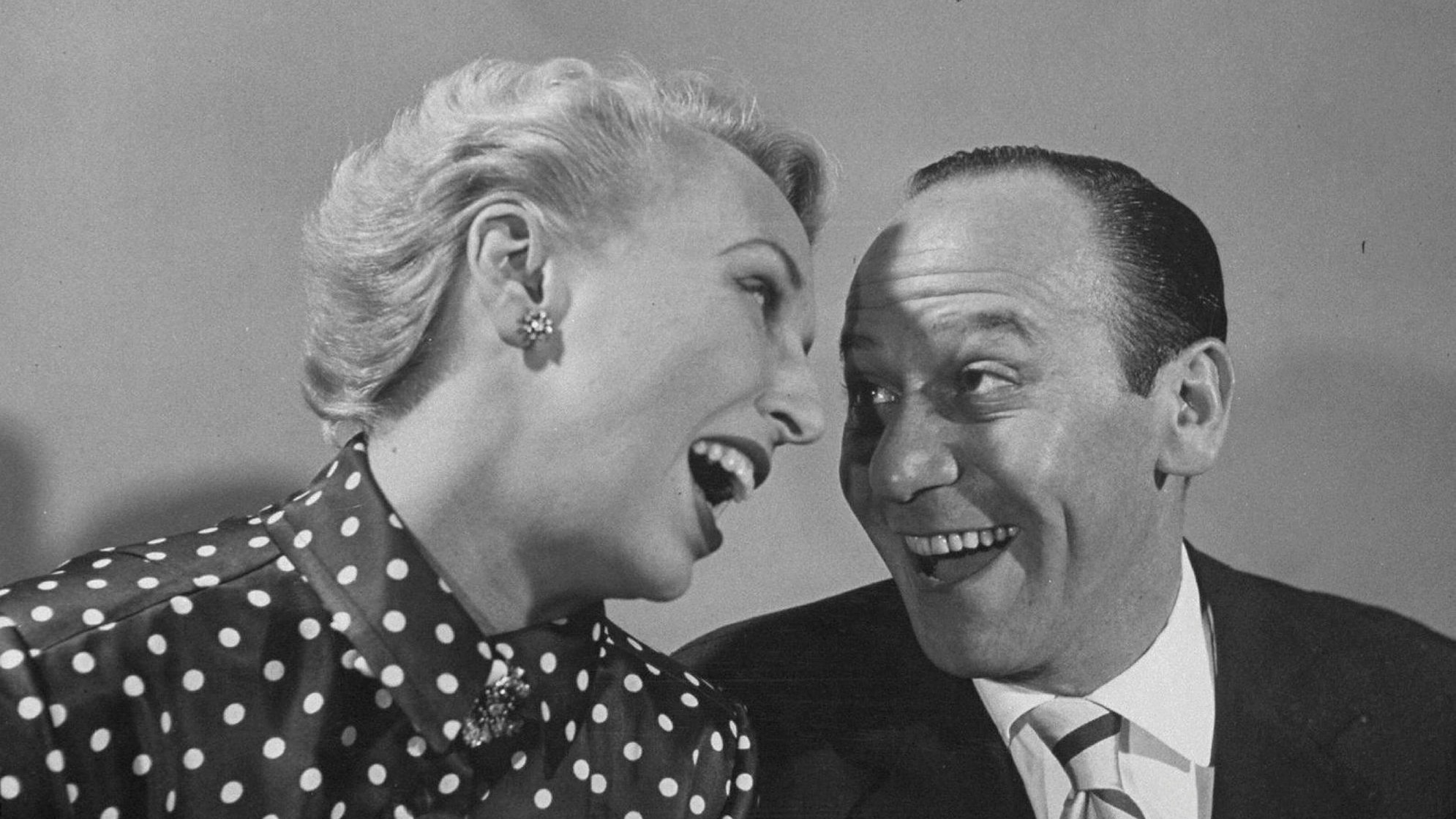
In 1944 he wrote “Baby, It’s Cold Outside”, not for the movies but as a duet for himself and his first wife, nightclub singer Lynn Garland (Susan Loesser’s mother), to sing at a housewarming party. “Flirting was a whole different thing back then,” Susan told NBC. “My father wrote it because he and my mom had parties where everybody had to have an act to entertain the guests.”
Loesser labelled the two vocal parts “mouse” (resisting) and “wolf” (insisting). The mouse frets: “My mother will start to worry”; the wolf replies, “Beautiful, what’s your hurry?” The dialogue goes on: “My father will be pacing the floor/ Listen to the fireplace roar/ So really I’d better scurry/ Beautiful please don’t hurry/ Well maybe just a half a drink more/ I’ll put some records on while I pour…”
In her unfinished memoir, Garland said the song became the couple’s calling card. “We got invited to all the best parties for years on the basis of ‘Baby’,” she wrote. “It was our ticket to caviar and truffles.”
Loesser sold the song’s rights to MGM and the studio quickly dropped it into the 1949 film Neptune’s Daughter, in which Ricardo Montalbán uses it to seduce Esther Williams. The couple’s deftly interlaced vocals are as slick as their choreography in a scene that sees Williams repeatedly slipping a fur stole over her shoulders; Montalbán literally attempts to get his leg over hers on the sofa. But then the scene flips to another household in which Betty Garrett sings the rest of the wolf part to Red Skelton’s mouse, pouncing on top of him in the closing bars.
Today the idea that a man can assume that a woman means “yes” when she says she has to go is, clearly, unacceptable. But defenders of the song argue that the lyrics capture the push-pull of seduction and that in the mid-20th century, a woman had to put up a “playful pretence” of resistance to maintain her reputation — even if she did want “just half a drink more”. It is worth noting that none of the reasons the “mouse” gives for wanting to leave are about her own feelings. She gives a list of relatives, neighbours and gossips who will judge her harshly.
Although the song made some listeners uncomfortable from the off, there was an instant blizzard of 1949 cover versions after Loesser won the Oscar. There was a soft-shoe shuffle by Johnny Mercer and Margaret Whiting; a slightly pacier take by Ella Fitzgerald and Louis Jordan; a bantering recording by Pearl Bailey and Hot Lips Page; and a countrified comic version by country duo Homer and Jethro with June Carter in which the mouse “ain’t a-fixin’ to stay” despite the lure of “saspy-rill-ah”.
In 1961, Ray Charles recorded the definitively super-smooth cover with Betty Carter. Later generations have carolled along to Miss Piggy and Rudolf Nureyev (on The Muppet Show in 1977); Bette Midler and James Caan (1991); Cerys Matthew and Tom Jones (1999); Idina Menzel and Michael Bublé (2014); and Lady Gaga and Joseph Gordon-Levitt, who swapped traditional gender roles in 2013.
The song returned to the movies in 2003 as part of Will Ferrell and Zooey Deschanel’s meet-cute in festive favourite Elf. But a new generation, determined to keep the romance of the original but uncomfortable with its outdated take on consent, began rewriting it. In 2016 Lydia Liza wrote a version in which her duet partner Josiah Lemanski replies “Baby, I’m cool with that” when she says she has to go. John Legend also recorded a 2019 version in which he offers to call his date a taxi.
It’s certainly true that the push/pull of the lyrics is now reflected in the push/pull of the culture wars. As soon as radio stations announced that the song couldn’t stay on their stations, online sales spiked by 70 per cent. Jazz singer Tish Oney wisely suggests we continue to enjoy this “gem” of a song as “a product of its time, replete with stereotypes and now inappropriate jokes” but also as “a theatrical scene all its own”.
What are your thoughts on ‘Baby, It’s Cold Outside’ in the age of #MeToo? Let us know in the comments section below.
‘The Life of a Song Volume 2: The fascinating stories behind 50 more of the world’s best-loved songs’, edited by David Cheal and Jan Dalley, is published by Brewer’s.
Music credits: Capitol; Decca; Yesteryears; KCP; ABC; Atlantic; Universal; Warner; Rock The Cause; Sony
Picture credit: John Swope/Getty Images