
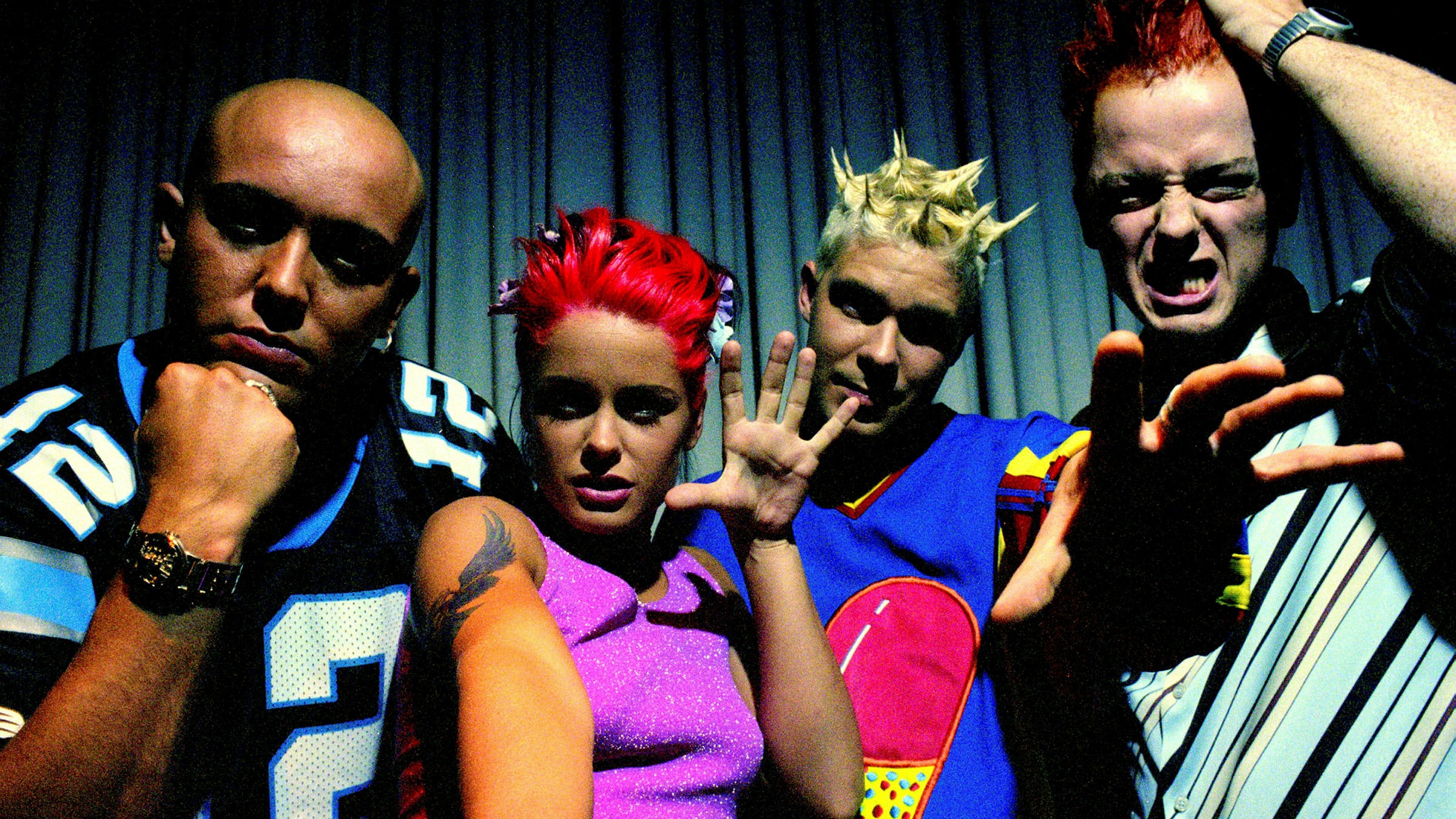
“A cartoonish anthem,” wrote People magazine. “Oh so disposable,” scoffed Entertainment Weekly. Rolling Stone voted it the worst song of the 1990s. This year marks a quarter-century since Danish-Norwegian Europoppers Aqua released “Barbie Girl”, the notorious third single from their debut album Aquarium.
A dancefloor novelty, the song casts lead singer Lene Nystrom as the eponymous doll, splashing about in smutty cosplay with her bandmate René Dif (Ken). “Dress me up, make it tight, I’m your dolly,” she implores in a squeaky soprano. “Kiss me here, touch me there, hanky-panky,” comes the leering response. Underpinning them is a stomping house beat, all smothered in synthesised harpsichord and a carnival-style percussion sample. It’s bubblegum heaven — catnip for the school disco DJ.
Taken at face value, “Barbie Girl” is an easy target. It’s an unashamed earworm, perfectly encapsulating the plastic-fantastic commercialism of the era. But that is, arguably, the point: “The song ‘Barbie Girl’ is a social comment,” read a footnote on the back of the Aquarium CD case. By verbalising what people secretly do with Barbie, and hinting at an exploitative relationship with Ken (“Come jump in, bimbo friend”), Aqua were poking fun at a blue-chip brand built on the twin pillars of wholesome play and female aspiration.
The parody is all the more potent when you consider Barbie’s dubious feminist credentials: since its conception in the late 1950s, the doll has been plagued by accusations of gender stereotyping (see 1992’s “Math class is tough” debacle) and perpetuating unrealistic beauty standards. In this context, it’s hard not to interpret “Barbie Girl” as a gloriously camp diss track.
Of course, by adding a disclaimer, Aqua may have simply been covering their backs — and we’ll get on to that in a moment. Certainly their label’s A&R director in the US, Carmen Cacciatore, knew what he was doing. Although Aqua had already released two singles from Aquarium in Denmark, they launched their US offensive with, in Cacciatore’s words, “what we knew would be the impact cut, taking a part of American culture with Barbie”. And here marks the first in a series of “Barbie Girl” ironies: Aqua had harnessed the very brand they were subverting to sell records. And boy did they sell. “It is the most mass-appeal record I’ve seen in my 17 years in this business,” said one US radio host. In the UK, “Barbie Girl” stayed at number one for four weeks, becoming the second-bestselling record of 1997.
Alas, Barbie’s manufacturer Mattel was unimpressed. It sued for copyright infringement, alleging that the song associated “sexual and other unsavoury themes” with its product. (Note here irony number two: Barbie was modelled on a racy German doll called Lilli, the title character in a Playboy-style comic strip.) MCA countersued for defamation, igniting a legal battle that would last almost six years and end up at the Supreme Court (where it was dismissed).
Judge Alex Kozinski of the Ninth US Circuit Court of Appeals provided the litigatory highlight when, in upholding an earlier decision that “Barbie Girl” was a parody and therefore protected under the doctrine of “nominative use”, he noted: “If we see a painting titled ‘Campbell’s Chicken Noodle Soup’, we’re unlikely to believe that Campbell’s has branched into the art business.” His conclusion: “The parties are advised to chill.”
The final and most delicious irony in the “Barbie Girl” saga came six years later when Mattel adapted the song for one of its own advertising campaigns. The Barbie Fashionistas commercial — choreographed by JaQuel Knight of “Single Ladies” fame, no less — had dolls bopping to a re-recorded version featuring the lyrics: “You can be a star, no matter who you are.” Mattel’s wasn’t the only adaptation to completely miss the point. In 2014 American rapper Ludacris released “Party Girls”, whose chorus of “Titties plastic, ass fantastic” reads like a masterclass in objectification. (You’ll be shocked to learn that the writing team were all men.) Even US singer-songwriter Ava Max’s 2018 “feminist revamp” excludes poor Barbie from Max’s definition of success: “Not your Barbie girl,” she sings defiantly. “I’m livin’ in my own world.”
Neither song came close to matching the popularity of Aqua’s original, which in February joined YouTube’s coveted “billion view club”. With such extraordinary exposure in mind, here’s a hot take to finish: in December 1997, just a few months after the song was released, Mattel remodelled Barbie to make her proportions more realistic. Hiding in plain sight, is “Barbie Girl” the world’s most underrated protest song?
What are your memories of ‘Barbie Girl’? Let us know in the comments section below.
‘The Life of a Song Volume 2: The fascinating stories behind 50 more of the world’s best-loved songs’, edited by David Cheal and Jan Dalley, is published by Brewer’s.
Music credits: Universal; Def Jam; Atlantic