
It’s not actually a carol, in the modern sense of the word: “Corpus Christi Carol” makes no mention of the nativity. Its enigmatic verses come from a time — the late middle ages — when a “carol” was a festive or celebratory song, one that was sung all year round, or on feast days; in the Christian calendar, Corpus Christi (“the body of Christ”) falls in June and celebrates the real presence of the body, blood and soul of Christ in the Eucharist. Nevertheless, “Corpus Christi Carol” is often sung at Christmas, and has featured in seasonal collections by choirs such as the Choir of King’s College Cambridge.So it is a carol. Sort of. And it is curious and baffling.
To begin at the beginning: in late medieval England there lived a grocer by the name of Richard Hill. He kept a “commonplace book” in which he wrote down all manner of things: learned advice, pious reflections, poems, recipes, cures (a cut could apparently be treated with a pint of ale, though it’s not clear whether the ale was to be applied to the wound, or drunk), and songs, including “Corpus Christi Carol”. Only the lyric survives; Hill made no record of any music.
Centuries passed. In the mid-19th century, Hill’s book was discovered stuffed behind a bookcase; it ended up in Balliol College, Oxford, where readers and scholars were struck by “Corpus Christi Carol”. Its lines are a curious conflation of Christian imagery and Arthurian legend: the refrain (or burden) laments that a “falcon hath borne my make [which probably means ‘mate’] away”, while the verses tell of an orchard, a hall, a bed, a knight whose wounds bleed constantly, a weeping maid, and a stone on which is written “Corpus Christi”.
What does it all mean? Reams have been devoted to unpicking it. The knight could be Christ, or perhaps the Fisher King of Arthurian myth, charged with keeping the Holy Grail, but blighted with a wound that never heals. The maid could be Mary, mother of Christ. It is a riddle. And it is one that has been a magnet to composers and singers.
Among the earliest to put the words to music was British composer Peter Warlock (his real name was Heseltine but his fascination with the occult led him to use the pseudonym Warlock), in a setting (c.1919) that channels the weirdness of the lyric — it is thoroughly spooky. A recording from 1928 by the English Singersseems to speak from another realm.
In 1933, a young Benjamin Britten, then still a student at the Royal College of Music, included a sparkling setting of “Corpus Christi Carol” in his choral composition A Boy Was Born, alongside carols such as “In the Bleak Midwinter”, thus firmly setting it in the context of Christmas and the nativity. This has become the “standard” version, the one most widely performed by choirs. Some years later, Britten arranged it for piano and solo treble voice; a notably pure and brilliant-sounding recording from 1961 features the young singer John Hahessywith Britten at the piano (he dedicated the setting to Hahessy, who went on to become a tenor performing under the name John Elwes).
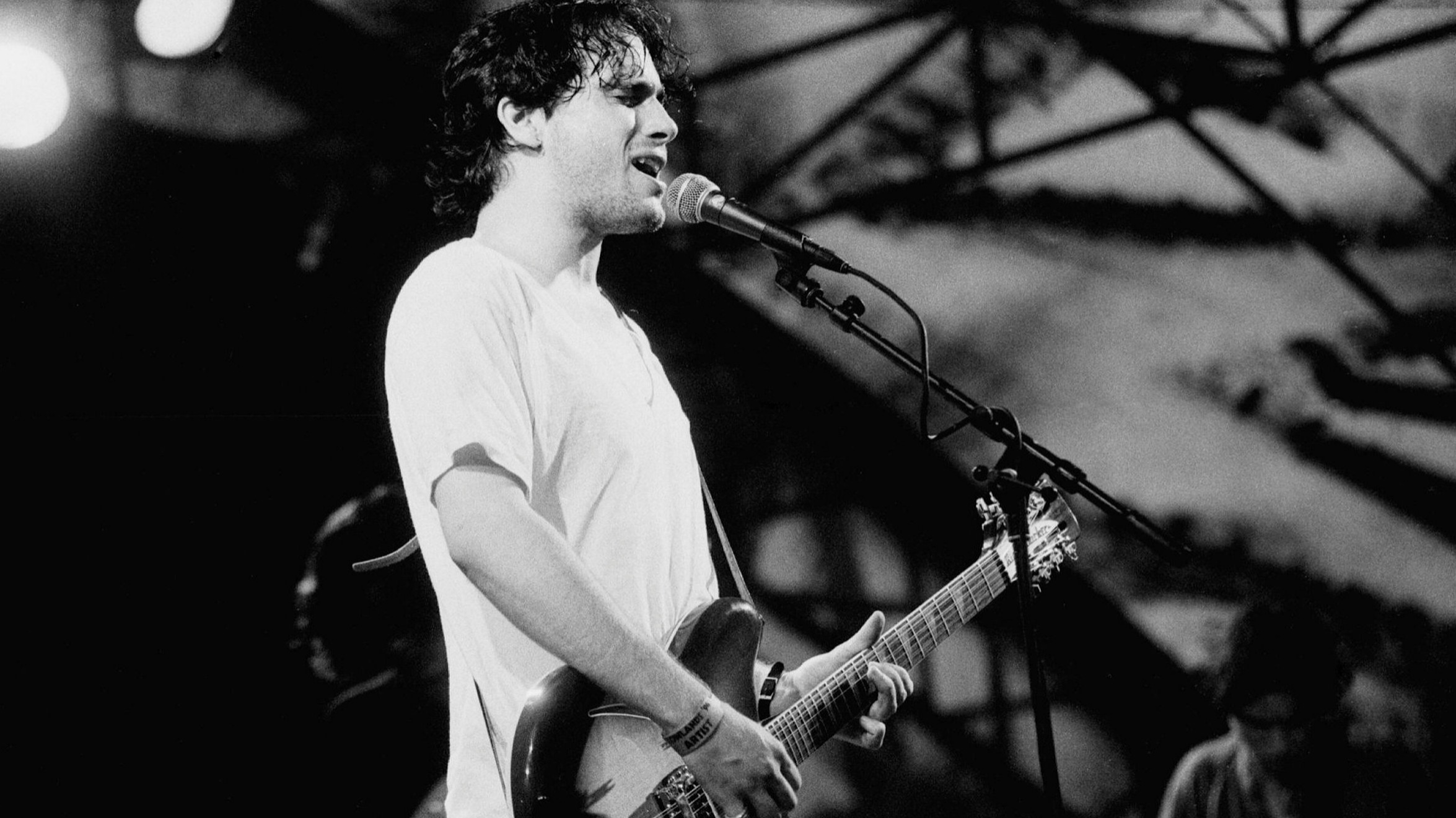
Hahessy showed that it requires a voice of great purity to do justice to Britten’s solo setting, and Jeff Buckley’s recordingon his 1994 album Grace is a match made in heaven. With sparse, ringing electric guitar accompaniment and a suitably ecclesiastical echo, Buckley soars and swoops in perhaps the best known recording of “Corpus Christi Carol”.
Other composers have tackled the lyric: among them was Judith Bingham,in a commission for the Queen’s diamond jubilee in 2012, who created a rich, dramatic, polyphonic piece for choir and organ.
The life of this song is one with many tangents. Over the centuries, folk songs using similar lyrics and imagery have grown and flourished. Their titles include “Down in Yon Forest”, “The Falcon Carol”, “Over Yonder’s a Park”, “All Bells in Paradise”. These ancient songs feature familiar imagery: a hall draped in red, purple, gold, a falcon, a bed, a stone, blood flowing; in some of them, the wounded knight becomes the wounded Christ, while Arthurian imagery persists in the presence of a thorn, perhaps the Glastonbury thorn of legend. In “Down in Yon Forest”, a hound licks the blood that flows under the bed. Unlike “Corpus Christi Carol”, many of these songs make direct reference to the birth of Christ: some versions seem to darken the nativity with a premonition experienced by Mary of the death of Christ.
Ralph Vaughan Williams collected folk songs and set to music a version of “Down in Yon Forest” which he had heard in 1908 in Castleton, Derbyshire (some versions of the song are known as “The Castleton Carol”), a setting that is now a fixture in the repertoire of vocal ensembles such as Harry Christophers’ The Sixteen.More austerely, the folk singer A.L. Lloydrecorded it in 1953, solo a cappella, laying bare the images and visions that characterise this perplexing song and its many variations.
What are your memories of ‘Corpus Christi Carol’? What does it mean? Let us know in the comments section below.
‘The Life of a Song Volume 2: The fascinating stories behind 50 more of the world’s best-loved songs’, edited by David Cheal and Jan Dalley, is published by Brewer’s.
Music credits: Divine Art; Decca; Columbia; Priory; Coro; Fellside Recordings
Picture credit: Frans Schellekens/Redferns/Getty Images