
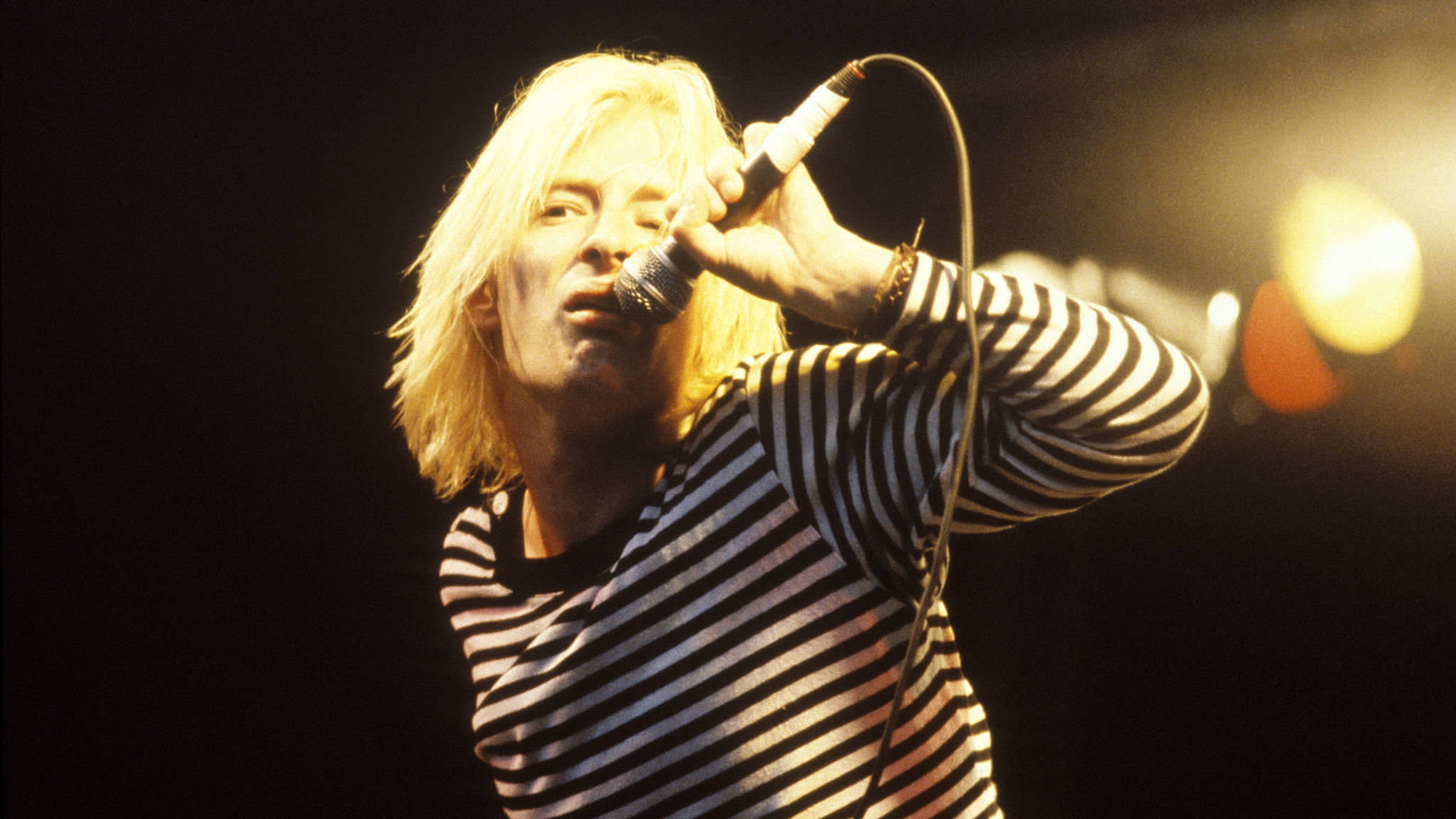
In September 1992, DJs at BBC Radio 1 almost irrevocably compromised the future of British rock music when they refused to give airtime to a fledgling band called Radiohead, whose violently lugubrious debut single, “Creep”, was deemed “too depressing” for the wider listenership.
The fact that the song has now clocked up combined plays on Spotify and YouTube of nearly 1bn suggests otherwise, but it’s easy to see where the DJs were coming from — after all, this angsty song oscillates between self-pitying insecurity and an off-puttingly earnest reverence for an unknown girl. The decision to make Radiohead all but radio-dead unsurprisingly had a deleterious impact on sales, and “Creep” charted at a lowly 78 in the UK.
But, with an element of fitting nominative determinism, “Creep” slowly began to gain traction globally in 1993. First in Israel — where it became such a huge hit that it gave Radiohead the platform to play their first international show — then New Zealand, Scandinavia and finally the US. While “breaking America” had been a white whale for many British bands, Radiohead found a far more receptive audience there, as “Creep” chimed with grungy American Gen X outsider anthems such as Nirvana’s “Smells Like Teen Spirit”, Pearl Jam’s “Alive” and Beck’s “Loser”.
Radiohead re-released “Creep” in the UK in the autumn of 1993, where it reached number 7. But the song’s newfound mass appeal was a Faustian trade-off of sorts; “Creep” was not an effort the group were particularly proud of, but their career could only develop off the back of its success. Radiohead may have been embarrassed by its rawness, but, for many others, “Creep” was a winning introduction to singer Thom Yorke’s sublime vocal range and the compositional nous of guitarists Jonny Greenwood and Ed O’Brien — from the creeping arpeggiated intro to the salvo of dead notes and power chords in the chorus.
Still, such was their resentment for the song that they went so far as to bitterly denounce it in their 1994 single “My Iron Lung” with the line: “This is our new song/Just like the last one/A total waste of time”. And by the late 1990s, Radiohead refused to play the track and were known to hurl profanities at audiences who requested it.
It must have come as some kind of perverse relief, then, when Radiohead were told that “Creep” wasn’t entirely their song at all, when they were successfully sued by The Hollies for lifting the chord progression from their 1972 classic, “The Air That I Breathe”. And in a sort of mise en abyme of plagiarism, Radiohead’s legal team displayed no sense of irony in later trying to sue singer Lana Del Rey for her 2017 song “Get Free”, which also employs the same chord sequence.
While Radiohead have spent much of the past three decades renouncing “Creep”, dozens of other artists have been only too happy to add it to their repertoire; for better — Prince’s searing eight-minute aching, electrified live rendition; or worse — Moby’s bewildering live electro-orchestral-metal mélange; or much worse — Robbie Williams’s irredeemably twee big-band cover.
Less ostentatiously, cover queen Tori Amos gave “Creep” the emotive slow piano treatment, and Irish miserabilist Damien Rice — one of the few who can match Yorke’s ability to imbue his vocals with authentic pain — turned the song into a moving acoustic lament.
Others opted to play up to the disquieting tone of the original, not least Macy Gray and Scala & Kolacny Brothers, whose respective efforts incorporated dark, ethereal elements: a gothic organ in the former, and a whole choir in the latter.
But perhaps the most bizarrely compelling cover comes courtesy of the actor and hobbying singer Jim Carrey, who performed “Creep” at an open-mic event in New York in 2011 — there aren’t many who can sell the line “I’m a creep” quite as convincingly as he does. An even stranger cover can be found online in the form of an inspired parody version that features a man singing “Creep” in the voice of Kermit the Frog with an altered chorus of “I am green”.
Not to be outdone by an impersonation of a frog puppet, Radiohead eventually yielded to their fans’ implorations and began to reinstate “Creep” in their live shows from 2016. Even the infamously saturnine Yorke couldn’t help but grin in delight while performing at Glastonbury in 2017, as thousands of revellers chanted the track’s refrain back at him. Maybe he finally felt like he belonged.
What are your memories of ‘Creep’? Let us know in the comments section below.
‘The Life of a Song Volume 2: The fascinating stories behind 50 more of the world’s best-loved songs’, edited by David Cheal and Jan Dalley, is published by Brewer’s.
Music credits: XL Recordings; Parlophone UK; Polydor Records; Caroline International (S&D); Rhino
Picture credit: Michel Linssen/Redferns