
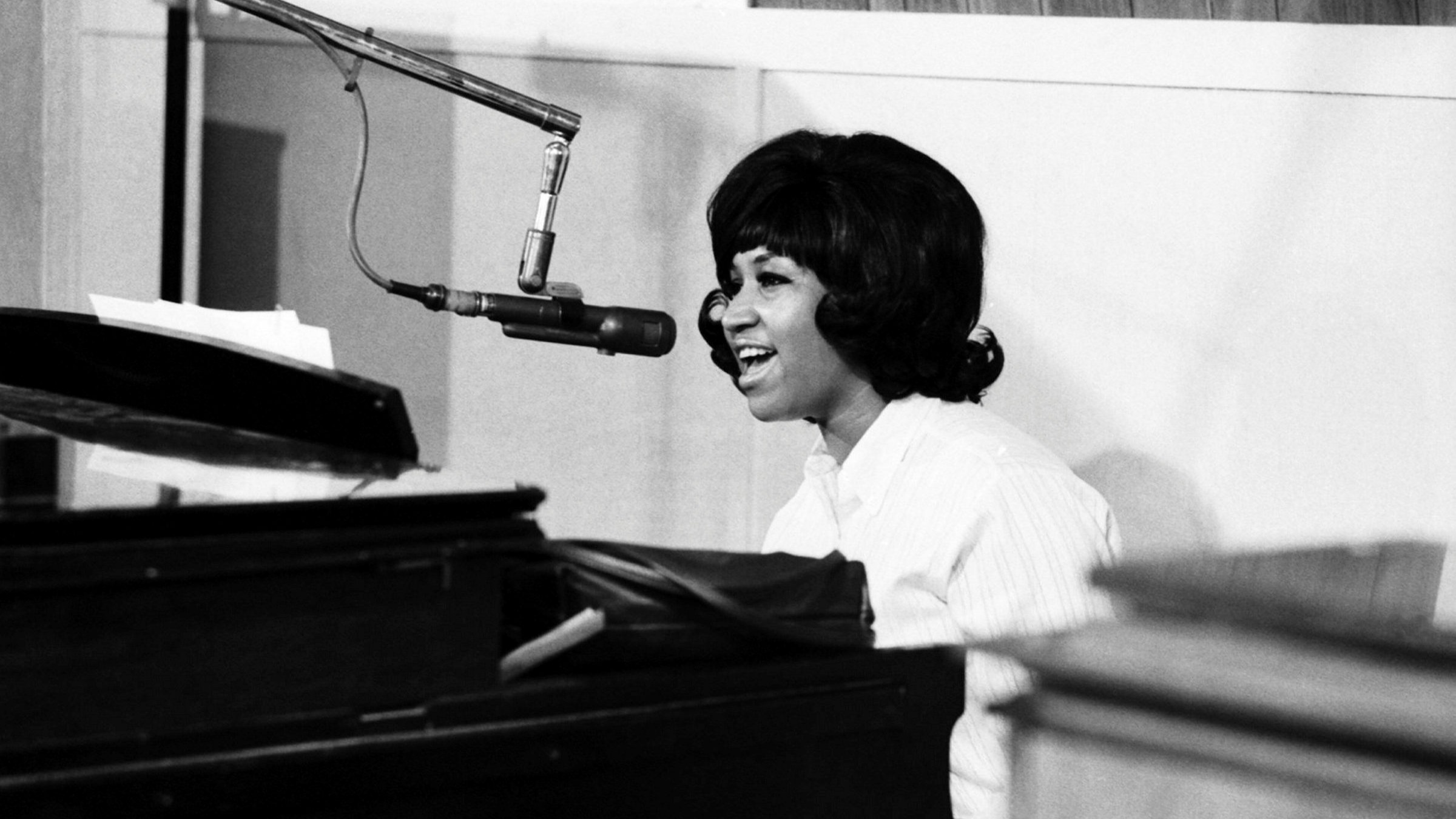
It was January 1967, and Aretha Franklin was in Muscle Shoals, Alabama, a small town on the banks of the Tennessee River in the northwest corner of the state. She had signed at the end of the previous year to Atlantic, at that point the powerhouse label of soul and R&B, and for her first Atlantic session, the producer Jerry Wexler had taken her down to FAME Studios, where a statistically unlikely agglomeration of the world’s greatest session players were based — the Muscle Shoals Rhythm Section, a group of white players whose subtle blend of country, soul and R&B provided the backdrop against which scores of black singers produced their greatest work.
The first song they cut was “I Never Loved a Man (The Way I Love You)”,written by Ronnie Shannon, which was to be the A-side of Aretha’s first Atlantic single. The B-side was to be a song written by a pair of young white writers, Dan Penn and Chips Moman, called “Do Right Woman, Do Right Man”, a gentle, beautiful piece of music whose lyrics demanded mutual respect between the partners in a relationship: “They say that it’s a man’s world / But you can’t prove that by me / And as long as we’re together, baby / Show some respect for me.”
That second part of the session, the recording of “Do Right Woman”, did not go well. Franklin had argued with her husband, Ted White, and could not get the track down. “It didn’t sound right,” Penn told the writer John Pidgeon in 1991. “She wouldn't even sing it... She couldn’t quite learn it in time and it was like the last thrown-in thing and, man, it was dreadful.”
With the song only partially completed, Franklin and White returned to New York, where Franklin returned to it, and created something startling. “She had put her sisters on it, she’d sang it over, she’d played piano herself, and I realised then you can make anything out of anything with a lot of tracks,” Penn said. “And it was such a wonderful record when they played it back.”
Franklin’s performance— controlled but heartfelt, and with a sense of undeniable yearning — was perfect, and so was the backing, Spooner Oldham’s organ and Franklin’s piano blending in perfect sympathy. And though not as revolutionary in message as Franklin’s version of Otis Redding’s “Respect”, it was a record that seemed to symbolise the hope that was emerging at that point: a song about how men and women might treat each other well, written by white men and sung by a black woman.
Every soul singer worth their salty tears has tried their hand at “Do Right Woman, Do Right Man”. Etta James— with flute in the mix, for no apparent reason — performed it assertively; Otis Clay,with a voice like syrup, took it back to church to testify, though his gender switch, pleading that women show some respect to men, is a little awkward; William Bellused the song to profess how he would respect his woman, with more fortunate results. Esther Phillips’s versionwould be a mile better without the saccharine strings ladled over it.
Just as interesting was when the song crossed back to white artists. The Flying Burrito Brothers,with Gram Parsons at the helm, cut it as a country waltz, with weeping pedal steel and lonesome Appalachian harmonies. Not all country versions were so sympathetic: Willie Nelson’s 1982 cover had fabulous delivery by Nelson, and an instrumental arrangement that was horribly glossy, all sheen and no grit. The less said about Barbara Mandrell’shoedown version — a hit on the country charts — the better. But Delaney & Bonnie— a group who mixed black and white musical traditions in the way the Muscle Shoals players did — found the same depth and passion in the song Aretha had: theirs is plainly a version by a band steeped in rock, but it is deep in soul, too.
One of the ironies of “Do Right Woman, Do Right Man” is that almost all versions get its chorus wrong: “If you want a do right, all day woman / You’ve got to be a do right, all night man,” they sing, rather undercutting the song’s message by suggesting that a man can have his cleaning and cooking done, if only he is willing to make the ultimate sacrifice of having it off loads. In fact, Aretha — listen carefully — had been singing about a “home days woman” and a “home nights man”, actually suggesting both partners be committed to being together. In 1994, Pennrecorded his own version — a gorgeous little swing of a thing, with no horns, pitched midway between country and soul — and settled the argument: he took the song “home”.
What are your memories of ‘Do Right Woman, Do Right Man’? Let us know in the comments below.
‘The Life of a Song Volume 2: The stories behind 50 more of the world’s best-loved songs’, edited by David Cheal and Jan Dalley, is published by Brewer’s
Music credits: Atlantic; Maximuze; Warner Music Group - X5 Music Group; Stax; Legacy Recordings; UMC (Universal Music Catalogue); StreamWorld Entertainment Classics; Rhino/Elektra
Picture credit: David Gahr/Getty Images