
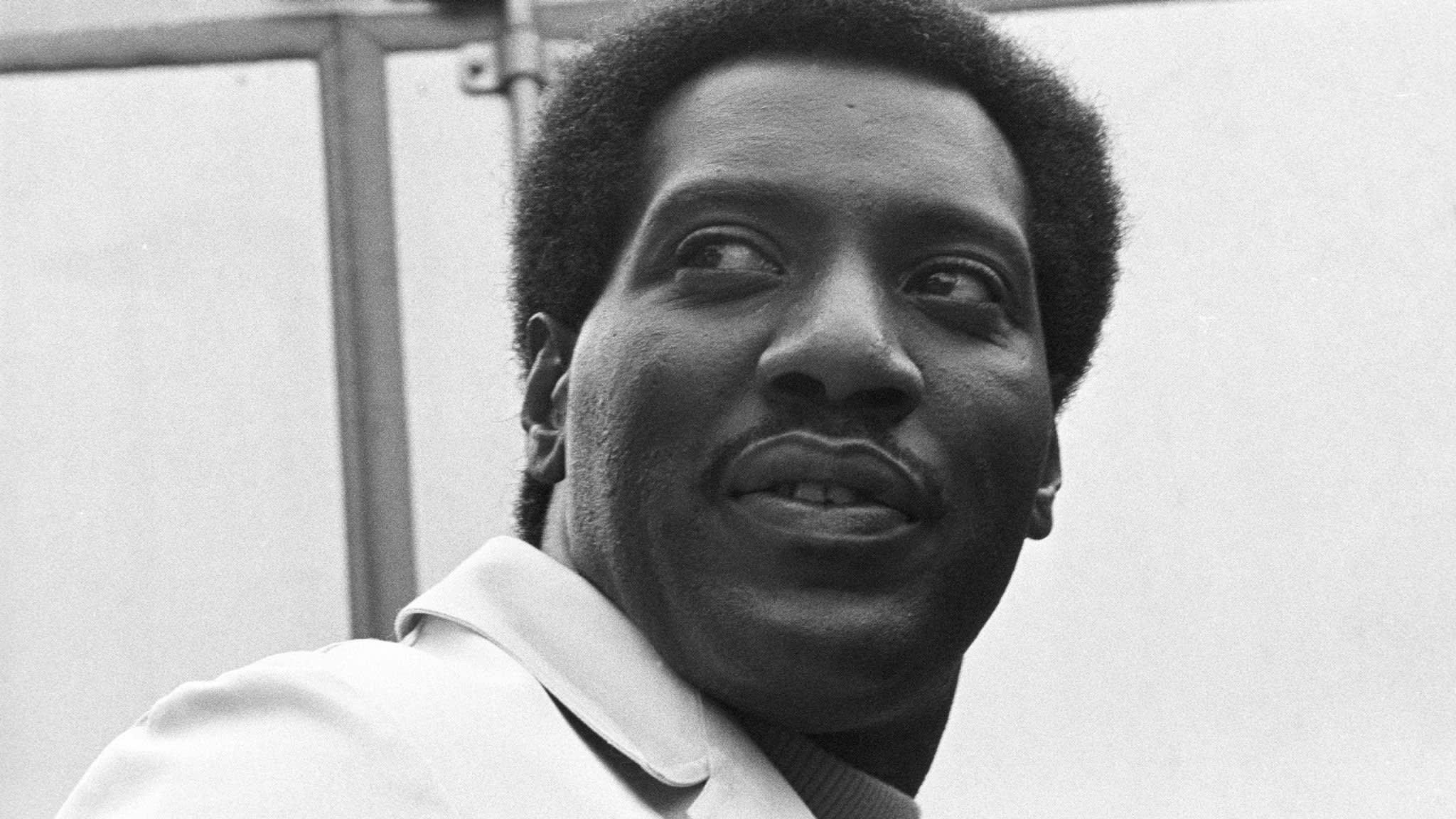
“This is my first million seller,” announced Otis Redding to nervous-looking studio bosses in early December 1967. He was referring to his upcoming record, “(Sittin’ On) The Dock of the Bay”, which would indeed prove to be his first seven-figure release, eventually selling several times that amount. It would also be the last song he ever worked on. Two days after his second recording session on this breezy new ballad, he was dead — killed in a light-aircraft crash.
Executives at Atlantic Records cynically requested that a new song be released immediately. Redding’s collaborator and studio guitarist, and the song’s co-writer, Steve Cropper, was forced to set aside his grief and transform the rough cuts of “The Dock of the Bay” into a coherent track in just 24 hours. The result was an unassuming yet near-perfect composition that would serve as a fitting legacy for one of soul’s greatest talents.
But “The Dock of the Bay” wasn’t really a soul song in the conventional sense. In the summer of 1967, Redding immersed himself in The Beatles’ Sgt Pepper and was inspired by the band’s devotion to stress-testing the limits of popular music. “It’s time for me to change my music,” said Redding, as his wife and employers voiced concerns about his “poppy” new direction which took him away from his roots in soul and R&B.
That autumn Redding was recovering after a punishing touring schedule on a houseboat in Sausalito, across the bay from San Francisco, owned by promoter Bill Graham. It was there, idly watching the ferries sail to-and-from the harbour, that he conceived of that scene-setting first verse and the basic chords for “The Dock of the Bay”. Back in the studio, he asked Cropper to flesh out the melody and the brilliant, bittersweet lyrics.
Lines such as “Sittin’ here resting my bones/ And this loneliness won’t leave me alone” capture the dichotomy of solitude as both a restorative and alienating experience. But the swaying bassline, tender vocals and coastal sound effects belie the narrator’s lonesomeness to such an extent that one scarcely registers the profound melancholy of lines such as “I had nothin’ to live for”. Still, that carefree outro whistle — an ad hoc placeholder for a spoken segment that Redding was intending to close the song with, but which he forgot — suggests that serenity ultimately conquers the angst.
The easy-going, genre-transcending appeal of “The Dock of the Bay” is reflected in the dozens of tonally diverse covers that have emerged over the past 50 years. Or tonally absent in the case of Bob Dylan, who, at a gig in the early 1990s, performed a track that is only identifiable as “The Dock of the Bay” through the accompaniment.
Neil Young was more committed in his harmonica-heavy live efforts, which he played while touring with Booker T. & the M.G.’s — the band comprised of Cropper and other musicians who featured on the original.
Pearl Jam have also repeatedly covered the track live; on one occasion the crowd got so carried away that they almost drowned out frontman Eddie Vedder. When audible, his raspy voice beautifully accentuated the song’s underlying poignancy. Willie Nelson and Waylon Jennings, meanwhile, made things a little too maudlin in their affecting if overly doleful attempt from 1982.
By contrast, Peggy Lee’s 1969 version is undermined by the busy up-tempo brass and drum accompaniment, which strips away the original’s meditativeness. More jarring still is the camp version by T-Rex and Gloria Jones from 1975 which features electronic sound effects. Last year, the rapper A$AP Rocky recorded an unexpectedly restrained and soulful cover for Australian radio station Triple J.
And in 2013, Justin Timberlake performed the song at a White House event along with Cropper. The rendition clearly won the approval of Barack Obama, who can be seen dancing in his seat and singing along.
The video of Timberlake’s performance drew comments from people arguing that it wasn’t appropriate for a white artist to cover the track. While this is rather a reductive outlook — after all, it was co-written by a white man — it’s worth remembering that “The Dock of the Bay” was perhaps an indirect product of the 1960s Civil Rights movement. The tale of a black man leaving Georgia to “waste time” in California can’t help but tacitly underline the disparity in African Americans’ experiences at the time, between the relatively tranquil West Coast, and the febrile South.
What are your memories of ‘(Sittin’ On) The Dock of the Bay’? Let us know in the comments section below.
‘The Life of a Song Volume 2: The fascinating stories behind 50 more of the world’s best-loved songs’, edited by David Cheal and Jan Dalley, is published by Brewer’s.
Music credits: Warner Music Group — X5 Music Group; EMI Catalogue; Left Field Media; Buddha Records; Capitol Catalog; Demon
Picture credit: Alamy