
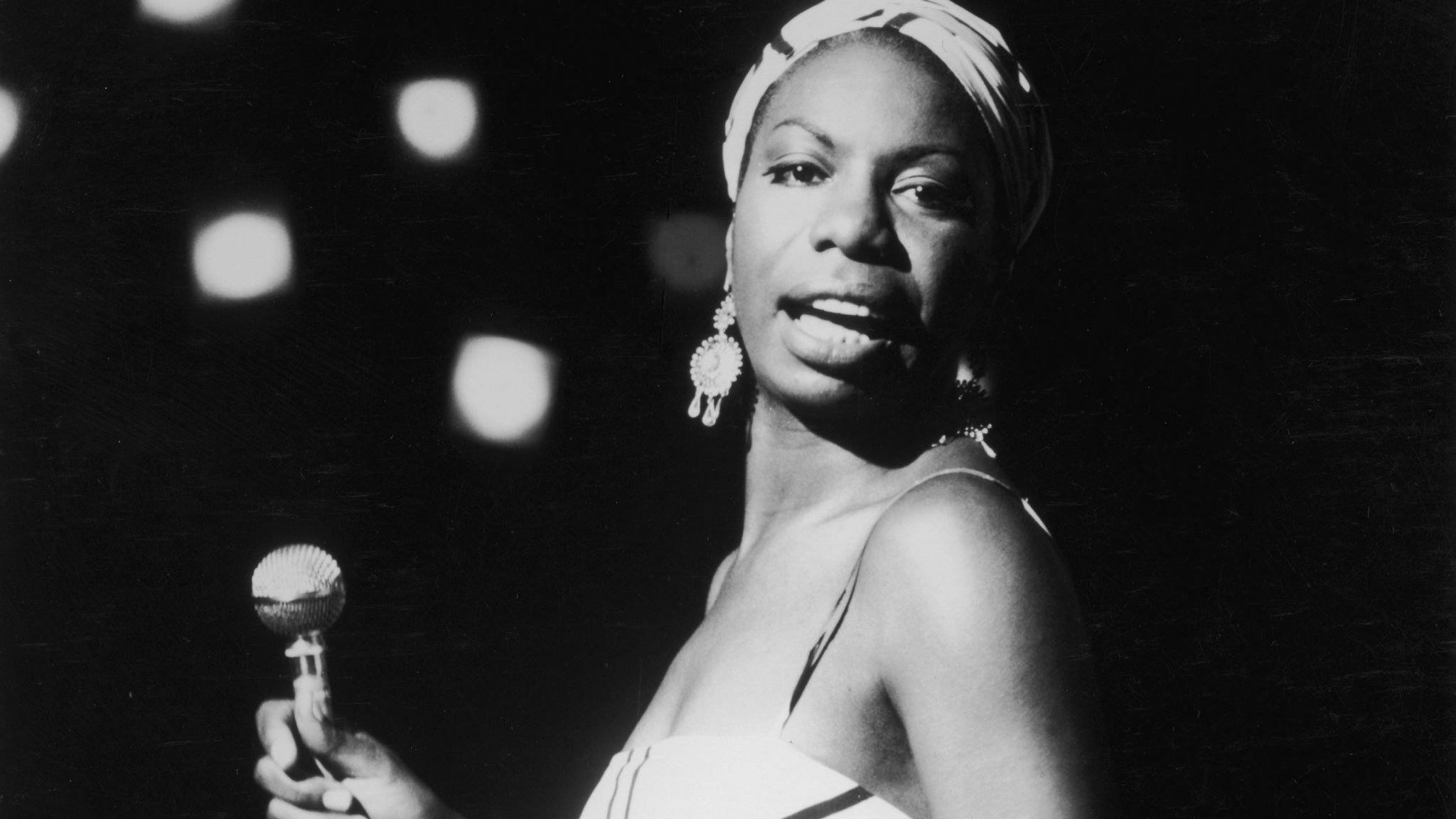
All the emotional turbulence that the composer Horace Ott and his girlfriend Gloria Caldwell had endured as a result of their bickering must have seemed worthwhile the moment they first heard Nina Simone perform “Don’t Let Me Be Misunderstood”. After all, it was one of their lovers’ quarrels that had inspired Ott to pen the melody, and chorus, for a song that would become a classic, and an apologia for anyone who had ever lost their cool in the heat of the moment.
Needing someone to flesh out the rest of the track, Ott passed it on to collaborators Bennie Benjamin and Sol Marcus, who were working on Simone’s next album. Broadway — Blues — Ballads may have been a rather bloodless follow-up to the searingly political In Concert, but its first song ranks among the singer’s very best. Simone had the perfect voice to deliver lyrics which oscillate between defiance and regret. Intensity meets vulnerability in every line she sings, not least in the refrain of “I’m just a soul whose intentions are good” — simultaneously a bold declaration and a desperate plea for forgiveness. And the brilliance of Ott’s unhurried arrangement — layered with plaintive strings, choral singers and the ghostly twinkling of a harp — lies not only in the hypnotising spell it casts during the verses, but the way the music cuts at the end of each chorus to reveal the power of Simone’s raw, soul-baring vocals on their own.
But maybe she was channelling another soul here. Knowledge of Simone’s marriage to the monstrously brutish Andrew Stroud gives some of the song’s lyrics — such as “Sometimes it seems all I have to do is worry, and then you’re bound to see my other side”— a darker resonance as they evoke the kind of self-exonerating rhetoric often wielded by manipulative abusers.
Such unsettling interpretations don’t lend themselves quite so readily to the 1960s soft-rock cover by The Animals, who translated Simone’s brooding version into a more commercial, upbeat tune. Gone were the orchestrations, the ethereal harp and the emotionally charged vocals; in came a catchy guitar-and-organ riff — devised around a violin melody from the outro of Simone’s original — which immediately hooked listeners on both sides of the Atlantic. Frontman Eric Burdon was so taken by the song that he would return to it a decade later, this time releasing a wearingly digressive eight-and-a-half-minute hard-rock rendition.
Of the dozens of iterations that have emerged since that first one, none has been more iconoclastic than the one by the group Santa Esmeralda in 1977. A breathless 10-minute Latin-disco hybrid, it marries trumpets, phaser-effect guitars, flamenco solos and a clapping interlude to create a feverish hit, perhaps best billed as “Santana meets Giorgio Moroder”. Kitschy and relatively obscure, it naturally found its way on to a Quentin Tarantino soundtrack, accompanying the climactic fight scene in 2003’s Kill Bill.
Joe Cocker took a different approach with his 1969 cover, adapting the track into an understated, mournful blues number driven by a wailing guitar lick and his gruff yet sensitive vocals. It would be kinder, however, to overlook his later reggae-influenced cover.
In 2006, Cat Stevens (under the name Yusuf) covered the song on his first album of western music since his conversion to Islam 30 years earlier. The lyrics serve as a diaphanously veiled riposte to those in the media who, he believed, had twisted his words to suggest that he held extremist sympathies.
Melancholic and melodramatic, the song seemed tailor-made for the contemporary doyenne of gloom-pop, Lana Del Rey. Her cover from 2015 lifts the organ riff from The Animals, but is an altogether more languid, sultry affair that is perfectly in keeping with her noirish, femme fatale persona. A 2018 version by Lady Gaga with jazz trumpeter Brian Newman also plays heavily on nostalgia, with a sound that transports us to a smoky prohibition-era bar.
That so many artists across a range of genres have been drawn to cover “Don’t Let Me Be Misunderstood” speaks volumes for Benjamin, Marcus and especially Ott’s talents. But look closely at the credits for any of these releases, and you will find that it’s Gloria Caldwell’s name, rather than Ott’s, which is listed. The reason for this may be prosaic (related to restrictive contractual stipulations), but as far as a gesture of reconciliation goes, immortalising one’s lover’s name through a timeless song takes some beating.
Whose is the finest version of ‘Don’t Let Me Be Misunderstood’? Let us know in the comments section below.
‘The Life of a Song Volume 2: The fascinating stories behind 50 more of the world’s best-loved songs’, edited by David Cheal and Jan Dalley, is published by Brewer’s.
Music credits: Doxy Records; G Records; A&M; Rhino; Cat-O-Log Records; Polydor Records; Verve
Picture credit: Hulton Archive/Getty Images