
In the 1880s, a grand new shopping parade opened in Brixton, south London. It was one of the first streets in the capital to be illuminated by electric lighting, and in honour of this, it was named Electric Avenue. Shoppers could wander beneath the glow of this new technological miracle, protected from the elements by an elegant wrought iron and glass canopy.
Over the following decades, Brixton underwent profound changes. The second world war brought bomb damage; urban decay set in during the postwar years.
In the late 1940s, the first Caribbean immigrants arrived in the UK on the Empire Windrush. Some of the early arrivals were accommodated in what must have seemed dystopian surroundings: a former deep-level bomb shelter beneath Clapham South Underground station. When the new arrivals sought work, some headed to the closest labour exchange in nearby Brixton, and many of the new immigrants began to settle in the area, where housing was relatively cheap.
By the late 1970s Electric Avenue was on its uppers and, like many of the UK’s inner city areas, Brixton was in a state of disrepair. Caribbean migrants and their children who lived in the area were becoming resentful at prejudicial and heavy-handed policing and the notorious “Sus” laws.
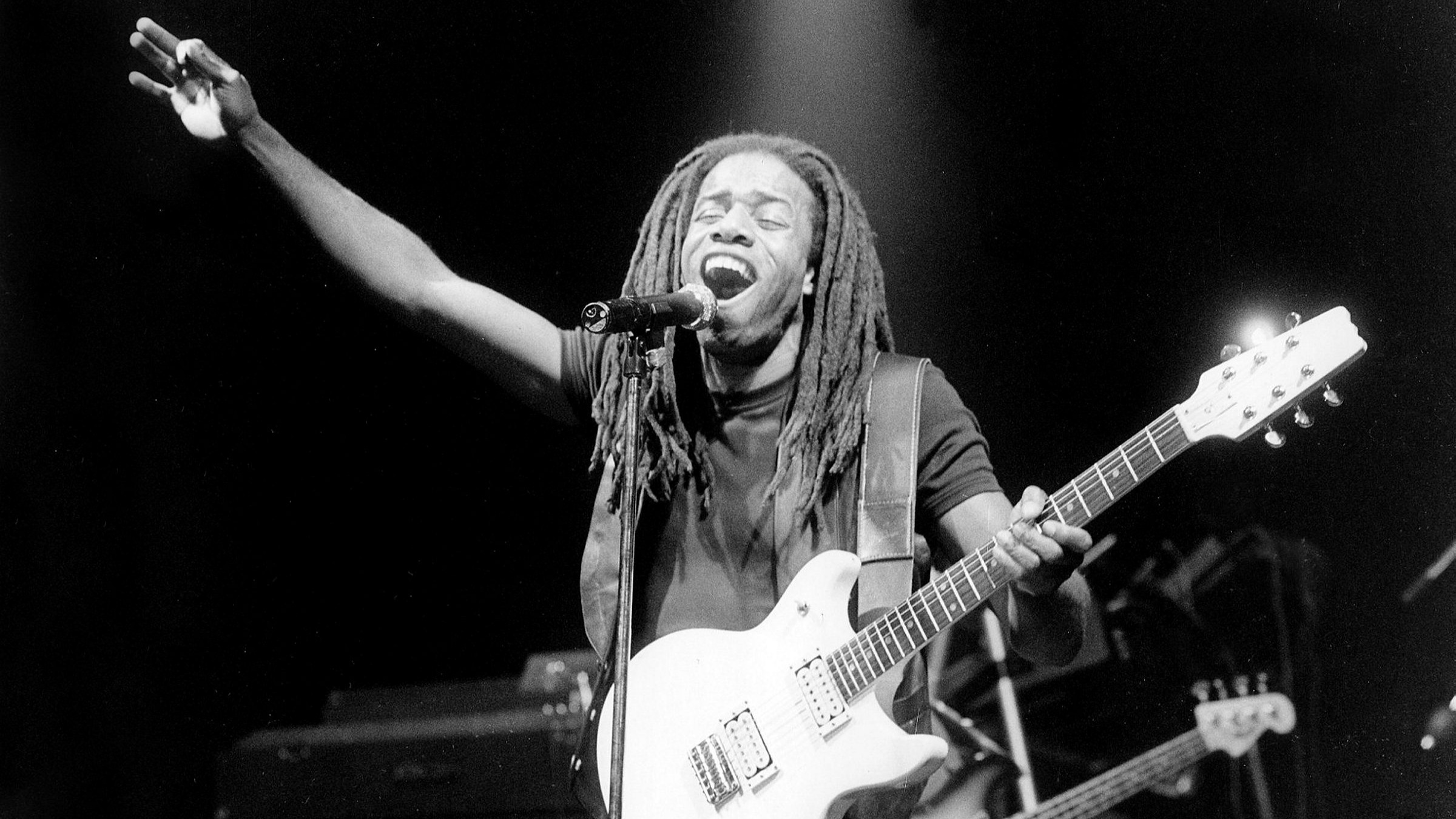
Meanwhile singer and songwriter Eddy Grant spent time with the Black Theatre of Brixton in the 1970s. He noticed Electric Avenue and twigged that it would be a great title for a song. Like all good songwriters, he stored it away for future use. Guyana-born Grant had already had success in the 1960s with his band, The Equals, a racially mixed group (unusual for the times) whose biggest hit was the poppy, lightweight “Baby Come Back” (1968) but who also tackled social issues with songs such as “Police on My Back”. In the 1970s Grant pursued a solo career.
In April 1981, after years of simmering hostility between police and residents, Brixton exploded in riots, which spread to other predominantly black inner-city areas of the UK. The Specials provided a soundtrack to these events with their bleak hit, “Ghost Town”. The next year, Grant — who had by now moved to Barbados, where he had set up a recording studio — wrote and recorded his response to the riots, playing all the instruments on the track. He called it “Electric Avenue”: “Now in the street there is violence, and, and a-lots of work to be done.”
“Electric Avenue” was taut, electronic and funk-rocky, with growling synthesisers adding an air of menace. A video was shot in Barbados, motorbikes prowling the night. By today’s standards, it looks flimsy and low-budget, but it attracted the attention of the young MTV channel, which had been stung by criticism that it didn’t feature enough black artists, and the video was given heavy rotation. “Electric Avenue” was a global hit in 1983, its message universal, with many listeners entirely unaware of what had sparked the song’s lyrics, or that Electric Avenue was a real place in London. Even Grant’s producer on the song, Frank Agarrat, had no idea until many years later that it was, as he told The Guardian in 2018, “a real street”.
Given its chunky groove, it’s perhaps surprising that it has not featured heavily on hip-hop tracks; the most notable came in 1997 when The Refugee Camp All-Stars— founded by rapper Pras from The Fugees — released their version, with Pras’s rhymes celebrating street life, hip-hop-style; sung vocals came from Ky-Mani Marley, son of Bob.
Other versions have accentuated the rumbling heaviness at the heart of the song. In keeping with their automaton personae, the quirky-novelty robotic ensemble Servotron adopted mechanical drone-voices in their 1998 version. A dancefloor-friendly “ringbang” remix by Peter Black brought the song back to the charts in 2001. A radical revision came from Welsh metal band Skindred (2009), with their heavy guitars and ragga-esque vocals (the father of the band’s singer, Benji Webbe, arrived in the UK from Jamaica on the Windrush).
Industrial-electronic rockers Powerman 5000 brought a pulsing, disco-metal beat and treated vocals to their dark version for their 2011 album of covers, Copies, Clones and Replicants. US rockers Lazlo Bane brought a retro-ish electropop flavour to their 2012 effort from an album of “guilty pleasures” cover versions. Montreal psychobilly trio The Brains gave it a frantic workout on their 2020 album Satana Tarantula.
Electric Avenue itself is now pedestrianised and forms part of the busy Brixton Market; there have been campaigns to reinstate the glass canopy, which was dismantled in the 1980s. It’s a source of local pride that the street inspired the song: a few years ago Grant was awarded a copy of the street sign by the local authority, Lambeth Council. And following a £1m refurbishment, the street’s name is now spelt out in large multicoloured neon letters at one end of the street — switched on ceremonially by Grant in 2016.
What are your memories of ‘Electric Avenue’? Let us know in the comments section below.
‘The Life of a Song Volume 2: The fascinating stories behind 50 more of the world’s best-loved songs’, edited by David Cheal and Jan Dalley, is published by Brewer’s.
Music credits: Blue Wave; President Records; AmRep; Lookout Sound; Cleopatra
Picture credit: ullstein bild/Getty Images