
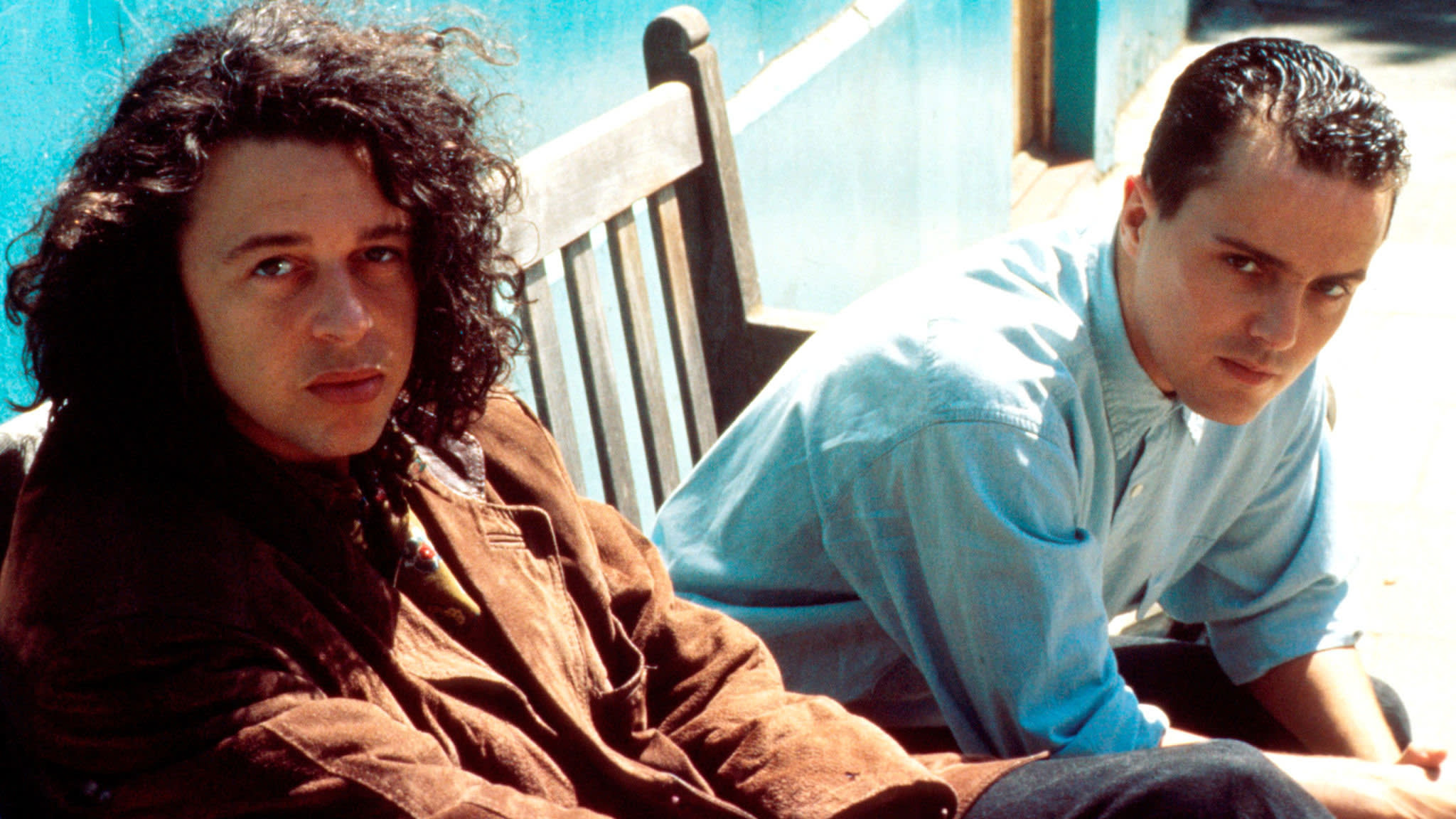
Tears for Fears’ 1985 hit “Everybody Wants to Rule the World” was a breakthrough for the English band, a worldwide success that topped the Billboard Hot 100 in the US and spent six weeks in the UK’s top five. Taken from their 1985 album Songs from the Big Chair, it epitomised the maturation of founding members Roland Orzabal and Curt Smith from relative low-liers in the mod revival band Graduate, to a globe-conquering synth-pop outfit. Thanks to a bigger, reverb-heavy sound which resonated worldwide, Songs from the Big Chair sold five million copies in the US alone.
They also became part of the “second British invasion” of the US — a new wave of acts who, thanks largely to MTV coverage, found favour among American audiences with their synth-based sounds and glossy videos. The invasion was spearheaded in 1981 by The Human League’s “Don’t You Want Me”, with bands such as Duran Duran following in their wake and Tears for Fears joining the party in the mid-1980s.
“Everybody Wants to Rule the World” emerged when singer and songwriter Roland Orzabal was in the studio sessions towards the end of recording Songs from the Big Chair and came up with a two-chord riff; the rest of the song, he later said, was “effortless”, though it did undergo some changes. Its lyrics were about the thirst for power and its consequences, with intimations of what was seen by many at the time as the imminent threat of global nuclear war. In an early iteration, the chorus ended with: “Everybody wants to go to war”, but the band were uncomfortable with this, preferring the less didactic version that made the final cut.
Given its commercial impact and its melodic strengths, it’s no surprise that the song has had an afterlife stretching to the present day. It was treated with relative conservatism by Gloria Gaynor (1986) and Patti Smith (2007), who both retained the original’s pacing and synth progression. In 2001, following the 9/11 attacks, rapper Nas sampled the synth riff and the chorus on his single “Rule”, a plea for racial tolerance and peace in a troubled world.
With its blend of thematic gravity and musical vibrancy, it became a natural fit for film and TV soundtracks; it was used most recently in Steven Spielberg’s 2018 sci-fi adventure Ready Player One, as well as being a regular fixture in scenes of histrionic high drama in the BBC soap EastEnders.
In the meantime, another, radical re-reading of the song was gaining traction. Lorde, the then-17-year-old New Zealand singer, covered it for the soundtrack to the 2013 film The Hunger Games: Catching Fire. Hers was a treatment that looked at the song anew, sedating the original’s insistent drumline and dispensing with its synth progression.
Lorde’s decision to lower the tempo of the track so drastically drew attention to the lyrics, as they oscillate between rhetorical pleas and declarative prophecies, acting both as social commentary and holistic musing: “Help me make the most/ Of freedom and of pleasure/ Nothing ever lasts forever/ Everybody wants to rule the world.” Lorde’s version also made its way on to trailers for blockbuster video games such as Assassin’s Creed Unity.
Two recent versions have returned to Tears for Fears’ original blueprint. Veteran producer Trevor Horn passes the microphone to Robbie Williams for an orchestral arrangement on his … Reimagines the Eighties album, while American rock outfit Weezer include a forgettable attempt on their collection of 1980s covers, The Teal Album. Introducing Tears for Fears’ original to young blood is left to DJs such as CC: DISCO! and Berlin-based Brits Objekt and Call Super, who situate the track among New Order and Depeche Mode as part of dance music’s wider new wave nostalgia.
Tears for Fears themselves, however, have given the ultimate accolade to Lorde’s radical re-reading: the band are still touring, and on stage, before they perform “Everybody Wants to Rule the World”, Lorde’s version is played over the PA.
What are your memories of ‘Everybody Wants to Rule the World’? Let us know in the comments section below.
‘The Life of a Song Volume 2: The fascinating stories behind 50 more of the world’s best-loved songs’, edited by David Cheal and Jan Dalley, is published by Brewer’s.
Music credits: UMC (Universal Music Catalogue); Signature; Columbia/Legacy; Universal-Island Records Limited; BMG Rights Management (UK) Limited; Crush Music/Atlantic
Picture credit: Michael Putland/Getty Images