
More than any other art form, music has the power to make us feel good: a guitar riff that gets the spine tingling, a soaring crescendo that makes us swoon, an aria that sets nape-hairs bristling.
And “Feeling Good” is perhaps the ultimate feelgood song: it soars and swoops, invoking the joy of nature, the freedom of a bird flying high. It thrills.
“Feeling Good” was written to express a particular kind of euphoria: that which comes with liberation from oppression. It was written by British songwriters Anthony Newley and Leslie Bricusse for their stage musical, The Roar of the Greasepaint, the Smell of the Crowd; the show toured provincial British theatres in 1964 (with a young Elaine Paige making her professional debut in the chorus) before opening on Broadway in 1965.
Roar is a curious, allegorical musical about power, class and race. Two characters, Sir and Cocky, play an endless, Beckett-esque game which is rigged in favour of the superior, supercilious Sir — but the arrival of The Negro (renamed The Stranger or The Black Man in later productions) shakes things up. While Sir and Cocky argue, and after being the object of racist taunts, The Negro wins the game and celebrates his victory by singing “Feeling Good”.
In its original arrangement, “Feeling Good” — as sung by Cy Grant in the UK and Gilbert Price on Broadway — hardly seemed the kind of song that would set the world on fire: it had little in the way of pulse and featured a rather saccharine children’s chorus. What power the song had lay in the strong vocal performances of Grant and Price.
Before the show opened on Broadway (starring Newley — who recorded his own version of “Feeling Good” — as Cocky), an original cast recording album was released to drum up interest. This meant that “Feeling Good” was in circulation before it reached the stage, and singers and musicians seized on it. Among the first was John Coltrane, a man with an ear for a showtune; in his version, the theme typically drifted in and out of focus as Coltrane’s sax floated and fluttered. Sammy Davis Jr gave it gravitas, with twangly electric guitar.
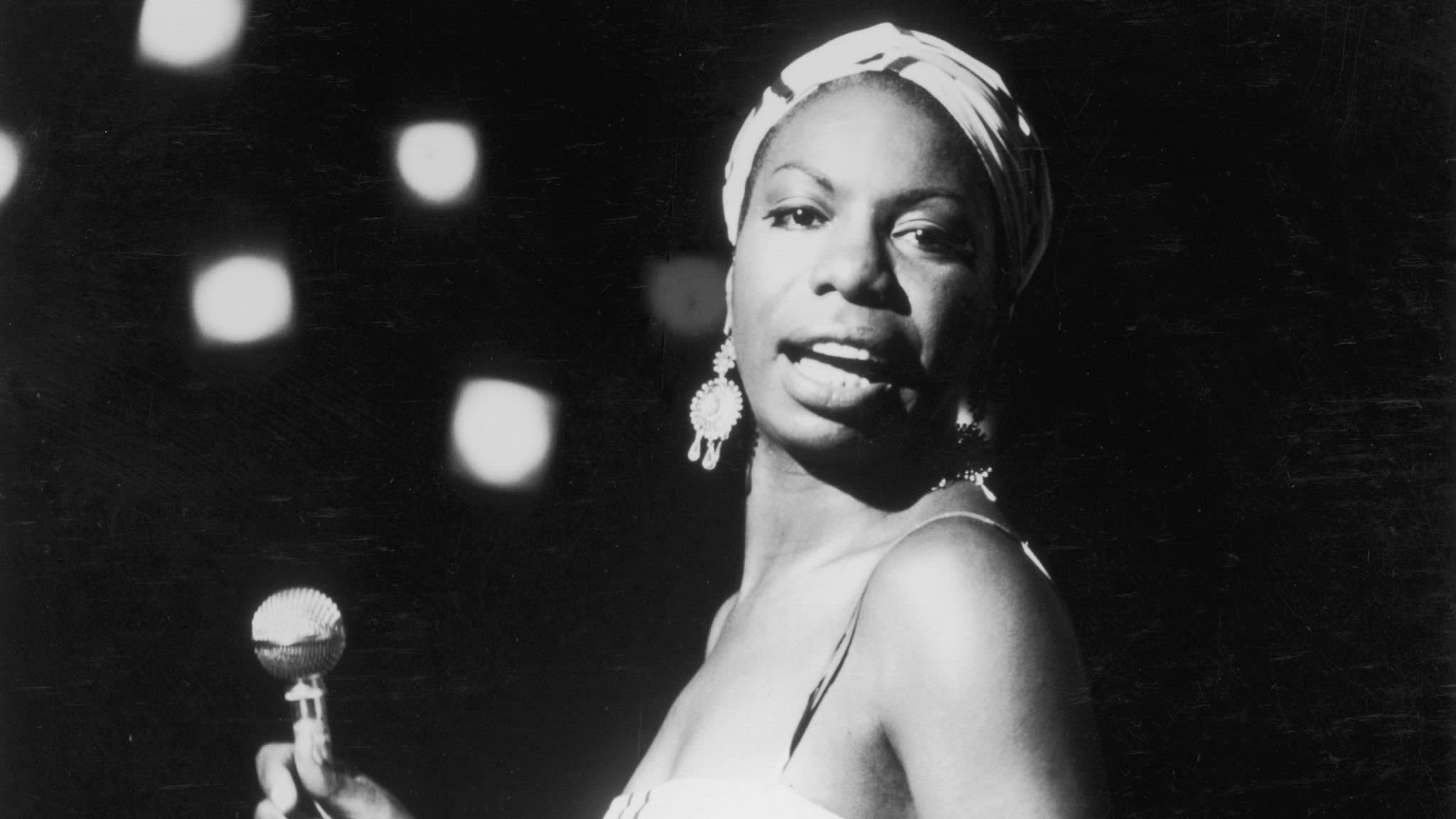
As has often been the case in this column, it took Nina Simone to find the song’s essence. In 1965 she and her arranger Hal Mooney brought in a big band, gave it a swing and a kick, emphasised the first and third beats like the strides of loping giant, introduced a tingling piano triplet, and unleashed Simone’s rebel spirit in a stunning vocal performance. Released during the ferment of the civil rights protests, Simone’s “Feeling Good” was a manifestation of that movement’s burning desire for freedom.
Simone’s interpretation became a template for almost all subsequent versions (though one band, Traffic, went their own way with a self-indulgent organ-heavy jam on their 1969 album Last Exit). Foremost among these was Muse’s blistering cover on their breakthrough 2001 album, Origin of Symmetry. Singer Matt Bellamy’s falsetto histrionics took the song into the realm of hysteria, while the video tapped into the band’s affinity for “outsiders”, featuring a roaming tribe of young people with digitally disfigured features.
Michael Bublé’s swinging, blowsy interpretation (2005) and its accompanying video channelled James Bond theme songs — aptly, as Newley had co-written “Goldfinger”. American Idol alumnus and sometime Queen singer Adam Lambert’s 2009 version closely followed Muse’s, including the falsetto vocals. But Lambert’s exhilarated performance brought a different subtext to the song: that of a man who was feeling good about being gay. (Lambert’s version is the subject of a lengthy academic discussion by Elizabeth Gould of the University of Toronto: Intertextual Apparitions: Haunting Adam Lambert’s “Feeling Good”.)
Lauryn Hill tapped into the spirit of Simone on one of her six contributions to a 2015 tribute album which tied in with the release of a documentary about the singer, What Happened, Miss Simone? George Michael went big band on his Symphonica album, in a version that was his last single before his death in 2016.
Several rappers have sampled it, the most curious example being Kanye West and Jay Z’s “New Day”; on this track from their 2011 collaborative album Watch the Throne, “Feeling Good” is a barely recognisable, heavily autotuned vocal doodle that floats over the lyric’s sombre view of fatherhood. This was a rare excursion into darker territory for a song that has overwhelmingly been treated as a celebration of being free, and of being alive.
What are your memories of ‘Feeling Good’? Let us know in the comments section below.
‘The Life of a Song Volume 2: The fascinating stories behind 50 more of the world’s best-loved songs’, edited by David Cheal and Jan Dalley, is published by Brewer’s.
Music credits: Sony BMG Music Entertainment; Masterworks Broadway; Decca (UMO); Sweeter Records; Verve Reissues; Grace Recordings; WM UK; 143/Reprise; Revive/RCA Records; Virgin EMI
Picture credit: Hulton Archive/Getty Images