
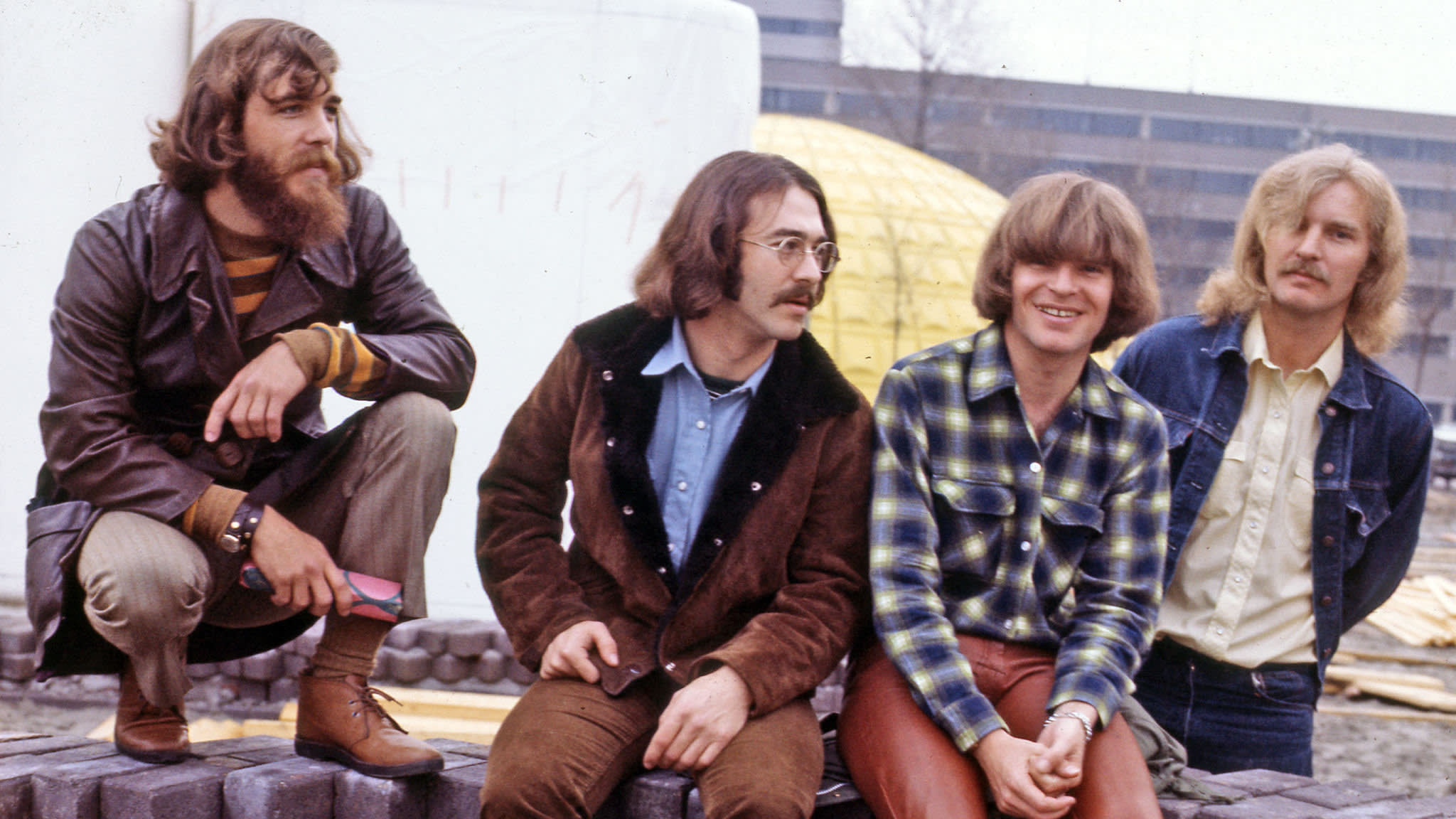
For John Fogerty, the wedding was the final straw. In December 1968, as thousands of American soldiers were being sent to their deaths in Vietnam, president-elect Richard Nixon’s daughter and former president Dwight Eisenhower’s grandson were getting married in a lavish ceremony. The Creedence Clearwater Revival frontman had been toying with the idea of writing a song railing against the injustice of the draft system — which ensured that the relatives of politicians received preferential treatment — having been called up to the reserves himself in 1967. But watching coverage of this event attended by America’s rich and famous galvanised his furious indignation. “You had the feeling that none of these people were going to be too involved with the war,” he said later.
The result, written the following year and released by CCR in September 1969, was the counterculture hit “Fortunate Son”.It took Fogerty roughly 20 minutes to translate all his outrage about Vietnam, Nixon and the culture of unwarranted privilege into an era-defining anthem of dissent. Subverting the trope of state senators and governors being branded as “favourite sons”, he unleashed an incandescent tirade against politicians who were demanding that young men give their country “More! More! More!”, while quietly protecting their own children. In this sense, the track acted as a kind of rockier counterpart to Bob Dylan’s own unsparing invective against self-interested statesmen, 1963’s “Masters of War”.
But where Dylan chose simmering, acid-tongued poetry, Fogerty opted for electrified fulmination. The instantly memorable battle cryof “It ain’t me… I ain’t no millionaire’s (senator’s/military’s) son… I ain’t no fortunate one” captured the feeling of disaffected young soldiers. So much so, that it has become an unofficial soundtrack to the Vietnam conflict — the go-to accompaniment for countless montages and films depicting the war.
But CCR themselves considered “Fortunate Son” to be more about social inequality than the military; as drummer Doug Clifford explained: “It isn’t really an anti-war song, it’s about class.”
And yet its association with Vietnam is indelible. In 2004, the Democratic presidential candidate, and proud veteran, John Kerry chose to use the song throughout his campaign as a transparent rebuke to rival George W. Bush, who, as the son of a president and a grandson of a senator, had never served in the army.
The track sparked controversy again a decade later when a supergroup comprised of Bruce Springsteen, Dave Grohl and country singer Zac Brown performed it at the Veterans Day “Concert for Valour”. The choice of “Fortunate Son” riled many rightwing firebrands and military personnel who saw it as an attack on American soldiers. Fogerty was quick to defend the use of the track, reiterating that it was never meant as an indictment of the military.
Fogerty had himself recorded the songwith Grohl’s Foo Fighters, for his 2013 album of new collaborative takes on CCR classics, in a version that’s very similar, if slightly heavier than the original. Remarkably, his angry, throaty vocals sound much the same 45 years on.
If there’s one rock singer who matches the gruff rawness of Fogerty’s voice — and his social consciousness — it’s Pearl Jam’s Eddie Vedder. The grunge rockers have covered “Fortunate Son” many times at live shows over the years in performances that are typically embellished by some nimble soloing from guitarist Mike McCready.
Others, however, have largely done away with the song’s catchy guitar licks and energetic drumming. In 2008, Cat Power recorded a superbly atmospheric, bluesy version led by slow, drawling vocals and accompanied by piano and strings. The rapper Wyclef Jean covered the song for the 2004 remake of The Manchurian Candidate. His R&B-inflected rendition radically departs from the original, eschewing the intro riff entirely. Not all reinterpretations have been successful: U2’s strange reverb-laden attempt from 1992 is a particularly egregious effort.
More recently, the song was chosen by indie rock band Sleater-Kinney as part of their set at the after-party for the 2017 Women’s March in Washington DC. Featuring The National’s Matt Berninger and the president of Planned Parenthood, Cecile Richards, on backing vocals, the impassioned performance served as a potent reminder that half a century on, the fortunate sons were still seen to be getting it all their way.
What are your memories of ‘Fortunate Son’? Let us know in the comments section below.
‘The Life of a Song Volume 2: The fascinating stories behind 50 more of the world’s best-loved songs’, edited by David Cheal and Jan Dalley, is published by Brewer’s.
Music credits: Fantasy Records; TP4 Music; Columbia; Universal-Island Records Ltd
Picture credit: Alamy