
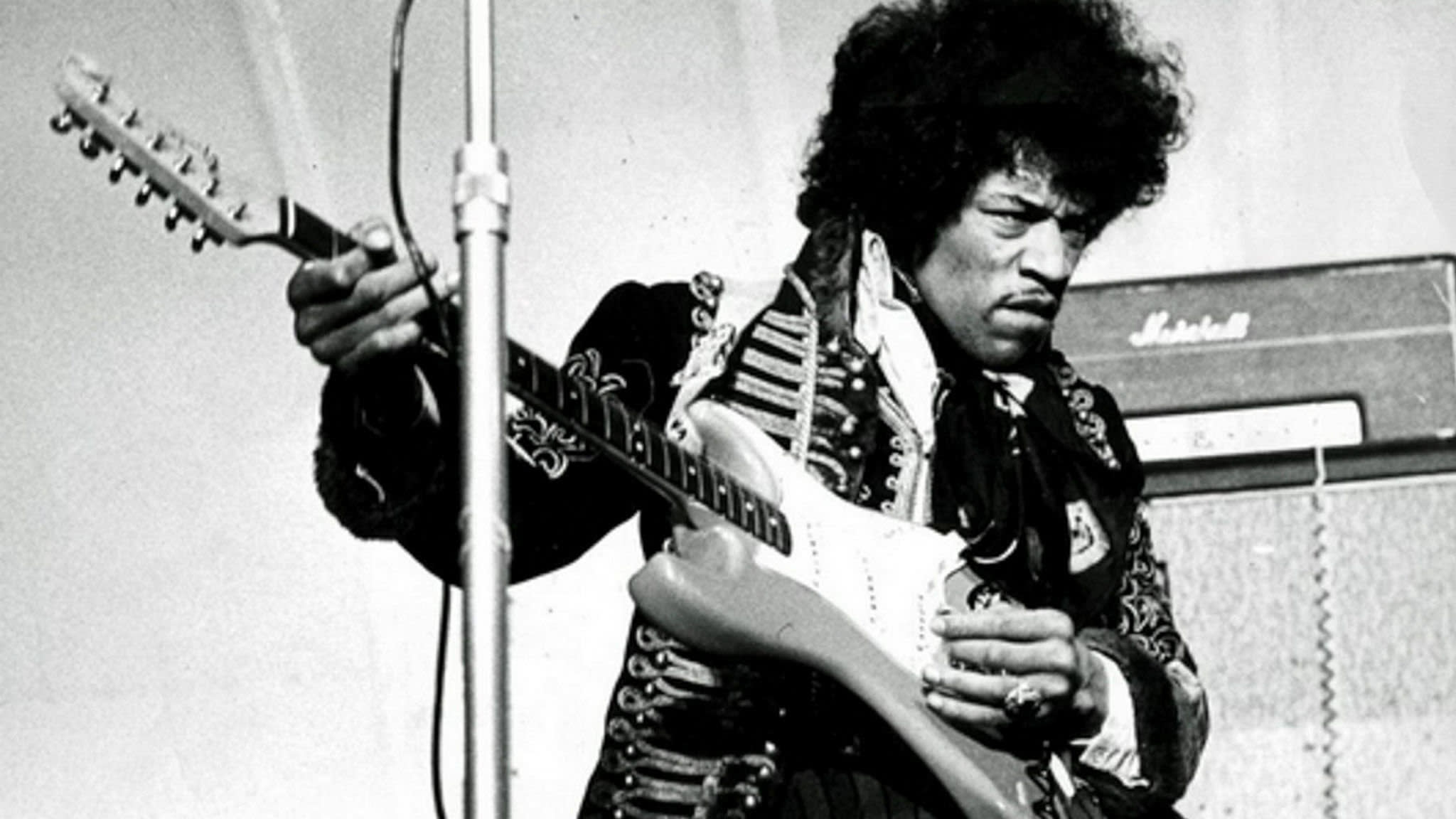
“Hey Joe” is a classic illustration of the music industry truism that where there’s a hit, there’s a writ. This brooding tale of a wronged man who shoots his cheating lover dead before going on the run is eternally defined by Jimi Hendrix’s sky-scraping 1966 cover,but its provenance was a source of controversy.
The song first emerged as an edgy, twitchy stab of primal garage rock much covered on the early 1960s US West Coast live scene. It was a gig staple for both Love and The Byrds, with the latter’s David Crosby a major fan of its abrasive charms.
The Surfaris, of surf-rock classic “Wipe Out” fame, also played it but the first recorded version was by minor Californian rockers The Leaves, who had a top 40 US hit with it in 1965. They also changed the words: where The Byrds and Love sang, “Hey Joe, where you going with that money in your hand?”, The Leaves swapped “money” for “gun”.
Yet who had written it? Royalties were initially paid to Dino Valenti, later frontman of Quicksilver Messenger Service. When Valenti admitted he was bluffing, the copyright was claimed in 1962 by Billy Roberts, a drifting singer-songwriter then busking in New York.
An ex-girlfriend of Roberts, Niela Halleck, then said she had written it, calling it “Baby, Please Don’t Go to Town”, while dating Roberts in the mid-’50s. New York folk singer Tim Rose muddied the waters further: covering “Hey Joe” in 1966,he said it was a traditional blues number he had known as a boy (there is no evidence to support this theory).
Yet all of these authorship squabbles were rendered insignificant by Jimi Hendrix’s seismic reworking of the tune. Hearing Rose play the song at Café Wha? in Greenwich Village, Hendrix took it and rocketed it into the stratosphere.
Gone was the nervy, lo-fi angst of the original. Instead, Hendrix slowed down and elongated “Hey Joe”, morphed it into something darker and wilder, invested it with vast psychological trauma and tension. In his magic hands, it became crazed, twisted, delirious.
It sounded as if Hendrix didn’t just empathise with the plight of the troubled Joe: he was actively encouraging his friend’s murderous actions. “Shoot her one more time!” he urged in the middle-eight as his Fender wailed, a law and a galaxy unto itself.
Hendrix’s annexing of “Hey Joe” was so colossal, it should by rights have scared off other artists from approaching the song for decades. Instead, the opposite happened. It has been covered hundreds of times, with hugely varying degrees of success. Cher’s shrill, strident 1966 versionsounded as if she was giving the killer a miffed ticking-off for his transgression. Marmalade’s puny version was psychedelia-by-numbers. Deep Purple,then still prog rockers and not heavy metal headbangers, got closer to the restless spirit of the song.
Wilson Pickettladled Stax horns all over it and turned it into a deep R&B cut. Patti Smith’s raw, visceral reworkingwas almost as radical as Hendrix’s: her new, freeform-poetry lyrics referenced kidnapped heiress Patty Hearst.
Marc Almond’s teasing vocal added sexual ambiguity to Soft Cell’s version, while Nick Cave’s sombre growl on his 1986 Kicking Against the Pricks covers album wasn’t his finest moment. Black Uhuru sounded so stoned on their 1990 album Now that it seemed unlikely Joe would have had the energy to pull the trigger.
Robert Plant gave it some serious welly with his Band of Joy; less likely half-decent covers came from rapper Ice T’s rock side-project Body Count, and from Seal. After hearing Charlotte Gainsbourg’s sultry 2013 murmurthrough the song, you needed a cold shower.
Ultimately, though, it’s impossible to see past the transcendent glory of Hendrix’s astral ramble.Many authors have laid claim to “Hey Joe”, but it truly belongs to just one man.
Do you have any personal memories of ‘Hey Joe’? What is your favourite version? Let us know in the comments below
‘The Life of a Song Volume 2: The stories behind 50 more of the world’s best-loved songs’, edited by David Cheal and Jan Dalley, is published by Brewer’s
Music credits: Legacy Recordings; Burning Girl Productions; EMI Catalog (USA); Sounds of the World; Warner Music Group — X5 Music Group; Rhino/Warner Bros; Because Music
Picture credit: Alamy