
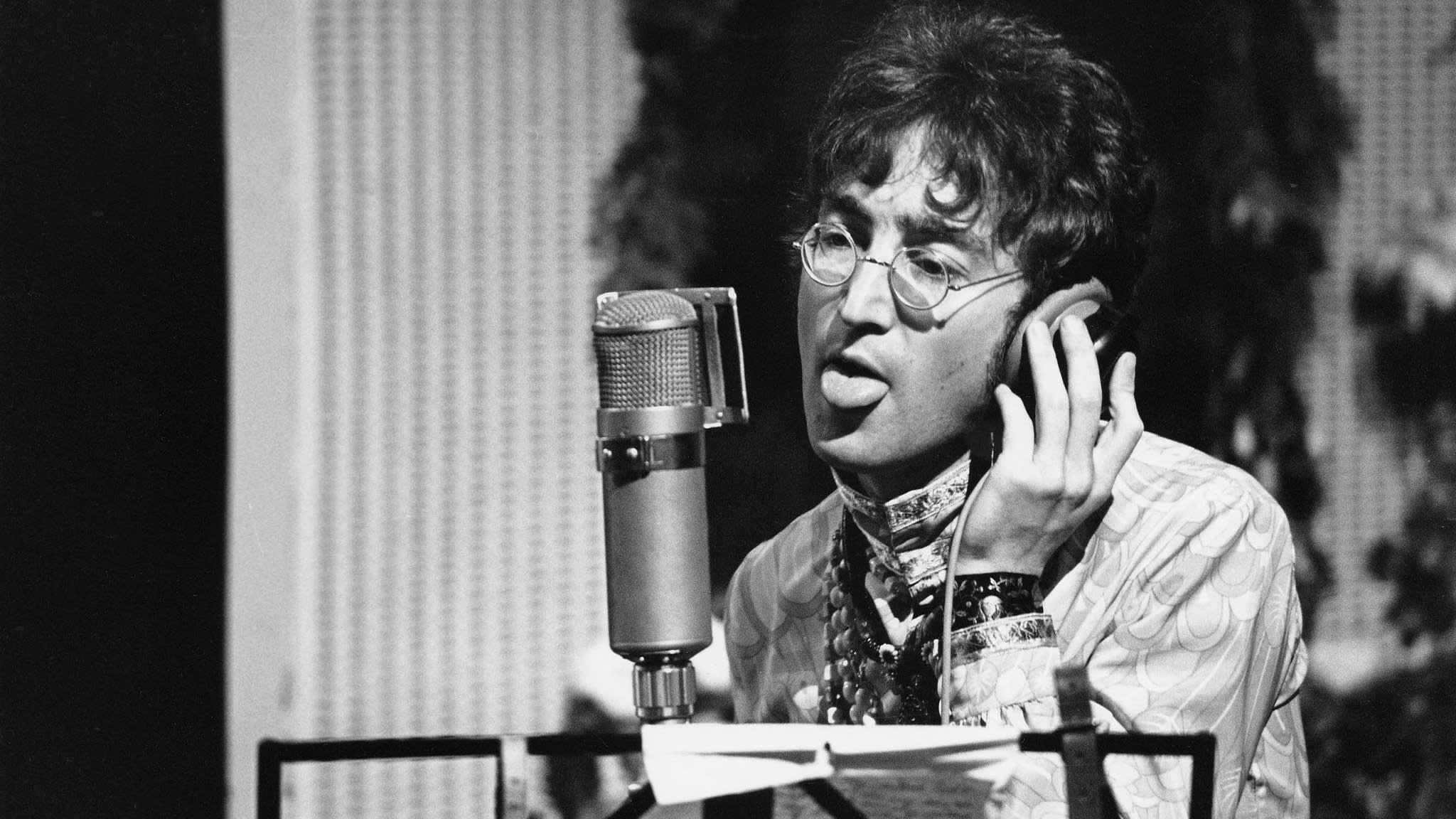
It all started with a piece of fan mail. Well, fan mail and copious amounts of psychedelic drugs.
In 1967 John Lennon received a letter from a student at his old secondary school informing him that The Beatles’ lyrics were being drily analysed in English class. Bemused, Lennon set about writing a song so chock full of arbitrarily-chosen images and recherché references that it would be completely impervious to meaningful interpretation; “Let the f***ers work that one out!” a bullish Lennon allegedly told a friend after penning a particularly convoluted verse.
Lennon already had the first two lines when he received the letter. The first, “I am he as you are he as you are me and we are all together”, a kind of Derridean chain of deferred meaning, came to the songwriter during an LSD trip. The second, “See how they run like pigs from a gun”, emerged during another narcotics-fuelled haze. The rest of the song was filled in later, and, some half a century on, this, one of the most enigmatic songs in The Beatles’ canon (“Revolution 9” is unsurpassably strange), still perplexes.
The lyrics draw on the literary — Lennon was inspired by Lewis Carroll’s nonsense poem “The Walrus and the Carpenter” — the salacious — “the eggman” referenced in the chorus alludes to an egg-based fetish indulged by The Animals’ frontman, Eric Burdon — and everything in between.
But an enduring fixation with the inscrutable lyrics means that the song’s musical achievements are often overlooked. With “I Am the Walrus”, The Beatles, along with producer George Martin — who was apparently appalled by an early acoustic version of the track — came up with a dizzying, disorientating sonic experience not unlike the earlier “Lucy in the Sky With Diamonds”. But where the latter had a dreamlike quality, here the effect verges on nightmarish.
The strings in the orchestral arrangement create an unbalanced tension as the notes rise and plummet. Lennon’s vocals — sleazy, distorted and gravelly — help turn an absurdist exercise into a veritable rock anthem. An outlier among the more sing-songy, Paul McCartney-penned tracks on 1967’s Magical Mystery Tour, it stands as symbol of the ever-widening gulf in the songwriters’ style that would eventually tear the band apart three years later.
Many saw 1990s Britpop pioneers Oasis as the natural successors to The Beatles’ legacy, and the Mancunian rockers adopted “I Am the Walrus” as a staple of their live shows. Their version, featured on a deluxe edition of their Definitely Maybe album, is largely faithful, but the sprawling guitar solos detract from the original’s punchiness. That said, Liam Gallagher, who modelled everything, from his nasal voice to his look, on Lennon, performs the track with fitting impudence.
In 2007, U2’s Bonorecorded a version in-character for The Beatles musical film Across the Universe. The Irish frontman brings his best lung-busting arena-rock vocals to this cover, but his clean-cut voice and upstanding public image seem ill-fitting for a song that is absolutely dripping with manic seediness.
By sharp contrast, the song was also frequently covered by one of the biggest, zaniest personalities in rock, Frank Zappa, in his live concerts. In one especially surreal recording uploaded to YouTube, a visibly dazed Zappa takes an on-stage cigarette break and hands vocal duties over to a singer who holds a stuffed toy walrus aloft throughout the song.
In 2011 American indie rockers Flaming Lips recorded a slightly sinister version, slower and even more distorted than the original. The video features lead man Wayne Coyne singing through a plastic plate and a backing musician (inexplicably wrapped in tinfoil) mimicking the complex orchestration with his voice.
Arguably the only version that can really sit alongside The Beatles’ for the sheer entertainment and bewilderment it elicits, is by Canadian comic actor Jim Carrey for George Martin’s much-derided 1998 covers album In My Life. Carrey, an unexpectedly adept singer, really commits to the song, adding improvisational flourishes along the way to make the song his own — or, as he put it, “defile a timeless piece of art”.
What all of these covers have in common is that they trade on the original track’s inherent sense of playfulness. But the walrus would reappear in Lennon’s work in a far more serious guise. In his 1970 polemical song, “God”, from his first solo album John Lennon/Plastic Ono Band, the singer declares: “I was the walrus, but now I’m John”. It was an unexpectedly heartrending way for him to renounce both The Beatles, and his own anarchic spirit.
We’re keen to hear from our readers. Do you like “I Am the Walrus”? Do you have particular memories of the song? Let us know in the comments.
‘The Life of a Song: The fascinating stories behind 50 of the world’s best-loved songs’, edited by David Cheal and Jan Dalley, is published by Brewer’s.
Music credits: EMI Catalogue, Big Brother, Polydor Associated Labels
Picture credit: David Magnus/REX/Shutterstock