
Brad Pitt is at the kitchen sink, washing an apple. A harp glides through a chord, introducing a backing track of swooning strings and an instantly recognisable four-note riff. Then Norwegian singer Even “Magnet” Johansen begins to croon: “Lay lady lay, lay across my big brass bed…” By the time the refrain comes around for the second time, the “lady” in question is revealed as the camera follows Pitt’s gaze down to the delicate bare feet of Angelina Jolie.
For “Brangelina” fans, the scene from the 2005 film Mr and Mrs Smith is worthy of endless analysis. Is the post-coital atmosphere strictly acting, or is it true that the film shoot sparked the start of the celebrity couple’s affair? Were the lyrics an apt fit in real life as well?
What we do know is that the words, from Bob Dylan’s song of seduction, “Lay Lady Lay”, nearly had a very different Hollywood association. The track was originally written by Dylan for the 1969 film Midnight Cowboy, starring Jon Voight and Dustin Hoffman as a male prostitute and hustler duo. But Dylan was unable to finish the track in time for the film’s production deadline, and so lost the job to John Barry (who later won a Grammy for his theme).
Dylan didn’t suffer much from the lost opportunity — when he instead released the song as a single in July 1969, it reached number seven in the US charts, and number five in the UK. Centred around a descending four-note hook, drawn out by a pedal steel guitar, the lilting groove was complemented by Dylan’s newly favoured deep and warm country croon. The reason for the new voice? “I tell you, you stop smoking those cigarettes, and you’ll be able to sing like Caruso,” he told Rolling Stone at the time.
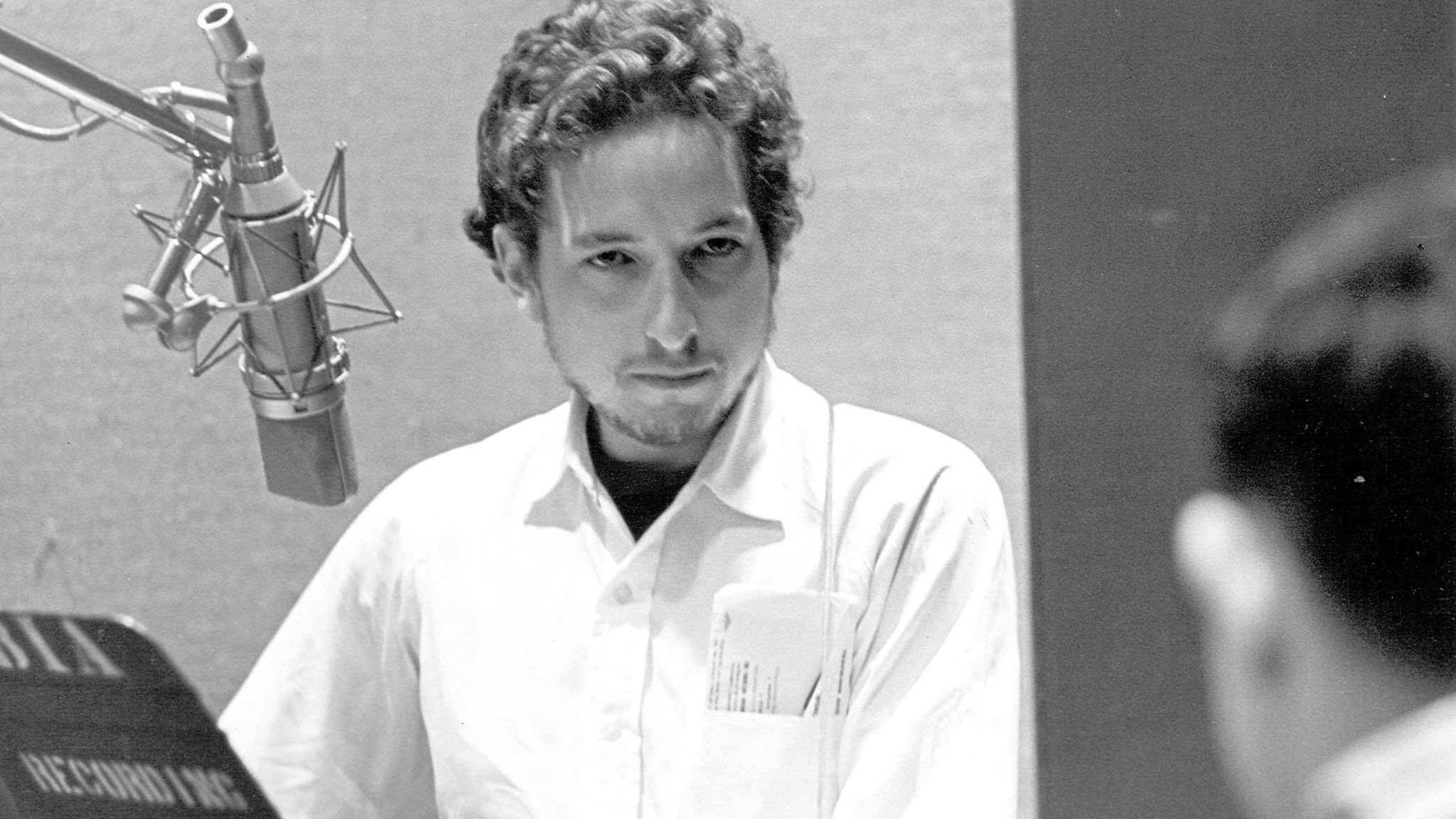
But July 1969 wasn’t the first time that the public heard Dylan’s come-to-bed lines. Though it was written by Dylan, who first played it to a small circle of friends at Johnny Cash’s house (including Joni Mitchell, who also shared her work-in-progress “Both Sides, Now”), The Byrds managed to release a cover version two months before Dylan’s original single came out. But unlike The Byrds’ covers of other Dylan songs, their “Lay Lady Lay” failed to break into the UK singles chart. The band themselves were furious with the recording — at the last minute, their (and Dylan’s) producer, Bob Johnston, had dubbed over a female choir without their consent.
For Dylan’s recording, he and Johnston couldn’t agree on whether to use cowbells or bongos. Drummer Kenny Buttrey unintentionally found a solution by jokingly using both at the same time. The result, the first take of the song, became the hit. But for all its success, Dylan was not a fan of the song. “I never… thought it was representative of anything I do,” he told Clive Davis, the president of Columbia Records who convinced Dylan to release the track as a pre-album single to Nashville Skyline.
Dylan’s first live performance of the hit was August 1969, when he shunned the Woodstock festival and flew to the Isle of Wight. Since then, the song has been covered numerous times, from Duran Duran’s pop-rock version to Ministry’s industrial metal take. The Everly Brothers, however, turned it down, reportedly because they misheard the lyrics as “lay across my big breasts, babe.” The song’s true lyrics have also put some off due to their old-school chauvinism. Nonetheless, in The Cambridge Companion to Bob Dylan, Barbara O’Dair makes a case for a feminist acceptance of Dylan. Taking a different approach to the song’s gender issues, on her 1969 album 3614 Jackson Highway, Cher changed the song’s “lady” to an ambiguous “baby”.
Change was something Dylan himself welcomed. In 1974, he yelled to a Los Angeles crowd “Happy St Valentine’s Day!” before breaking into a frenzied rendition with high-energy electric guitar solos and bursts of shouting. Two years beforehand, he gave a twang-heavy country swing performance, swapping the lines “Stay lady stay… let me see you make him smile” to “forget this dance, let’s go upstairs / Let’s take a chance, who really cares”. The rewrite, Dylan confirmed in Playboy magazine, was “much raunchier, less pretty”.
What has remained a constant, however, is the big brass bed. Dylan drew illustrations for most of his greatest hits — for “Lay Lady Lay” he lovingly detailed the big brass bed in light pencil sketch. For some, it’s best listened to on one too: “I’d lie on the bed and play that song and cry all the time,” Madonna remembered of her adolescence. “Don’t ask me why I was crying — it’s not a sad song. But,” she said, “that's the only record of his that I really listened to.”
Sexist or seductive: what’s your view of ‘Lay Lady Lay’? Let us know in the comments section below.
‘The Life of a Song Volume 2: The fascinating stories behind 50 more of the world’s best-loved songs’, edited by David Cheal and Jan Dalley, is published by Brewer’s.
Music credits: Filter Records; Columbia; EMI UK; Warner Music Group — X5 Music Group
Picture credit: Michael Ochs Archives/Getty Images