
Sometimes songwriters wait for the muse to descend; sometimes they roll up their sleeves and write to order.
Carole King and Gerry Goffin were walking down Broadway when Atlantic Records’ Jerry Wexler pulled up in his limousine, rolled down the window and said: “I’m looking for a really big hit for Aretha. How about writing a song called ‘Natural Woman’?”
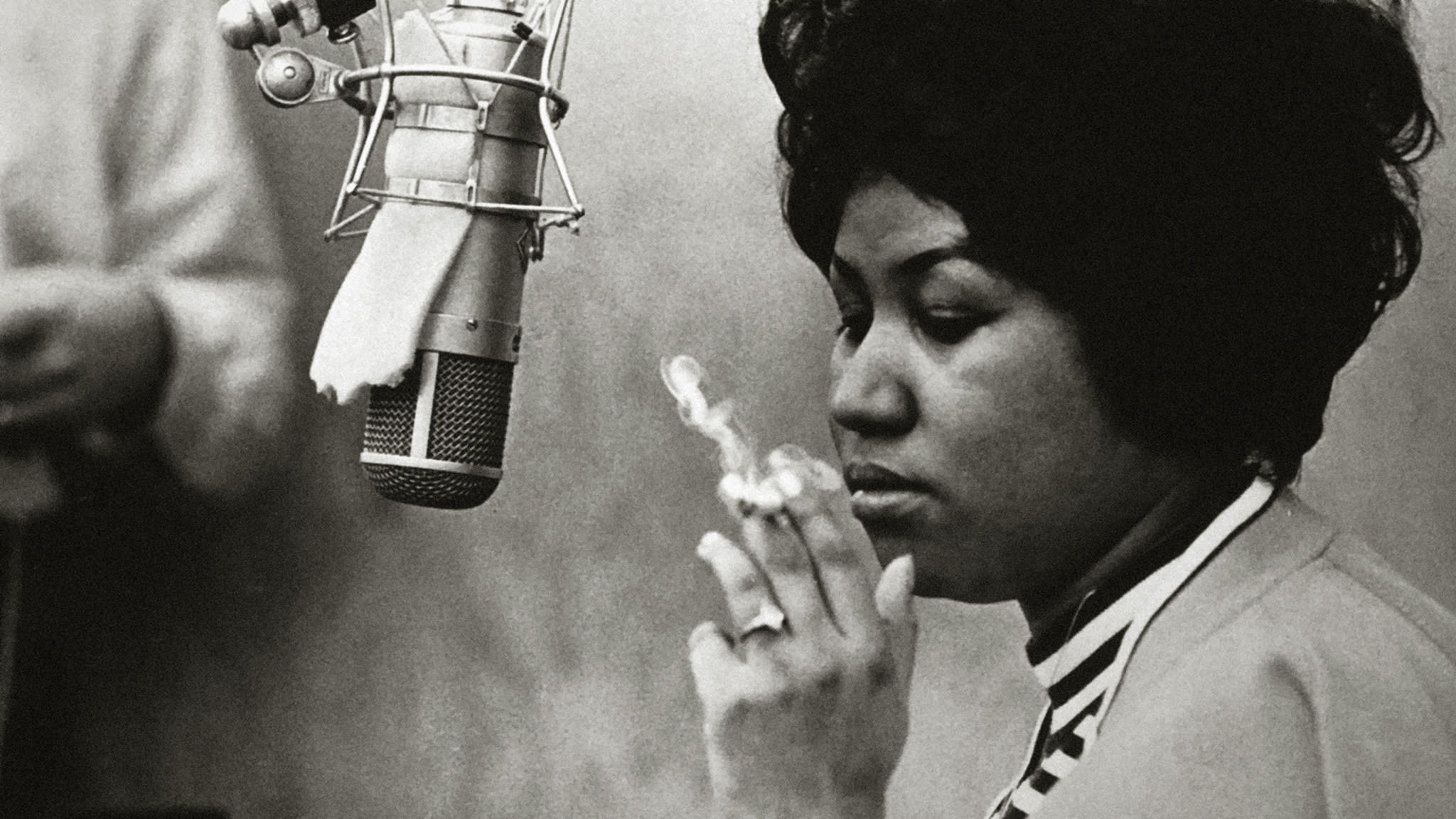
It was 1967. Twenty-five-year-old Aretha — no surname needed — was in her first year at Atlantic but was already the “Queen of Soul” and had just had a number one, “Respect”. Goffin and King looked at each other then back at Wexler. He nodded, rolled up the window, and disappeared into traffic. Back at their New Jersey home, the young couple put their two daughters to bed and got to work.
An extraordinary team, they had already written a songbook’s worth of huge hits, including “The Loco-Motion”, “I’m into Something Good” and “Will You Love Me Tomorrow”.
King, the musical genius, found the chords almost immediately. Goffin, the lyricist, dreamed up “Looking out on the morning rain, I used to feel so uninspired” and “When my soul was in the lost and found, you came along to claim it.”
The next day they recorded a demo and took it to Wexler, who loved it. It was an astonishing achievement for a commissioned song created in a single evening. But would Aretha like it?
They heard nothing for days until Wexler called and invited them into the office. Aretha had liked it. In fact, she had recorded it. He played them the record. As King puts it in her memoir: “Oh. My. God.”
“(You Make Me Feel Like) A Natural Woman” had a surging orchestral arrangement and wonderful backing vocals from Franklin’s sisters, Erma and Carolyn. But the most powerful ingredient was Franklin’s soaring, swooping vocal, particularly on the joyous chorus. King called her voice “one of the most expressive vocal instruments of the 20th century”.
It reached number eight in the US charts and became one of Franklin’s signature songs, synonymous with her to the point where people are surprised to discover that she didn’t write it. (Wexler got a writer’s credit for providing the title.)
King herself recorded a slower, more sparse version which closed her legendary 1971 album, Tapestry, and she would later title her autobiography A Natural Woman.
It has been covered by many other great female artists such Peggy Lee, Bonnie Tyler, Whitney Houston, Celine Dion, Mary J Blige and Adele. And it was attempted, perhaps less successfully, by Rod Stewart on 1974’s Smiler album as “Natural Man”. Whether simply singing the word “ma-an” instead of “woman” has quite the transformative effect that Stewart appears to believe it has is very much open to debate. Rolling Stone thought his interpretation “sincere but pallid”, though, to be fair to Stewart, Bobby Womack had also recorded it the previous year.
Although Goffin’s lyrics could be interpreted as describing a woman being validated by a man, the song has come to be seen as a celebration of womanhood and as an anthem for female empowerment. As Dr Mike Jones of Liverpool University’s Institute of Popular Music points out, no one who has listened to Franklin sing it ever imagined that this was a woman who needed validation from anyone.
Jones ascribes the song’s enduring success to three factors. “Firstly, Goffin and King,” he says. “Some songwriters simply go for the hook and the verses are hit-and-miss. Goffin and King songs are very whole and entire. There’s an attention to detail maybe lacking from hits by others.
“But then the hook, ‘You make me feel like a natural woman’ — there was something about it that suggested feminism, at a time when second-wave feminism was taking shape. Finally: Aretha, who was on a real roll at the time. Her vocal and address transform it into a soul classic.”
When Franklin died in 2018, both Alicia Keys and Ariana Grande performed “Natural Woman” on television programmes in tribute, and the latter also sang it at her funeral. But the video that went viral was of Franklin herself singing it in 2015 at an event honouring Carole King.
Franklin walks on stage. King blows a kiss to her, she blows a kiss back — sisters in music. Then she sits at the piano and starts playing. She’s a 73-year-old legend — she doesn’t have to prove anything to anyone. But she goes ahead and proves it anyway. Oh. My. God.
What are your memories of ‘(You Make Me Feel Like) A Natural Woman’? Let us know in the comments section below.
‘The Life of a Song Volume 2: The fascinating stories behind 50 more of the world’s best-loved songs’, edited by David Cheal and Jan Dalley, is published by Brewer’s.
Music credits: Rhino Atlantic; Ode/Epic/Legacy; Capitol Catalog; Castle Communications; Columbia; Universal-Island Records Ltd.; UMC (Universal Music Catalogue); Charly
Picture credit: Alamy