
There was a time when everything, and everyone, that was touched by David Bowie turned to gold — and platinum. In 1972, when Lou Reed was at a post-Velvet Underground low ebb, Bowie (who had previously covered The Velvets’ “White Light/White Heat” in his shows) co-produced Reed’s Transformer album, decorating it with his backing vocals and bringing Reed (and by association The Velvets) to a new younger audience. And the very words “mixed by David Bowie” were sufficient to bring Bowie’s fans flocking to “discover” Iggy and the Stooges and their 1973 album Raw Power. Both Reed and the Stooges’ wild frontman Iggy Pop signed to Bowie’s management company, MainMan, helping to resurrect their careers, while Pop himself was said to be an influence behind the creation of Bowie’s Ziggy Stardust character.
Bowie’s association and friendship with Iggy Pop endured, and launched an astonishingly fruitful creative period for both men. In 1976, Bowie took Pop around the world as a companion on his Isolar tour, and that year they shacked up in the Château d'Hérouville near Paris, equipped with a recording studio. After further sessions in Munich, they emerged with Pop’s first solo album, The Idiot, released in 1977.
Groaning with dystopian synthesisers, the album was shockingly bleak but a critical and commercial success. With tracks such as “Mass Production” that conjured up a world of machines and belching smokestacks, it seemed a musical mirror to David Lynch’s bleak masterpiece, Eraserhead, released the same year.
By now the pair were living in the same apartment block in Berlin. Witnesses to Bowie’s time in Berlin painted a picture of a frenetic, ascetic figure in the studio cracking raw eggs into his mouth to sustain himself — though others recalled that Bowie and Pop would often head out after a recording session to drink beer and eat pies.
In contrast to the convivial nightly pleasures of beer and pies, one track on The Idiot summoned up a nocturnal demimonde of loveless, cheerless revelry: “Nightclubbing”(music by Bowie, lyrics dashed off in minutes by Pop). On this haunting song, to a drum-machine beat, a keyboard riff and squalling guitars, Pop sings in irony-drenched droll-deadpan tones of an emotion-free scene: “Oh, isn’t it wild?” Later in the song, Pop’s sprechgesang vocal delivery resembles that of Lou Reed, leading to suggestions that Reed sang on the track, though this is not true.
Though never released as a single, “Nightclubbing” attracted attention, notably from a young synth band, The Human League, who, in 1980 — before they were joined by Joanne Catherall and Susan Ann Sulley for 1981’s “Don’t You Want Me” — covered “Nightclubbing”. The Human League were sharp enough to notice that the robotic Roland drum-machine beat of “Nightclubbing” bore a striking resemblance to Gary Glitter’s 1972 hit “Rock and Roll” — and seguedbetween the two songson their Holiday ’80 EP (remixed in 2003).
Henceforward, “Nightclubbing” became a go-to track for bands and artists wishing to show off their cool credentials. Best known among these was Grace Jones, whose ice-queen demeanour was the perfect vehicle for the track’s chilly atmosphere; her 1981 dubby deconstructionis driven by the immaculate synchronicity of rhythm section Sly and Robbie.
Perhaps reflecting the fact that Jones had effectively taken possession of “Nightclubbing”, some years passed before anyone else tackled it — though Pop’s original featured on the soundtrack of the 1996 film Trainspotting, with tickets to an Iggy Pop show forming part of the narrative.
In 1998 Brazilian pop-countertenor singer Edson Cordeiro braved a trip into clubland, taking his voice down an octave in a slinky take. In the same year, Space-rock band Tars Tarkas channelled the song’s bluesy structure on an album of Iggy Pop covers, Pop O.D. — The Songs of Iggy Pop, instrumentalsave for some jaunty whistling.
It was perhaps inevitable that a post-punk band such as The Creatures — a spin-off from Siouxsie and the Banshees, featuring singer Siouxsie Sioux and drummer Budgie — would cover it, and indeed they included a version from their 1999 Glastonbury set (interpolated into “Pluto Drive”) on their 2000 live album, Sequins in the Sun.
French electropop duo Zombie Zombiedoubled up the pulse in the style of Donna Summer’s “I Feel Love” in 2008. The Jolly Boys,a veteran Jamaican “mento” band (a folky precursor to ska and reggae), covered it in 2010, with banjo and bongos, singer Albert Minott sounding appropriately world-weary.
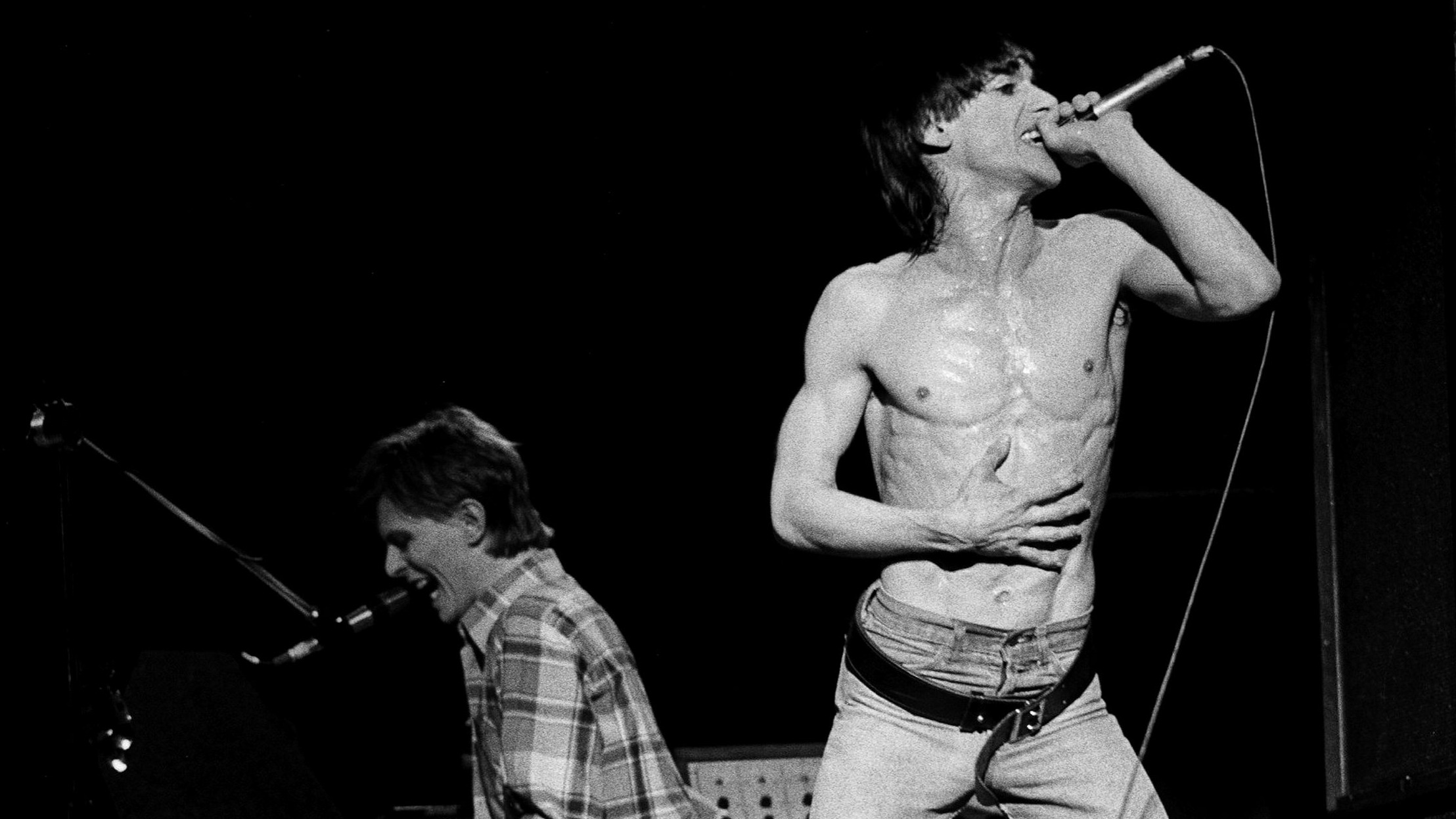
Iggy Pop himself has continued to perform it in his live shows over the years. A 1977 tour, with Bowie on keyboards, became a live album, TV Eye, featuring a raucous rendition.Perhaps finest of all was Pop’s version at his 2016 show at London’s Royal Albert Hall (which features on the DVD of the show), with Queens of the Stone Age guitarist Josh Homme sashaying while Pop gurned, hollered and plunged into the crowd. No cool drollery here: this was really wild.
What are your memories of ‘Nightclubbing’? Let us know in the comments section below.
‘The Life of a Song Volume 2: The fascinating stories behind 50 more of the world’s best-loved songs’, edited by David Cheal and Jan Dalley, is published by Brewer’s.
Music credits: UMC; Virgin Records; Orchard.Com; Versatile Records; Wall of Sound
Picture credit: Richard McCaffrey/Michael Ochs Archive/Getty Images