
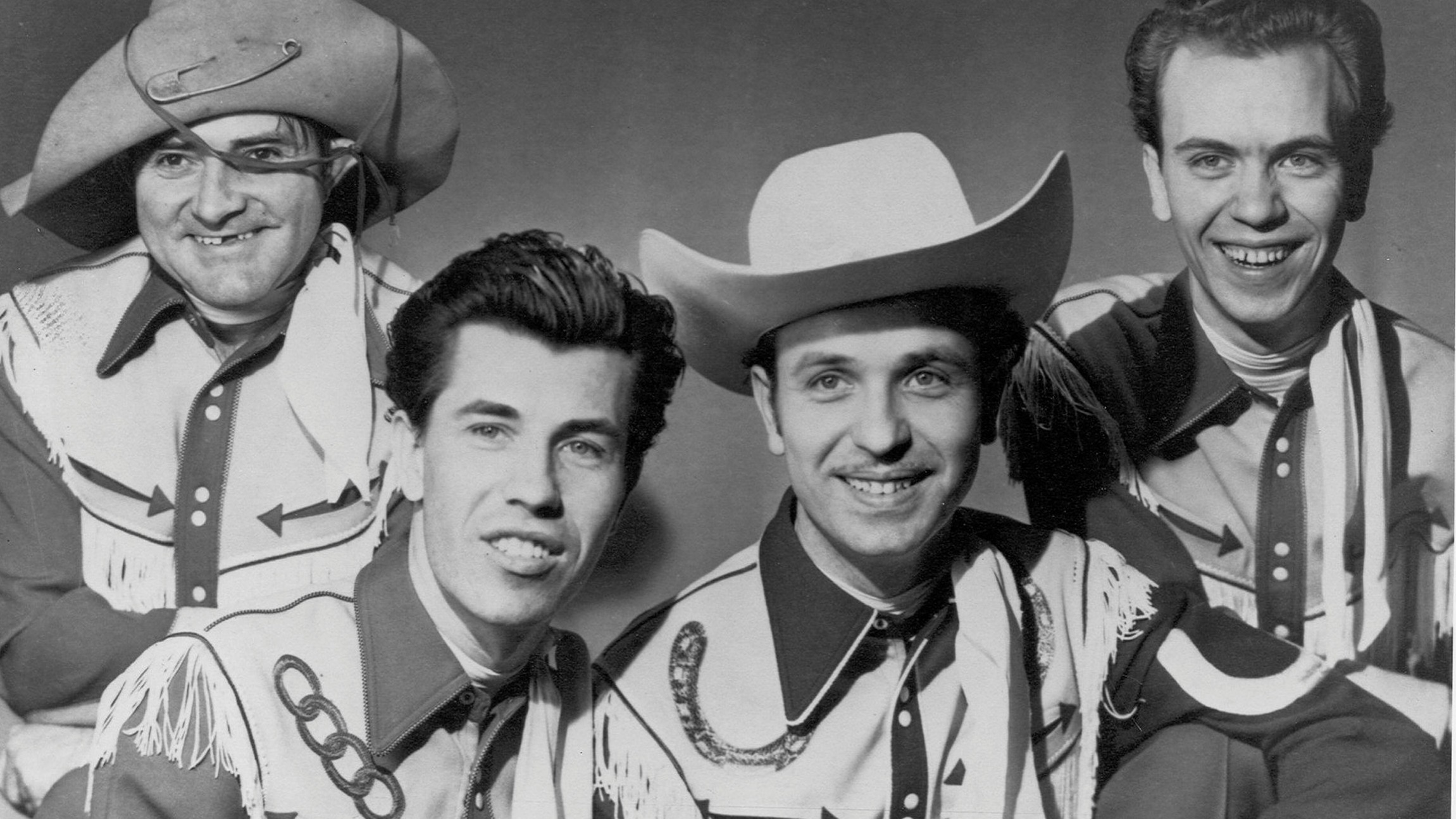
“Rumble”,the menacing instrumental released by Link Wray & His Ray Men in 1958, has had an outsized influence on the world of rock guitar, rockabilly and film soundtracks. The raw guitar sound was unlike anything heard before, and has been cited by generations of musicians, including Pete Townshend, Jimmy Page and Iggy Pop, as the catalyst for them to pick up a guitar or microphone. From one punctured amplifier, a thousand distortion pedals bloomed.
The song was born by accident. The Ray Men were on stage in Fredericksburg, Virginia, at a “hop”. The band were asked by local DJ Milt Green, who had organised the hop, to play “The Stroll”by Canadian doo-wop group The Diamonds but guitarist Link Wray didn’t know what he was talking about.
Wray’s brother Doug, whom he described as the loudest drummer in the world, started beating out a rhythm using the wrong end of his sticks. Wray played along with a heavy sequence of chords and a vocal microphone was put in front of the guitar amp so it could be heard over the drums. The brutal sound made the kids “go ape”, according to Wray, and the Ray Men were rushed to a studio to record a song initially dubbed “Oddball”.
They struggled to replicate the sound in the studio. Wray thus punched holes into his amplifier speakers. The effect was to produce distortion that set the world alight. Kinks guitarist Dave Davies says he used a similar method of vandalism to beef up the group’s guitar sound (this was before the invention of the fuzz box).
Archie Bleyer, the boss of Cadence Records, was unconvinced by the strange record until his stepdaughter Jackie Ertel enthusiastically said that it sounded like “The Rumble”,the gang fight in West Side Story. Leonard Bernstein’s score has little in common with the malevolence of Wray’s guitar but the mood was set and the song rechristened.
The link to street violence saw the instrumental banned by radio stations after it was released. It went on to sell 4m copies as speakers rumbled across the world.
The song firmly established Link Wray’s influence in guitar mythology. That was best illustrated when a beaming Jimmy Page of Led Zeppelin was shown joyously playing air guitar along to “Rumble” in It Might Get Loud, a 2008 documentary about guitar greats. He cited the influence of the “profound attitude” bleeding out of the record.
The guitar work, including a descending pentatonic riffthat echoes in The Beatles’ “Helter Skelter”and AC/DC’s “Back in Black”,catches the ear from the first chord. But it’s Wray’s playing style that really drives the record. The Korean war veteran, who lost a lung to tuberculosis, uses power chords, intense vibrato and distortion to add menace to the rockabilly sound. Wray was a badass. Footage of him strutting around the stage dressed in black leather and sunglasses and manhandling his guitar set the template for artists striking up an attitude.
Wray re-recorded the song multiple times (“Rumble ’68” “Rumble-69”), getting rowdier with every take, but others have struggled to match it. The 1960s saw The Trashmenof “Surfin’ Bird” fame produce a more laconic version, while The Dave Clark Fiveadded a beat that sounds like a goose-step. Jack Nitzsche’suptown big-band version from 1963, while charming, sounds more like a minor scuffle over a bill in a cocktail bar than a teenage street brawl. Adam and the Ants used it as the basis for their 1980 track “Killer in the Home”but the mood sounds more laboured than ominous. Jazz guitarist Bill Friselladded more texture, trills and solo squall on his 2014 “space age” covers album but it all feels a little unnecessary.
It was arguably psychobilly revivalists The Cramps who returned the instrumental to its threatening roots when “Rumble Blues” crashed violently out of the rehearsal rooms garnished with Lux Interior’s unintelligible howling.
The song has endured in recent decades. Although guitar rival Dick Dale’s “Misirlou” was the star of the Pulp Fiction soundtrack, it was “Rumble” that played during the key “uncomfortable silences” scene in the movie. It was also used in the first episode of The Sopranos and remains a staple for soundtracks looking to signify roughness and edge.
Its mood-enhancing qualities were also co-opted by price comparison site Confused.com, whose “Confusion to Clarity” TV advertisements have used “Rumble” to signify freedom — somewhat ironically — from aggressive capitalist harassment.
Wray retreated to play redneck bars in the country but re-emerged in the 1970s with an album devoted to his Shawnee identity and later led the rockabilly revival with singer Robert Gordon. “Rumble” was selected as the title of a 2017 PBS documentary about the overlooked influence of Native American musicians on the history of rock and roll.
Wray was never an advocate of the violence associated with his best known song. “I’m wild but I’m not evil,” he said.
What are your memories of ‘Rumble’? Let us know in the comments section below.
‘The Life of a Song Volume 2: The fascinating stories behind 50 more of the world’s best-loved songs’, edited by David Cheal and Jan Dalley, is published by Brewer’s.
Music credits: Play Digital; Black Sheep Music; Foyer; EMI Catalogue; Epic/Legacy; Canadian American Car; Sundazed Music; BMG Rights Management; Pop Classics; Sony Music UK; Okeh
Picture credit: Michael Ochs Archives/Getty Images