
Harold Arlen once heard a New York taxi driver whistling “Stormy Weather” and asked for the songwriter’s name. “Sure — Irving Berlin,” came the reply. “Wrong,” said Arlen. “I’ll give you two more guesses.” Richard Rodgers, then Cole Porter were struck off before the passenger announced that in fact he, Harold Arlen, had been responsible. The driver was unimpressed: “Who?”
Arlen’s profile always was low for a man who, in addition to “Stormy Weather”, would also claim credits for “Over the Rainbow”, “Blues in the Night” and many other hits. But he had the respect of his peers: George Gershwin, the one to whom he is most often compared, described him simply as “the best of us”.
In 1933, the year of “Stormy Weather”, Arlen and his then lyricist Ted Koehler were working at the Cotton Club on 142nd Street in New York, writing songs for a house band led by Cab Calloway. Controlled by the terrifying Owney Madden, with a racist entrance policy and a southern plantation theme, the establishment was seen as a malign presence by Harlem intellectuals of the day; the poet Langston Hughes dismissed it as “a Jim Crow club for gangsters and monied whites”. But the gangsters paid well at a time when few others did, employing musicians of the calibre of Duke Ellington, Jimmie Lunceford and Adelaide Hall.
“Stormy Weather” was written with Calloway in mind, and you can hear a gesture towards that performer’s trademark “hi-de-ho” in the early phrases. But when he turned out to be touring and unavailable, it was offered to Ethel Waters, just back in town after a year on the circuit of Al Capone nightclubs in Chicago.
Initially wary, Waters accepted when she heard the song, which after the characteristic Arlen octave drop of “weath-er” quickly developed into something far more suited to her bluesy style than that of the flamboyant, self-ironising Calloway. Reeling from the collapse of her second marriage, she also recognised that it matched her mood.
“I was telling the things I couldn’t frame in words,” wrote Waters in her autobiography. “I was singing the story of my misery and confusion, of the misunderstandings in my life I couldn’t straighten out, the story of the wrongs and outrages done to me by people I had loved and trusted.” The audience demanded 12 encores on the opening night.
Just starting out at the Cotton Club that year was the 16-year-old Lena Horne. Quickly plucked from the chorus, she remained deeply unimpressed by her surroundings and got out as soon as she could, later describing the experience as a kind of “indentured servitude”.
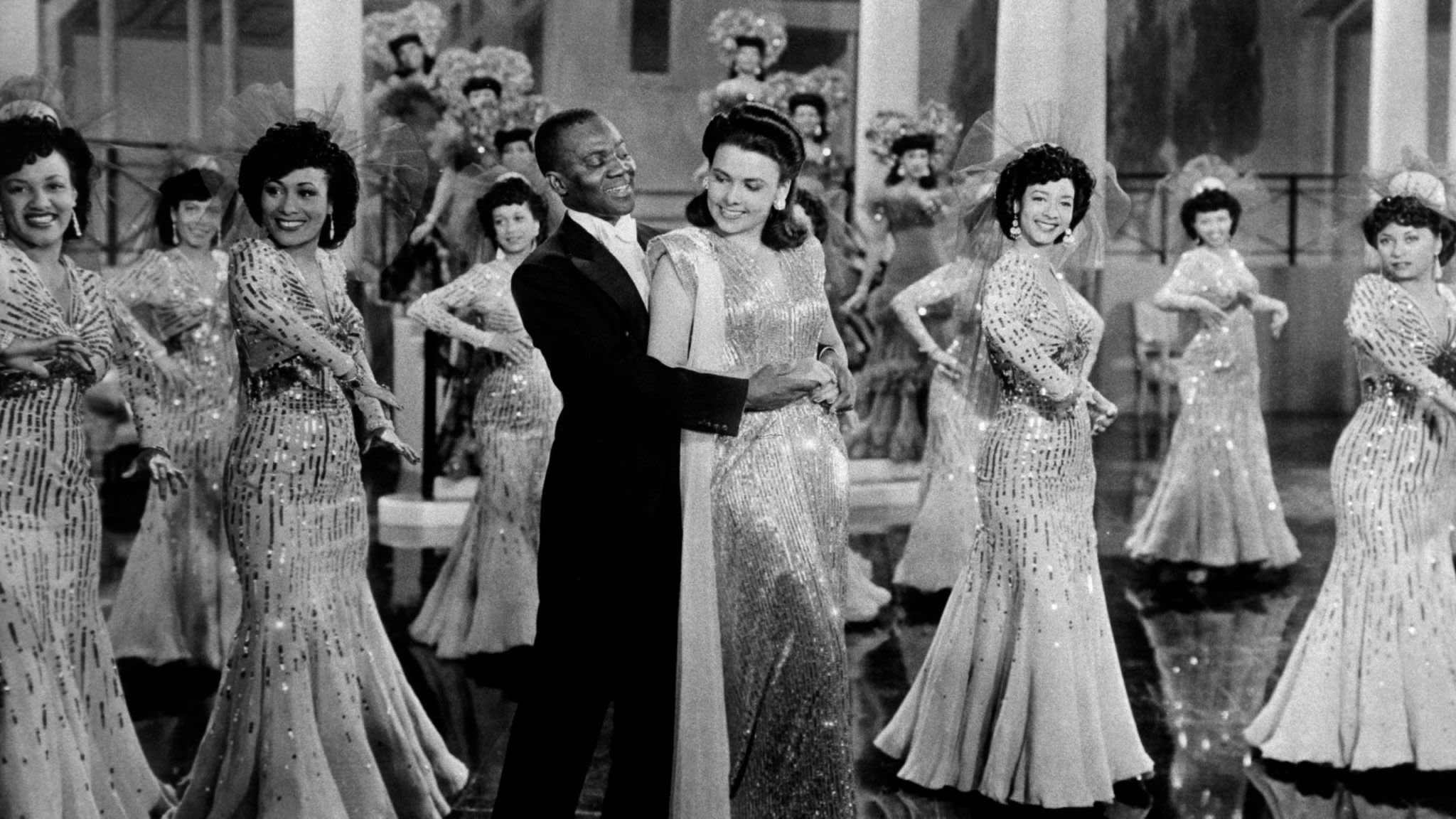
By this point, the club’s fortunes were fading; it would close in 1940. Horne, meanwhile, was on her way to landing a long-term contract with MGM, and it was as a Hollywood star that she delivered the next defining performance of “Stormy Weather”, in the 1943 all-black musical of the same name.
Gone was the log cabin set of the original shows, replaced by an upscale New York sitting room. Horne, interrupted at one stage by a dream ballet, sang the song in a cool, precise style that might almost be read as a rebuke to Koehler’s folksy borrowings.
Something had changed. But not enough, as Horne’s Hollywood career would illustrate. Finding her parts largely limited to cameos that could be easily cut for southern movie theatres, she had grown disillusioned by the mid-1950s and was once again focused on nightclub singing.
“Stormy Weather” was now firmly established as a standard, a tune that every jazz musician was expected to know and countless singers would record (including Calloway, who gave a sense of what might have been). These were the years when Ella Fitzgerald was embarking on the epic series of recordings for Verve that would do so much to cement the status of the Great American Songbook. Taking each writer or writing team in turn, she reached Arlen in 1961, cutting a version of “Stormy Weather” that swings hard while hinting at another era in jazz; just the odd phrase to remind you that this was a singer who could scat in the language of bebop too.
By now, Waters was in poor health and struggling with debt. Fitzgerald toured constantly, building on the international following she had acquired with the Song Book albums. Horne threw herself into the civil rights movement, speaking and performing at many marches and rallies.
More than a decade later, at the age of 64, her successful one-woman show Lena Horne: The Lady and Her Music included two versions of “Stormy Weather”. The first was performed as it had been in Hollywood; the second delivered with a passion and a freedom that stunned audiences. “I had to grow into this song,” she confided on stage — though you might equally say that the song had grown with her.
What are your memories of ‘Stormy Weather’? Let us know in the comments section below.
‘The Life of a Song Volume 2: The fascinating stories behind 50 more of the world’s best-loved songs’, edited by David Cheal and Jan Dalley, is published by Brewer’s.
Music credits: Jazz Masters; Retrospective; Verve Reissues
Picture credit: Alamy