
Late last year the British singer and one-time X Factor runner-up Rebecca Ferguson received an invitation to perform at the inauguration ceremony of President Donald Trump. It would be, without doubt, the most high-profile performance of her career, in which she would be following in the footsteps of Aretha Franklin and Kelly Clarkson, who sang at the inaugurations of Barack Obama.
Ferguson replied that she would be delighted to accept on the condition that she could perform “Strange Fruit”. Made famous by the jazz singer Billie Holiday, it was a song, she explained, “that was blacklisted in the United States for being too controversial. A song that speaks to all the disregarded and downtrodden black people in the United States. A song that is a reminder of how love is the only thing that will conquer all the hatred in this world.” Ferguson never heard back from Donald Trump’s people and ended up watching the ceremony on TV.
Before it was a song, “Strange Fruit” was a poem written by Abel Meeropol, a Jewish high school teacher from the Bronx. He was inspired by a now well-known photograph of two black teenagers who had been lynched in the town of Marion, Indiana in 1930. A mob had broken into the jail where they were being held for allegedly murdering a white factory worker and raping his female companion. They dragged the boys outside, killed them and hung them from a tree for all to see.
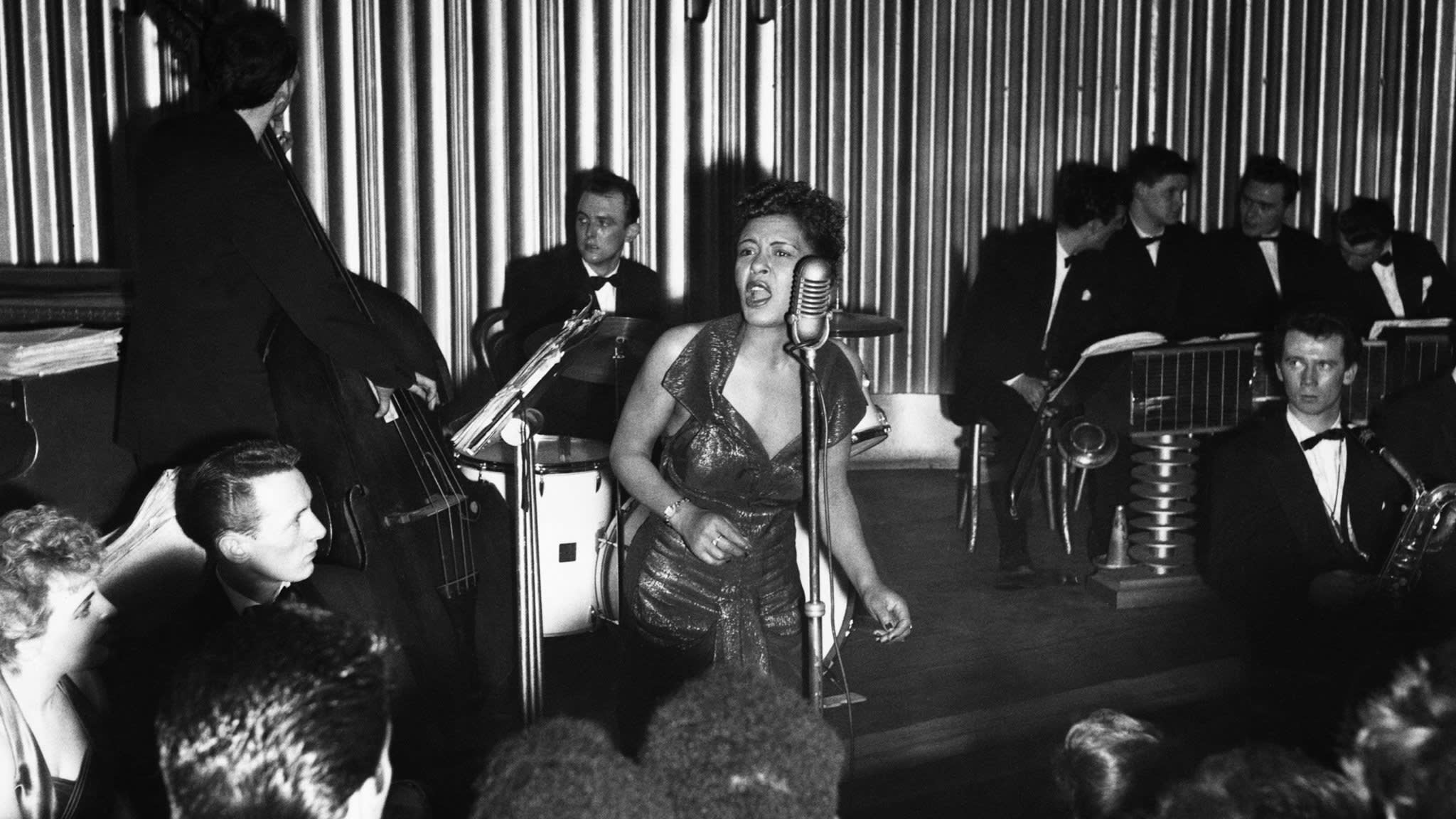
Set in the rustic loveliness of the “gallant South”, Meeropol’s poem provided an unflinching description of a “black body swinging in the southern breeze”with “the bulging eyes and the twisted mouth”, and where the scent of magnolia is supplanted by the stench of burning flesh. It first appeared in 1937 under the title “Bitter Fruit” in the union publication The New York Teacher. Later Meeropol set it to music and played it to the owner of the Greenwich Village cabaret club, Café Society, who passed it on to Billie Holiday, then one of the club’s regular performers. Early in 1939, right at the end of her set, she sang it while standing under a single spotlight in front of a shocked crowd. Holiday later recalled that at first “there wasn’t even a patter of applause. Then a lone person began to clap nervously. Then suddenly everyone was clapping.”
Holiday asked her label, Columbia, to record it but, fearing a backlash, they declined. Instead she went to Commodore Records and, accompanied by her eight-piece Café Society band, recorded it in a single afternoon. “Strange Fruit” would become her biggest hit and signature track, and would be described by the jazz writer Leonard Feather as “the first significant protest in words and music, the first unmuted cry against racism”. The record producer and co-founder of Atlantic records, Ahmet Ertegun, called it “a declaration of war...the beginning of the civil rights movement”.
Performance of the song was banned in some US cities for fear of provoking civil unrest; in 1940, Meeropol was brought before a committee assembled to investigate communism in public schools, where he was asked if the Communist party, of which he was a member, had paid him to write it (it hadn’t).
Holiday’s “Strange Fruit” has long been viewed as the definitive one, dripping as it is with pain and disgust, though Nina Simone came close with her similarly bleak 1965 version. She once described it as “the ugliest song I have ever heard. Ugly in the sense that it is violent and tears at the guts of what white people have done to my people in this country.” Other interpreters have included Diana Ross, Jeff Buckley, Siouxsie and the Banshees, Cocteau Twins and Robert Wyatt. Most recently, Kanye Westrevived interest in the song when he sampled Simone’s recording for his 2013 track “Blood on the Leaves”.
In 1999 Time magazine called Holiday’s version the song of the century, though that doesn’t mean that the world has grown comfortable with its ferocious imagery and malignant tone. Now, 80 years after it was written, this powerful portrait of racial violence still has the capacity to break hearts and stun audiences.
We on the Arts desk would like to hear from our readers. Whose is the most moving version of “Strange Fruit”? Do you have particular memories of the song?
The Life of a Song: The fascinating stories behind 50 of the world’s best-loved songs, edited by David Cheal and Jan Dalley, is published by Brewer’s.
Music credits: Not Now Music, Compulsion, Universal-Island Records Ltd., Columbia/Legacy, UMC (Universal Music Catalogue), Domino Records, Virgin Records Ltd
Picture: © Hulton-Deutsch Collection/CORBIS/Corbis via Getty Images