
Let’s work backwards.
It’s 2020. Chrissie Hynde is bored at home. She and her guitarist James Walbourne, across London, record a version of Bob Dylan’s “Sweetheart Like You” for her album Standing in the Doorway: Chrissie Hynde Sings Bob Dylan. Hynde throws out the lines rather than crooning them. And as she sings “A woman like you should be at home, that’s where you belong ...”, her voice cracks, archly.
It’s 2007. In one of the great missed opportunities, although his singing persona would have fitted it like a glove, Bryan Ferry does not include the song on his album of Dylan covers. (Nor indeed does Bettye LaVette, on hers.)
It’s 1995. Rod Stewart, who has history with taking on and taking over Dylan’s songs, deploys a cod-American accent on his organ-heavy version of “Sweetheart Like You”. His reading smooths out the song’s strangenesses, much as he made Robbie Robertson’s “Broken Arrow” a bland shadow of its real self: you suspect it is actually addressed to a literal sweetheart, no more, no less.
It’s 1993. Judy Collins starts by speaking the verses into a reverberant silence, before being joined by hesitant descending piano chords. When crashing drums appear, it’s as if they are being played in a neighbouring room. Collins ends the song with a pretty, wordless coda.
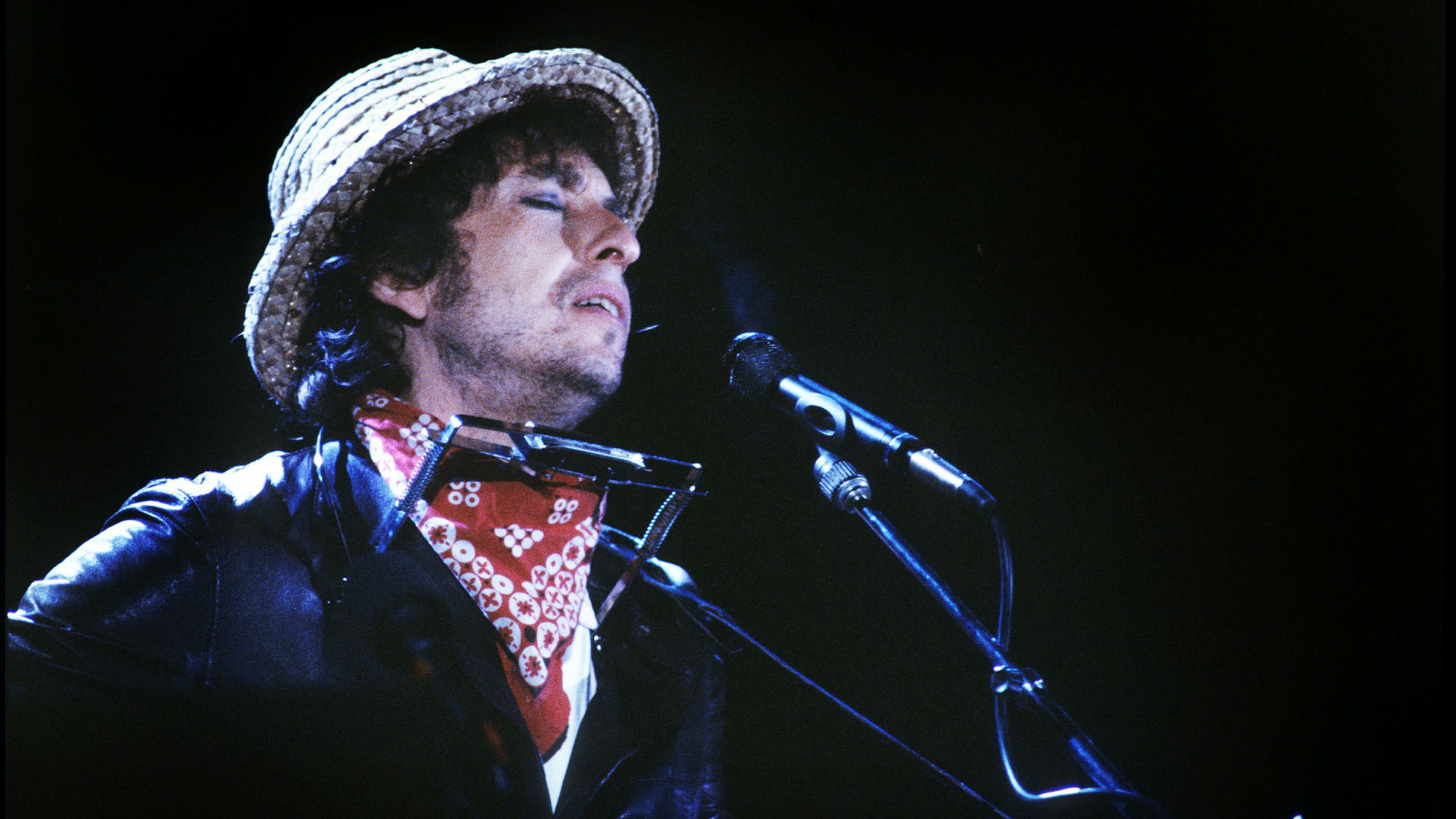
It’s 1983. “Sweetheart Like You” is the first single from Bob Dylan’s new album, Infidels, the successor to a couple of poorly received gospel outings. A BBC2 review show plays the video (Dylan and a small band, not the musicians on the record, sing to a woman sweeping up after a nightclub closes). The panel compare it unfavourably with Tom Waits’s “In the Neigborhood”. It sounds, sniffs one panellist, like Dire Straits.
And to some extent it does. Dylan has enlisted Dire Straits’ frontman Mark Knopfler to produce the album (promoting him from guitarist on his Slow Train Coming album). The top end of the sound is Knopfler’s guitar and Alan Clark’s keyboards, with Mick Taylor playing a Knopfleresque solo. But the bottom end is provided by the peerless Jamaican rhythm section Sly and Robbie: Dylan had spent a lot of time in the Caribbean before making the album and wanted a reggae feel.
In many ways, the album’s country-blues with a disorienting echo of dub is as good as Dylan ever sounded on record, at least until Daniel Lanois produced Oh Mercy later in the decade. When people criticise Dylan as a singer, what they are really reacting to is the timbre of his voice; his phrasing, here, is exemplary, warm and conversational. Setting his version against Hynde, Stewart and Collins, none of them slouches, you hear how often their micro-decisions break the spell of the song, tipping it respectively into the agitated, the louche or the alienated. You also hear how their minor adjustments to Dylan’s lyrics throw off the balance.
But wind back further and you can hear Dylan himself constantly at work on the words. On the alternative take included in the revelatory new box set Springtime in New York (released on September 17), the opening verse is still taking shape. The boss has gone north, but “the very last thing he said was ‘see ya later’ … he did go out in style”. There are too many words; the eventual “vanity got the best of him” is just right. The sweetheart at this stage wore not a cute hat but a “cute pair of boots”, possibly of Spanish leather. Again, here, cutting the words sharpened the phrases.
Go back even further, to genuine bootlegs, and you can hear the song starting cold with “The boss ain’t here”, which throws us too precipitately into its world. Adding “the pressure’s down” — possibly a nod to Toots and the Maytals’ “Pressure Drop”? — tames the pace. Even with the pressure down, for a while the boss went up north to, bewilderingly, a “lighthouse round the bend”. Sometimes a lighthouse is just a lighthouse; nonetheless, Dylan is inching towards the alchemical balance of the song, a mixture of Guys and Dolls card-sharpery, political aphorism (“Steal a little and they throw you in jail; steal a lot and they make you king”), eschatology (“In your father’s house there’s many mansions… each one of them got a fireproof floor”) and off-kilter seduction (“You could be known as the most beautiful woman who ever crawled across cut glass to make a deal”). What he reaches is a commentary on the state of the world as powerful as, if more oblique than, the album’s “lost” masterpiece (eventually released in 1991), “Blind Willie McTell”
It’s 1942. Humphrey Bogart is playing the gambler Alfred “Gloves” Donahue in the wry spy thriller All Through the Night. “What would a sweetheart like the Hamilton dame be doing in a dump like this?” he asks. Dylan has been born just one year before.
What are your memories of ‘Sweetheart Like You’? Let us know in the comments section below.
‘The Life of a Song Volume 2: The fascinating stories behind 50 more of the world’s best-loved songs’, edited by David Cheal and Jan Dalley, is published by Brewer’s.
Music credits: BMG; Warner Bros. Records; Geffen; Columbia/Sony
Picture credit: Gie Knaeps/Getty Images