
Many artists have exploited the shock value of toying with the occult and Satanism in song. Few have produced an imperious masterclass in musical menace to rival The Rolling Stones’ compelling “Sympathy for the Devil”.
In 1967, a manuscript of Mikhail Bulgakov’s satirical novel The Master and Margarita was smuggled out of Moscow. A fantastical musing on Satan visiting the Soviet Union, it was heavily censored there. A publisher rushed out an English-language edition and Marianne Faithfull gave a copy to her boyfriend, Mick Jagger.
It had a large impact on The Rolling Stones’ singer. At the end of 1967, his band released Their Satanic Majesties Request. That album bore no specific lyrical references to the occult — but Jagger became increasingly fascinated by Satanism.
His interest was partly inculcated by film-maker Kenneth Anger, who was later to direct Lucifer Rising (Jagger turned down the title role). Jagger also spent 1968 filming Performance, written and co-directed by noted occultist Donald Cammell.
When The Stones came to record their Beggars Banquet album in spring 1968, Jagger penned “a sort of Bob Dylan song” adopting the persona of the Devil. Yet his Lucifer was no fire and brimstone-spitting Old Testament Beelzebub. Like Bulgakov’s anti-hero, he was a seductive sophisticate.
Originally titled “The Devil Is My Name”, the song openedwith Jagger’s Satan oozing diabolic charm: “Please allow me to introduce myself, I’m a man of wealth and taste.” It was initially a folk song until Keith Richards upped the tempo, introducing funky rhythms.
Over a samba beat, Jagger’s drawling Devil claimed malign agency over numerous historical catastrophes. He began with the biggest of all, the crucifixion of Christ: “I made damn sure Pilate washed his hands, and sealed his fate!”
Jagger’s louche Lucifer took credit for the Russian revolution, killing the Romanovs (“Anastasia screamed in vain”), Nazi atrocities and the Hundred Years’ War. Behind him, the frenzied beat pulsed and quickened like a diabolic incantation.
In the original lyric, the Devil asked, “Who killed Kennedy?” On June 5, 1968, as The Stones recorded the song, JFK’s brother, Robert, was shot dead in Los Angeles. Ever the opportunist, Jagger changed the line to “Who killed the Kennedys?”
Behind the possessed-sounding Jagger, the other Stones, along with Faithfull, Richards’ partner Anita Pallenberg and producer Jimmy Miller wailed “Woo-woo!”backing vocals. Pallenberg had the idea after overhearing Miller talking to himself: “Who you singing about, Mick? Who? Who?”
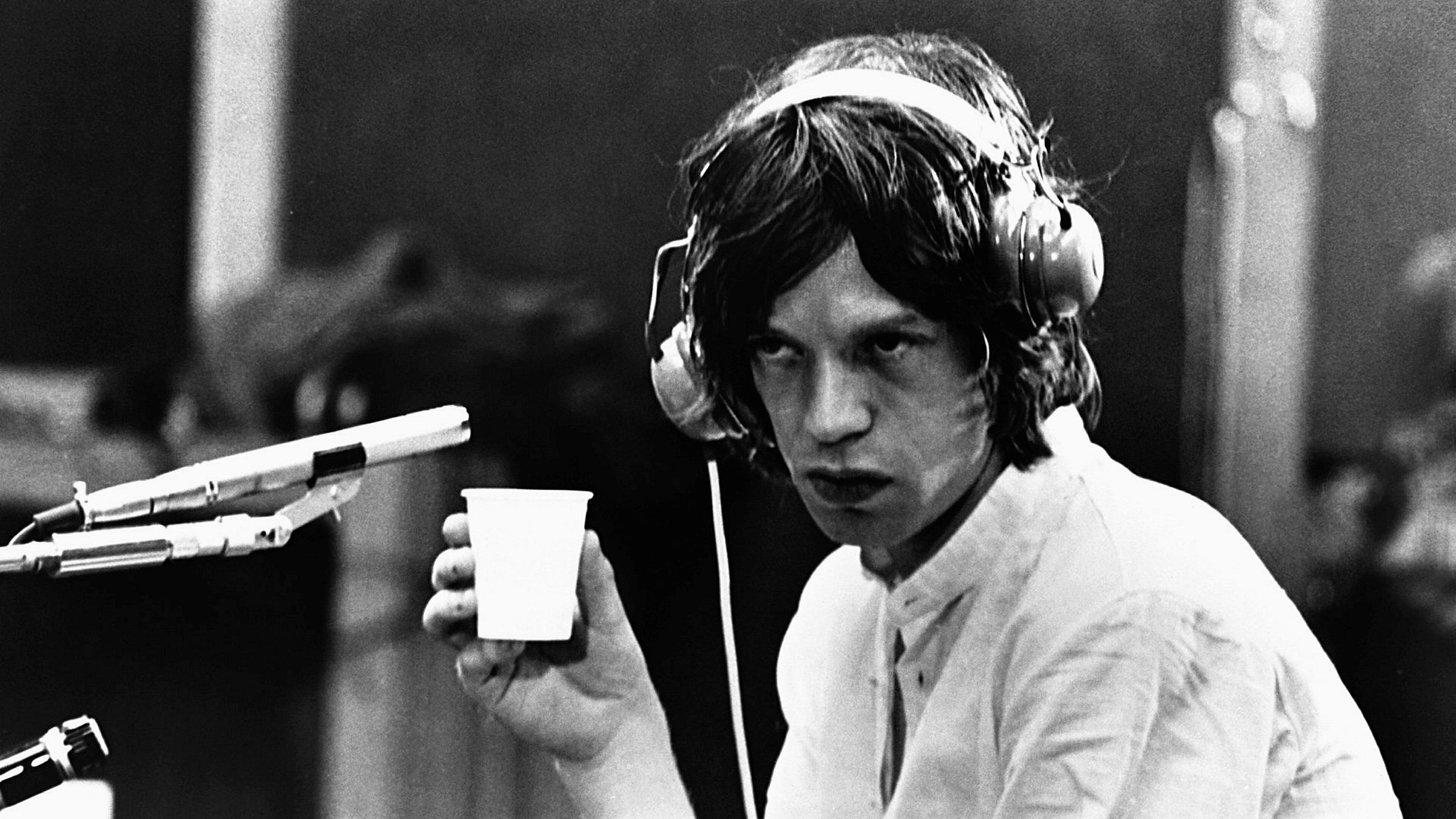
Avant-garde director Jean-Luc Godard shot The Stones recording the song for his movie, One Plus One. The film, with odd scenes of Black Power activists reading manifestos and firing rifles in a scrapyard, is bafflingly incoherent, the studio footage the best thing about it by far.
Godard’s lights started a studio fire, damaging the band’s gear — was “Sympathy for the Devil” cursed? Some blamed it for instigating the crowd unrest at 1969’s Altamont Festival that led to the murder of Meredith Hunter by Hell’s Angels security guards during The Stones’ set. During their performance, the band had to stop and restart the song due to the disturbances.
Carlos Santana, also on the Altamont bill, claimed that the track had unleashed demonic forces. “I don’t have no sympathy for the Devil,” he told NME. “The Devil is not Santa Claus. He’s for real.”
Just a few brave artists have essayed covers. Bryan Ferrywarbled through it in 1973, Jane’s Addictionbrooded in 1987, and Slavonic art-rockers Laibachdid a whole album of reworkings of the song in 1990.
Guns N’ Roses’ 1994 versionwas the last song Slash played on before quitting the band. Ozzy Osbourne,an expert on rock occultism, whined through it in 2005, and it was the closing song on Motörhead’s23rd and final album, 2015’s Bad Magic.
The dilettante Jagger soon disavowed any interest in Satanism and moved on. Yet the ever-unconventional Richards remains less inclined to deny the spirit of The Stones’ dark, labyrinthine masterpiece.
“‘Sympathy…’ is an uplifting song,” he has mused. “It’s just a matter of looking the Devil in the face. He’s there all the time. I’ve had very close contact with Lucifer — I’ve met him several times.”
What are your memories of ‘Sympathy for the Devil’? Let us know in the comments section below.
‘The Life of a Song Volume 2: The fascinating stories behind 50 more of the world’s best-loved songs’, edited by David Cheal and Jan Dalley, is published by Brewer’s.
Music credits: Universal Music Group International; Virgin UK; Triple X Records; Mute; Geffen; Epic/Legacy; Motörhead Music
Picture credit: Hulton-Deutsch Collection/CORBIS/Corbis via Getty Images