
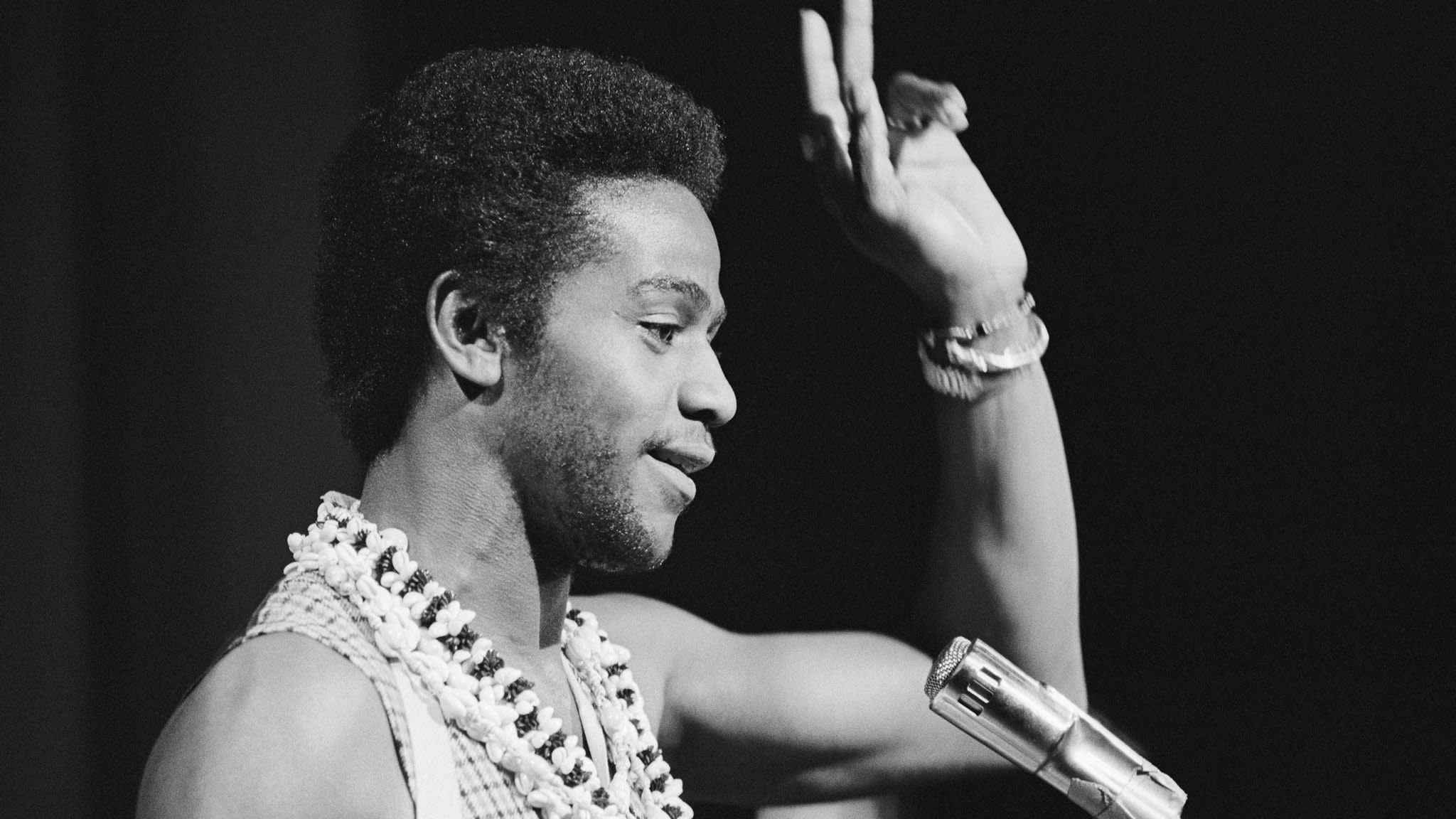
Al Green’s “Take Me to the River” is awash with tradition. Its gospel content finds the singer calling for baptismal cleansing, but less godly references lurk in its lyric, such as the mention of 16 candles, which refers to The Crests’ 1958 teenage love ballad of the same title, while the opening line is an amendment of the hook in Clarence “Frogman” Henry’s 1961 hit “(I Don’t Know Why) But I Do”.
The mix of the earthly and the sacred in “Take Me to the River” may seem awkward, but it typifies the troubled Al Green of 1974. He had become a born-again Christian the previous year, and in the month that “Take Me to the River” was released on the album Explores Your Mind, a girlfriend threw a pot of scalding grits over him, which accelerated his flight from a secular life. However, the song’s title is not entirely spiritual. Green complains that his lover has stolen his money and cigarettes, and moans that his carnal needs are going unmet: asking to be dunked in water is probably a sexual euphemism, not just a cleansing process.
Written by Green and his guitarist, Mabon “Teenie” Hodges, “Take Me to the River” had a meandering journey. Although it is one of Green’s most famous songs, it was not released as a single by him at the time. Instead, Willie Mitchell, his producer and vice president at Hi, the record company Green was signed to, encouraged his label-mate Syl Johnson to record it. Johnson had a similar voice to Green’s but his uncompromising style made him a harder sell to the pop market. However, Mitchell’s plan worked: in 1975, “Take Me to the River” became Johnson’s biggest US hit; casual listeners perhaps assumed it was the song’s originator singing.
“Take Me to the River” became a go-to composition for acts seeking a touch of soulful authenticity. Foghat, the British blues-rockers who were more successful in the US, recorded it in 1976; in 1978 Bryan Ferry included it on his fifth solo album, The Bride Stripped Bare. The song returned to the US top 30 in 1979 thanks to Talking Heads; it was the band’s only single that was a cover version and was representative of their shift from art-punk to more groove-oriented music. Lead singer David Byrne later praised the way the song “combines teenage lust with baptism”. They returned to it on both of their live albums. Annie Lennox played it live and recorded it on her 1995 Medusa album. Tina Turner, movie band The Commitments and Bruce Springsteen performed it at gigs. The song generated steady cashflow for Green and Hodges, but an unlikely twist suddenly brought royalties flooding in.
In the late 1990s, Gemmy Industries, a Dallas-based manufacturer of novelty toys, began work on an animatronic singing fish. The company rejected the initial model as “hideous”. A more lifelike version, designed with the help of a taxidermist, was approved and went into production. The original Big Mouth Billy Bass delivered two songs, Bobby McFerrin’s ‟Don’t Worry, Be Happy”, and the apposite “Take Me to the River”. The identity of the session singer who crooned it over a plinky keyboard backing is unknown.
Simultaneously irritating and funny, Big Mouth Billy Bass was a massive success and “Take Me to the River” was heard in high places. The Queen kept one on the grand piano at Balmoral and was most amused; Tony Blair was also a fan at No 10. Mob boss Tony Soprano battered another thug with the fish in The Sopranos, and Motörhead singer Lemmy kept one in damp conditions: the bathroom of his Los Angeles home. Gemmy shipped an estimated $100m-worth of the $25 toy in 2000 and it is still being made (a version enabled with Amazon’s Alexa device recently went on the market, just in time for Christmas), with nostalgia apparently now a factor in driving sales after a long period when the fish was considered utterly passé, even by novelty toy standards.
Green, now a celebrated preacher, and Hodges, who died in 2014, both said they made more money from the toy version of “Take Me to the River” than any other.
We’re keen to hear from our readers. Whose version of ‘Take Me to the River’ do you prefer? And do you own Big Mouth Billy Bass? Let us know in the comments below.
‘The Life of a Song Volume 2: The fascinating stories behind 50 more of the world’s best-loved songs’, edited by David Cheal and Jan Dalley, is published by Brewer’s.
Music credits: Fat Possum; Warner Music Group — X5 Music Group; Virgin UK; Rhino/Warner Bros; RCA Records Label
Picture credit: Michael Ochs Archives/Getty Images