
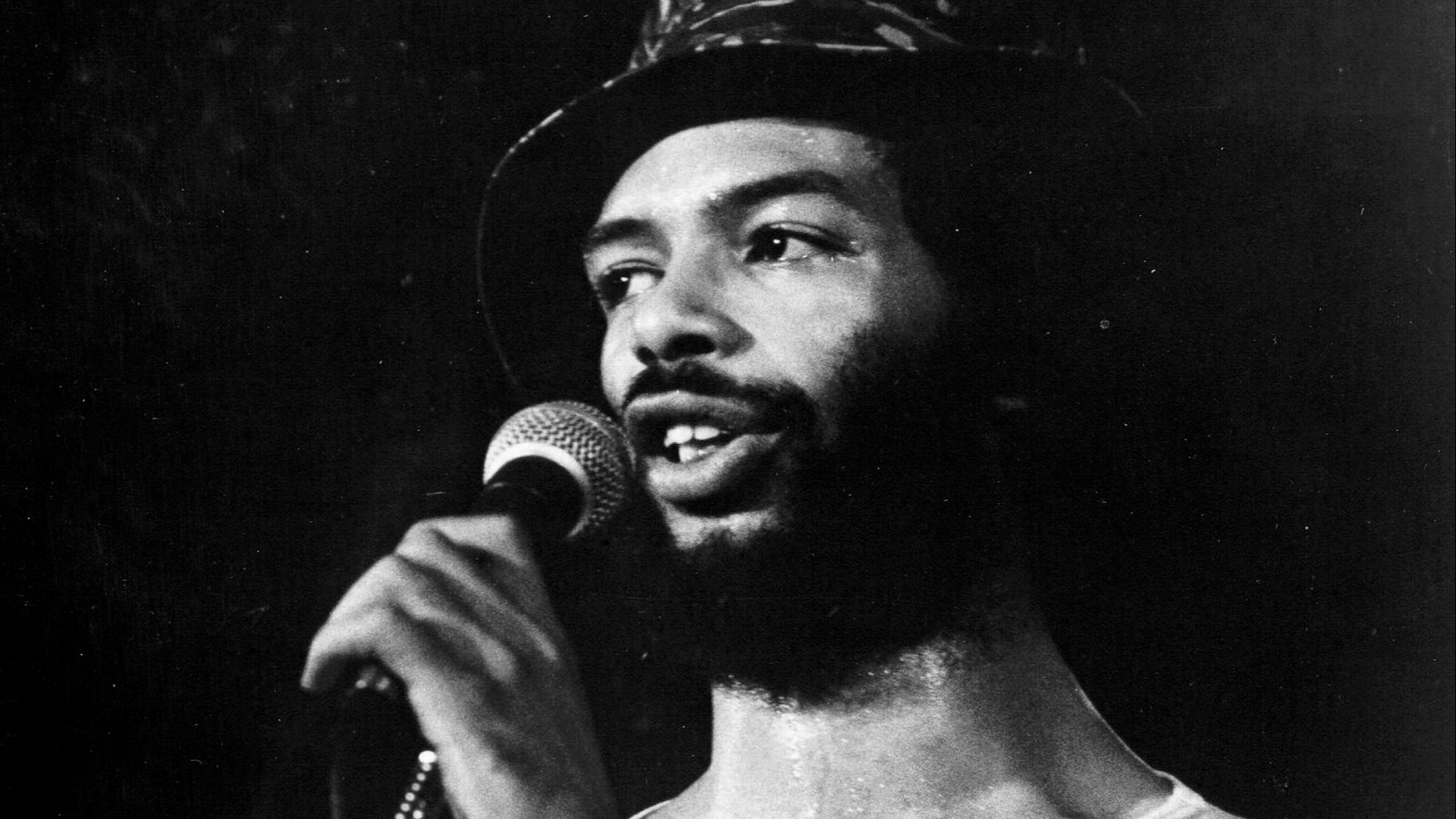
It was never a hit, yet 50 years after Gil Scott-Heron released the definitive version of his song “The Revolution Will Not Be Televised”, it is still being broadcast, sampled and streamed.
The song’s endurance results from its role as a forerunner of rap music, its stature as one of the great political songs and because its title entered the international lexicon. The phrase has been brandished by political movements from the Arab Spring to Black Lives Matter, and widely used and referenced in book, television and film titles and song lyrics.
The phrase originated among US civil rights campaign activists during the 1960s, for which Scott-Heron became an advocate. He adopted it for his spoken-word song, the style of which was influenced by The Last Poets, a New York group who began speaking and chanting black power poems over conga and drum rhythms in 1968. Significantly, one of their best known songs was “When the Revolution Comes”.
Scott-Heron, according to his biographer Marcus Baram, wrote his song while watching televised baseball games as a student at Lincoln University, Pennsylvania in the late 1960s. Ironically inspired by his own couch-potato behaviour, the lyrics are a call to black Americans to free their minds of trivial TV and focus on social change.
“You will not be able to stay home, brother…/ You will not be able to lose yourself on skag and skip out for beer during commercials/ Because the revolution will not be televised.”
The track blends sardonic commentary about TV advertising slogans, programmes and performers with fiery oratory. Lines such as “The revolution will not make you look five pounds thinner” and “The revolution will not go better with Coke” are interspersed with “There will be no pictures of pigs shooting down brothers on the instant replay” and “Black people will be in the street looking for a brighter day”.
Scott-Heron first recorded it in 1970, urgently declaiming the words over a sparse backing of congas and bongo drums. But the classic version came a year later for his album Pieces of a Man, this time to a mesmeric backing of jazz-funk bass and drums, with a flautist improvising around his words.
Because of the song’s idiosyncratic nature, there have been few covers. In 1973 female vocal trio Labelle produced a jazzier take, pairing it with Thunderclap Newman’s “Something in the Air” in an unlikely medley that works surprisingly well. An even more bizarre medley came in 2004 when American drag cabaret duo Kiki and Herb blended it with other songs on their album Kiki and Herb Will Die for You: Live at Carnegie Hall. Two years earlier US band The Soul Rebels released five club and disco mix versions.
Others have adapted it. Rapper KRS-One changed the lyrics to lines lauding basketball for a 1995 Nike TV commercial. Biographer Baram says Scott-Heron, who was a crack-cocaine addict at the time and needed the money, later bitterly regretted giving permission for the sportswear behemoth to use his protest song.
More original, but clearly a homage, was Prince’s longest recorded track, “The War”, in 1998. The 26-minute marathon’s lyrics are largely spoken and include the oft-repeated phrase, “Evolution will be colourised”. A feminist adaptation followed in 1999 with Sarah Jones’s “Your Revolution”, which condemned misogyny in hip-hop (“Your revolution will not happen between these thighs”).
The title has resonated down the decades for political campaigners and demonstrators. Baram reports it displayed in protests from London anti-nuclear protests in 1983 to Tahrir Square, Cairo (2011), Kyiv (2013-14), Indian Muslims in Mumbai (2019) and US Black Lives Matter marches. It also appeared in a window of ERT, the Greek state TV broadcaster, during resistance to its planned closure in 2013.
Films to adopt it include a documentary about the 2002 coup staged against Hugo Chávez, then Venezuela’s president, and this year’s Summer of Soul (…Or, When the Revolution Could Not Be Televised). The latest film to include the song on its soundtrack is the Sopranos prequel The Many Saints of Newark, while television’s Homeland used it as an introductory theme. Snoop Dogg and Gorillaz, Public Enemy, Pulp, Wu-Tang Clan, Elvis Costello and Jamiroquai are among the songwriters who have used the slogan.
When Scott-Heron died in 2011, leading musicians hailed him as a founding father of rap, and Kanye West, one of many to have sampled his work, performed at his funeral in Harlem.
What are your memories of ‘The Revolution Will Not Be Televised’? Let us know in the comments section below.
‘The Life of a Song Volume 2: The fascinating stories behind 50 more of the world’s best-loved songs’, edited by David Cheal and Jan Dalley, is published by Brewer’s.
Music credits: Flying Dutchman; Charly; Sony; Evolve; Defected
Picture credit: Michael Ochs Archives