
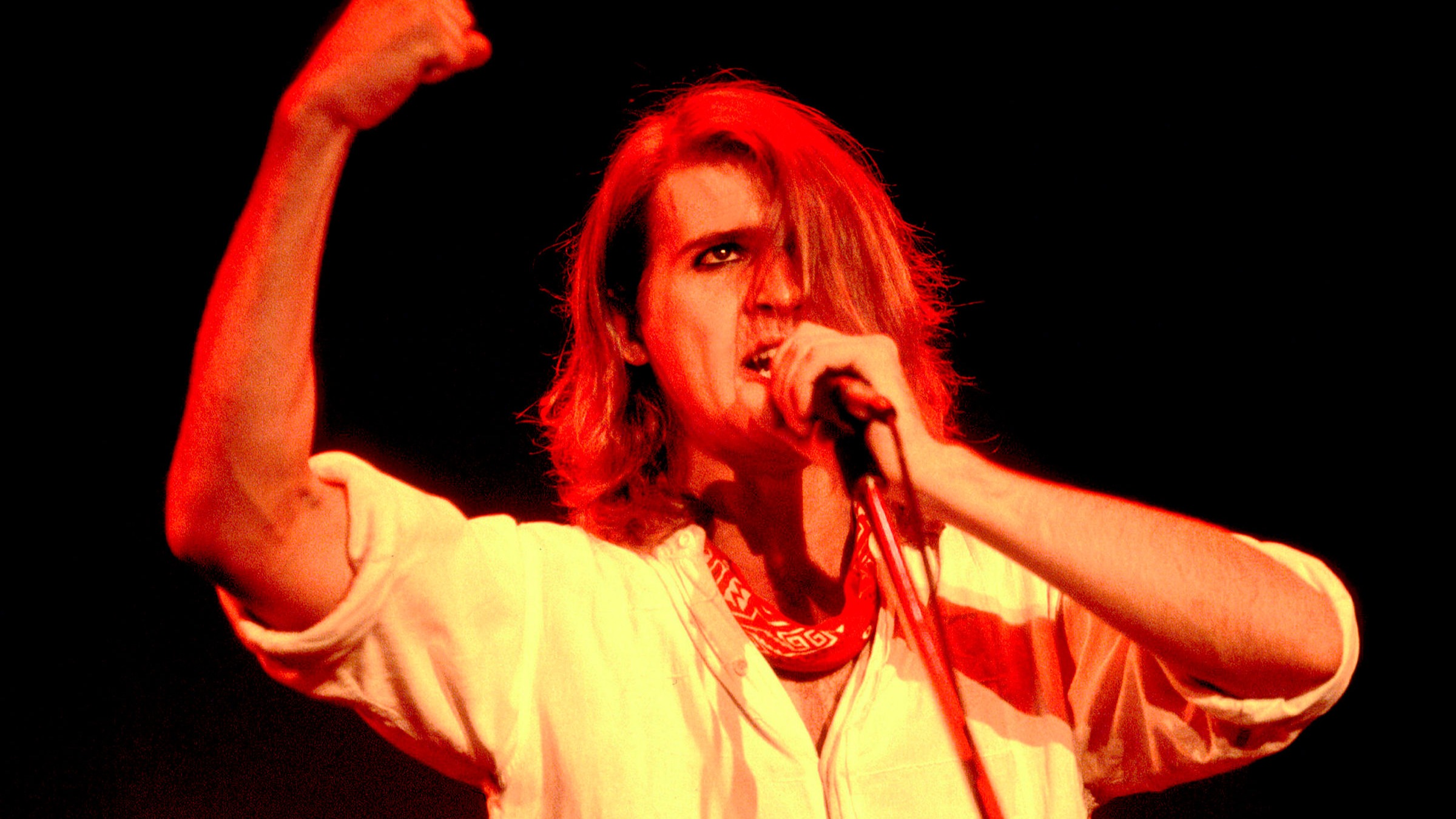
The very title of “The Safety Dance” made it inevitable that this past year or so would see it repurposed. So, as lockdown began and the US entertainment industry responded the only way it knew how, with the One World: Together at Home event, Covid’s low-budget Live Aid, the talk show host Jimmy Fallon and The Roots — the house band on his show — were on hand to provide an acoustic run-through of the song. Safety, do you see? At the end of last year, Alaska Airlines rewrote the lyrics and changed it into a TV ad to boast about their pandemic hygiene protocols. Safety, do you see?
When the Canadian band Men Without Hats recorded “The Safety Dance” in 1982, it was not to promote safety in any way at all. Some later wondered if Ivan Doroschuk’s lyrics pertained to sexual health, but that would have been unlikely — at the time the song was released, Aids was just emerging, and safe sex campaigns were a thing of the future.
In fact “The Safety Dance” was a protest against something far more mundane: officious bouncers. Doroschuk had formed Men Without Hats as a punk band, and “The Safety Dance” was about being told off for dancing dangerously: “It originated when I was getting kicked out of clubs for pogoing — for hitting the dance floor whenever they played Blondie’s ‘Heart of Glass’ or The B52’s’ ‘Rock Lobster’,” he later told Time Out Sydney.
“The Safety Dance” had not been the first single from their debut album, Rhythm of Youth. But after no one paid a blind bit of notice to “I Got the Message”, so their Canadian label put out “The Safety Dance”, which entered the Canadian top 50 in February but didn’t do a lot more. Then they remixed it for a 12-inch version, and slowly but surely the song took off, and through the winter of 1983 and 1984 it became a huge worldwide hit, so big that although Men Without Hats had a decent career, this one song dwarfed everything else they did.
So much about the track seemed odd and off. Doroschuk’s voice was a stiff and inflexible baritone; the synth pattern seemed clunky and repetitive compared to what was happening in electronic pop in the UK; and dance craze lyrics, though a staple of pop history, seemed a bit naff at this point.
And then there was the video. It was filmed in the Wiltshire village of West Kington, a location so un-rock’n’roll that the nearest point of interest is Leigh Delamere services on the M4 motorway. It was made by Tim Pope, later to become very well known for his videos for The Cure, and it depicted some kind of godawful medieval fair, with dancing dwarfs, Morris dancers, a Punch and Judy show, and a future editor of Cosmopolitan, Louise Court, playing an unhinged dancing villager. It was a gaudy, messy treat, that suited the song — which had an oddly Olde Worlde feel to it — perfectly.
People loved “The Safety Dance” because it was hook after hook after hook, lyrically and melodically. Its opening lines — “We can dance if we want to” — became the inspiration for one of the big hits on Washington DC’s go-go scene in 1986, Go Go Lorenzo & The Davis Pinckney Project’s “You Can Dance (If You Want To)”, and the scene’s leading band, Trouble Funk, apparently performed it live.
In fact, the strength of “The Safety Dance” is proved by the staggeringly strange array of artists who have covered it. There is the extremely hip: the experimental hip-hop producer J Dilla recorded it as a slowed-down instrumental. There is the extremely unhip: Status Quo correctly identified it as not a million miles from the boogie. There is the raw from the garage rock band The Donnas, and the poppy from The Asteroids Galaxy Tour. There was even a Brady Bunch-themed “Weird Al” Yankovic parody.
But perhaps its greatest afterlife has come as a song of community. Just as its original video was a cornucopia of people, so it has inspired groups. Just as the cast of Glee’s version was performed as a shopping centre flashmob, so you can find people copying it and posting their own flashmobbed versions of the song — search YouTube for “Safety Dance flash mob” and there they all are. So simple and moving are they that of course business had to co-opt them, and so Lipton Iced Tea had Hugh Jackman lead a faux flashmob to The Feeling’s version of the song.
Sometimes songs can have no meaning, no subtlety, no depth, but something in them communicates extraordinarily powerfully. “The Safety Dance” is one of those songs. Whatever Men Without Hats intended when they wrote it, it has ceased to be that. It is instead a simple explosion of delight that the whole world owns.
What are your memories of ‘The Safety Dance’? Let us know in the comments section below.
‘The Life of a Song Volume 2: The fascinating stories behind 50 more of the world’s best-loved songs’, edited by David Cheal and Jan Dalley, is published by Brewer’s.
Music credits: Oglio; Legacy/Sony
Picture credit: Paul Natkin/Getty Images