
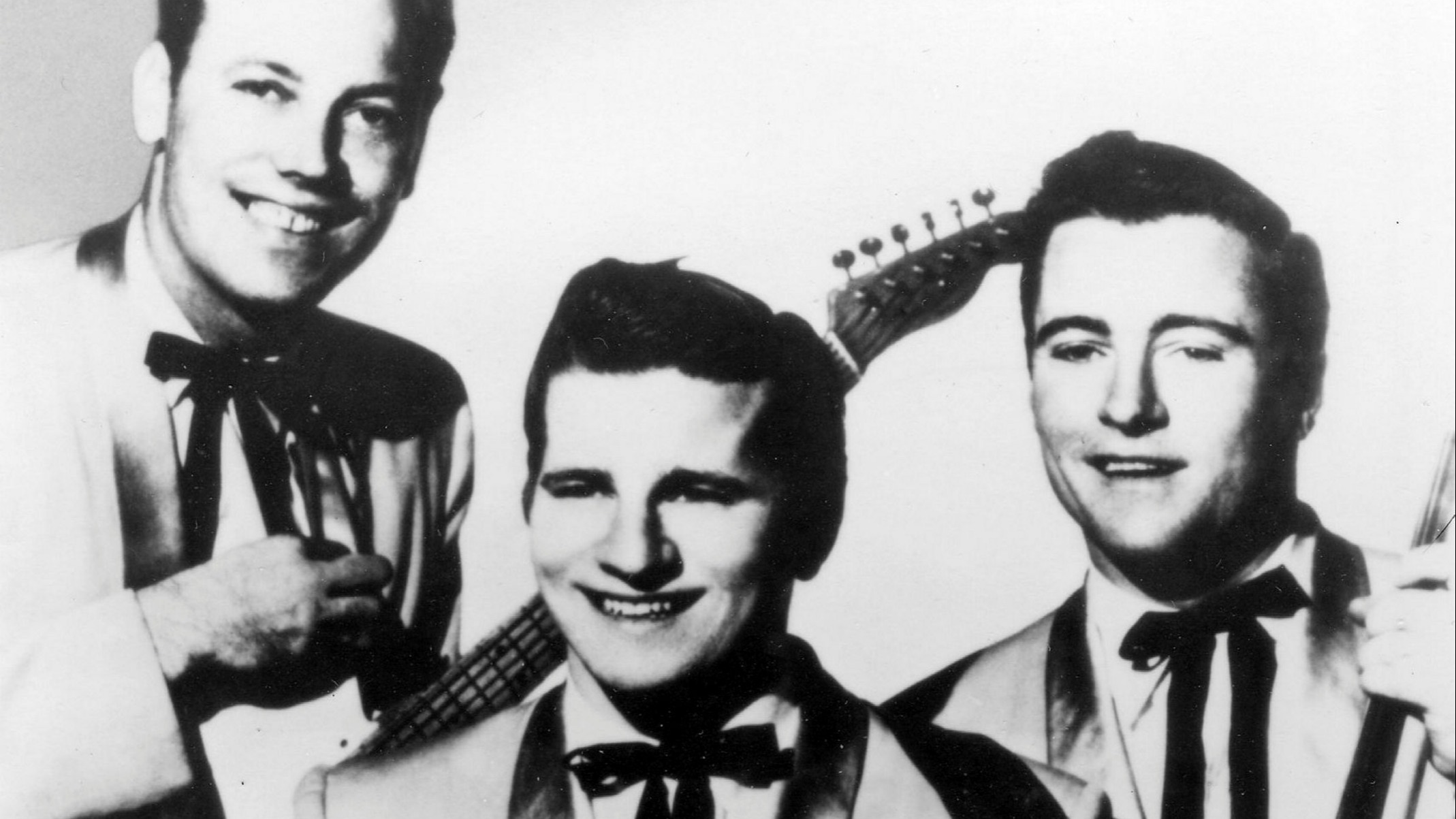
Myron “Tiny” Bradshaw can’t have imagined the impact he would eventually have on the direction of popular music — helping shape rockabilly, garage rock and hard rock — when he entered the studio in Cincinnati, Ohio, on October 6 1951. The song for the session was an easy, swinging jump blues, loosely based on the song “Cow-Cow Boogie”, which had been written for the 1942 Abbott and Costello movie Ride ’Em Cowboy. Bradshaw had tinkered with the lyric, and instead came up with a song he called “The Train Kept A-Rollin’”.
While the railroad song had been a staple of American demotic music, both white and black, Bradshaw wasn’t interested in trains as a means of transportation. The train was where he met a woman — “a hipster and a gone dame” — and it wasn’t her ticket he was interested in inspecting. It wasn’t just the train that kept a-rollin’ all night long.
The recording was not a hit, and there the story of the song would have ended had it not been for two brothers, Johnny and Dorsey Burnette, and their bandmate Paul Burlison – The Rock and Roll Trio, from Memphis, Tennessee, who had a moment of musical nuclear fission on July 2 1956. After one unsuccessful recording session for Coral Records in New York, the trio had gone to Nashville to try to capture their live sound, but what they got in Owen Bradley’s studio was not their live sound. It was the thrilling and unmistakable sound of music changing in the very instant of it being made. In the run-up to the Nashville session, Burlison — the Trio’s lead guitarist — had dropped his amp and knocked one of its vacuum tubes loose. When he played through it, he found that his guitar made a new, menacing sound, fuzzy and distorted, and though he repaired the amp, he started deliberately loosening his tube to recreate the sound.
The Burnettes and Burlison had all been good boxers, and their recording of “The Train Kept A-Rollin’” sounded like they were having a tear-up on vinyl. Johnny’s voice, all hiccups and yelps, came from a place where bourgeois proprieties were not observed; Dorsey hammered at his upright bass as if he wished to do it harm; but the real violence was done by Burlison, playing a riff so elemental — like standing stones being toppled — it sounded as though the guitar was playing itself (not wanting to leave the pudding under-egged, they used the riff all over again the following day on their version of Big Joe Turner’s “Honey Hush”).
Maybe it was too wild, because “The Train Kept A-Rollin’” still wasn’t a hit. It found its disciples, though, in the English home counties. Screaming Lord Sutch recorded it in 1965, then The Yardbirds transplanted it into the canon of rock standards, for where the Yardbirds went, others followed. Their studio recording was only issued in the US — on their second American album, Having a Rave Up (which is likely where Todd Rundgren heard it, before recording it with his band Nazz) — but it was a staple of their live sets and BBC recordings. And when the band appeared in Michelangelo Antonioni’s film Blow-Up, with both Jimmy Page and Jeff Beck playing guitar (and Beck smashing his), they were playing “Stroll On”, a version of “The Train Kept A-Rollin’”.
As Page assumed control of The Yardbirds, he kept “The Train Kept A-Rollin’” in their set and then took it with him to Led Zeppelin. Though they never made a studio recording of it, it was the first song Zeppelin played at their first rehearsal in Soho, their performance of it at the Texas International Pop Festival in 1969 was captured on tape and they were still playing it on their final tour (the novelty tribute band Dread Zeppelin gave it one of their reggae makeovers).
The guitarist Joe Perry had been one of the kids blown away by The Yardbirds in Blow-Up; his future bandmate Steven Tyler had seen the band live and was knocked sideways by the heaviness of “The Train Kept A-Rollin’”. Naturally, when the pair came together in Aerosmith they recorded it. Aerosmith, more or less, do the song twice in one recording — the first half keeps Burlison’s riff, but has a swinging, Stonesy swagger; the second half is a straightforward take on the Burnette/Yardbirds template. Motörhead did it, Lemmy gargling his way through the lyric; and when the punk-rockabilly hybrid known as psychobilly elevated Burnette into one of its heroes in the early 1980s, Guana Batz recorded it.
The amazing thing about “The Train Kept A-Rollin’”, though, is that for 65 years no one has really tinkered with what The Rock and Roll Trio did with it. Be they the smoky, torchy singer Imelda May — who recorded it in 2011 — or the grizzled punk veterans UK Subs (2018), they all return to the untrammelled, untameable energy of the Burnette brothers and Burlison. None of the three ever made another record with even a fraction of the impact of “The Train Kept A-Rollin’”, but they didn’t need to. They had already changed rock forever.
What are your memories of ‘The Train Kept A-Rollin’’? Let us know in the comments section below.
‘The Life of a Song Volume 2: The fascinating stories behind 50 more of the world’s best-loved songs’, edited by David Cheal and Jan Dalley, is published by Brewer’s.
Music credits: Classics; Imports; Oriole; Epic; Cleopatra Records; Columbia; I.R.S.; ABC; Decca; Big Beat
Picture credit: Alamy Stock Photo