
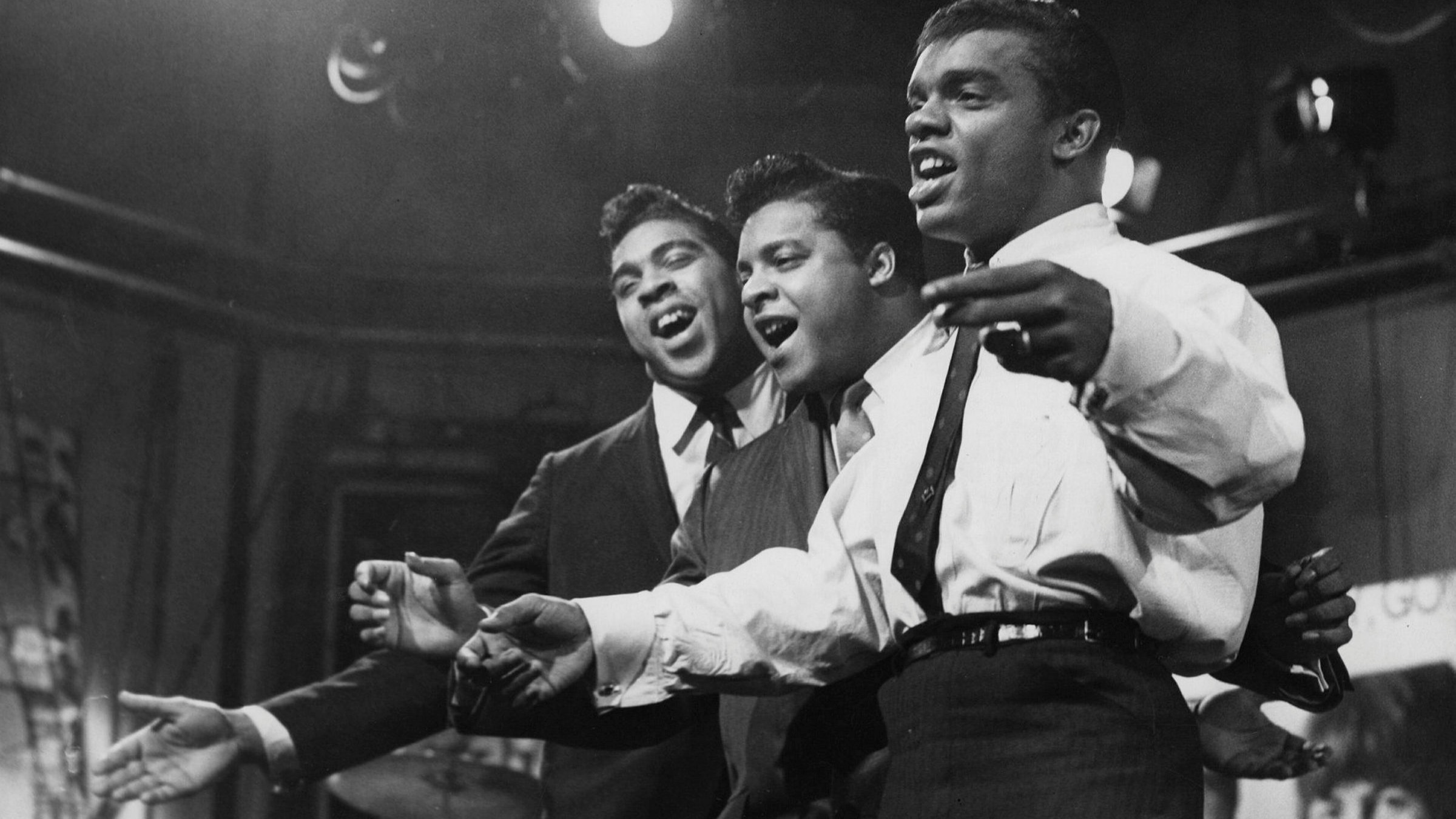
Former Detroit automobile factory worker Berry Gordy’s ambition was to provide what he called “The Sound of Young America”. In 1959, borrowing $800 from his family, he set up his own record company and built a studio in his modest suburban house in his home town, Detroit, grandly naming it “Hitsville USA”. He started signing local singers, groups, musicians, writers and producers: Gordy built his own Motor City assembly line — Motown — which, by the mid-1960s, was manufacturing a stream of ageless classics.
Within the gleaming chassis of a song was the beautiful sound of a perfectly tuned engine, generating rhythms and harmonies, efficient as a machine but in no way mechanical; the skills and sensibilities of Motown’s house musicians — the Funk Brothers, recruited from Detroit jazz clubs — seeing to that. They could dally with dissonance and toy with atonality but they were always as sure-footed as the honed, backbone-slipping choreography of the silk- and mohair-clad stage acts. Backing singers The Andantes added depth and sweetness.
The most successful songwriters were Holland-Dozier-Holland — brothers Brian and Eddie Holland and Lamont Dozier — who supplied the most successful act, The Supremes, with a string of chart-topping hits.
In 1965, H-D-H wrote “This Old Heart of Mine (Is Weak for You)”, with a little help from fellow Motown songwriter Sylvia Moy. They had The Supremes in mind to record it, but for once The Supremes did not get first bite at this most luscious cherry. A newly signed band of brothers did.
The Isley Brothers — Ronald, Rudolph and O’Kelly — joined Motown in 1965, soon after their guitarist, Jimi Hendrix, had left them. They were offered “This Old Heart of Mine” as their first single on their new label, and the rest, as they say, is one of the greatest records ever made: the apotheosis of Motown.
The song has echoes of The Supremes’ “Back in My Arms Again”, but so what? H-D-H had written that, and it was beautiful, so why not a little self-plagiarism, why not another slice of the same old song?
Though it is packed with energy, the record also has an ease; great force but not too fast, exactly the right dancing speed. Rolling thunder drums. Piano and xylophone. Skating across the surface, banks of strings, courtesy of the Detroit Symphony Orchestra, describing a mesmeric rising and falling switchback refrain, buttressed by brass, including that fantastic fat, farting baritone sax used to such great effect on so many of the company’s records, played by Mike Terry.
The Isleys add to the energy, skittering and scooting around the rhythm. Amid a crammed, crowded lyric, they throw in perfectly precise pauses and semi-stutters. The song soars with joy and plummets into sadness: “This old heart, darling, is weak for you… I’m not too proud to shout it, tell the world about it ’cause I... I love you-ou… yes I do-oo.”
Motown always made the most of a good song. Later in 1966 The Supremes sped it up a little, as did Tammi Terrell in 1968. Incidentally, Curtis Mayfield liked the record so much he immediately copied it with The Impressions on “Can’t Satisfy” in 1966. He didn’t get away with it; Motown sued.
Falsettoists handle the song well: Donnie Elbert (1968), Lou Christie (1982) and, in full-pelt wah-wah hi-hat disco style, Donny Beaumont (1975). The Zombies do it in a spirited mid-Sixties beat-group fashion.
If you slow the song down, it generally becomes a misery-fest. One magnificent exception is by Bettye Swann in 1975. Her lovely spoken intro enriches all that follows. Delroy Wilson proffers a just-rolled-out-of-bed bluebeat style featuring an equally drowsy trombone (1967). Worth listening to, for all the wrong reasons, is Richard McGraw, in 2012. He adopts a Dylan voice over a daft, clunky, deconstructed strings/brass backing and a kiddie chorus. Very funny.
Freshly Hollywood-ensconced Rod Stewart’s dreary AOR-targeted hit in 1975 is well worth not bothering with; more interesting being his 1989 duet with original lead vocalist Ronald Isley. Lamont Dozier and Cliff Richard formed a more unlikely duo in 2018.
In the 2018 movie Bad Times at the El Royale, Cynthia Erivo— playing a struggling Sixties soul singer called Darlene Sweet — is filmed practising the song unaccompanied. Impressive in its affected way, sure, but dig out the vocal track from the Isleys’ first recording to hear how it should be done.
Nothing can improve on The Isley Brothers’ initial effort. It is a textbook case of the original being the greatest.
What are your memories of ‘This Old Heart of Mine’? Let us know in the comments section below.
‘The Life of a Song Volume 2: The fascinating stories behind 50 more of the world’s best-loved songs’, edited by David Cheal and Jan Dalley, is published by Brewer’s.
Music credits: Motown; Spectrum; Echo Records; Suite 102; Atlantic; Jet Star; Import; Warner; V2
Picture credit: Chris Ware/Keystone/Hulton Archive/Getty Images