
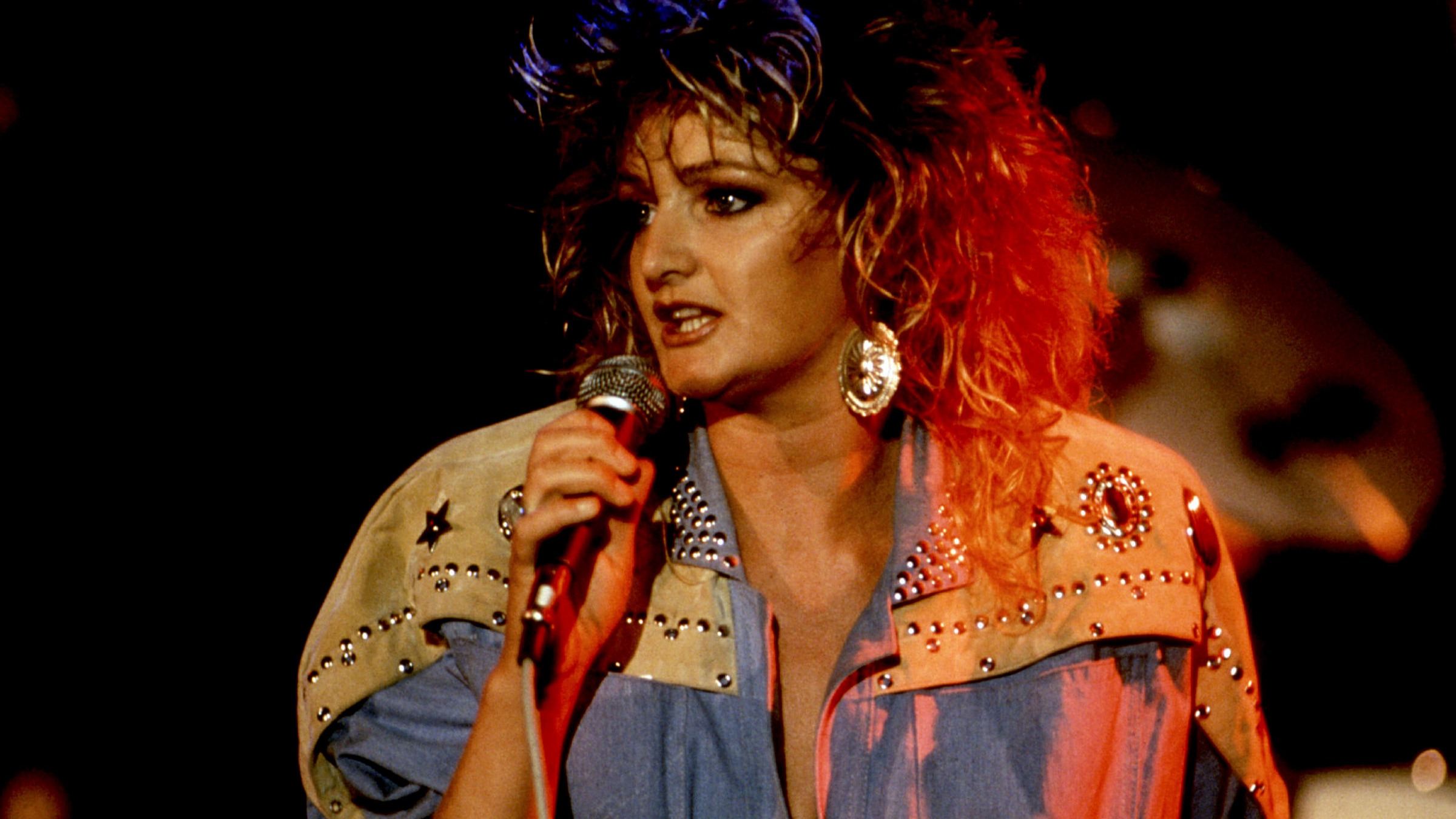
Twelve hours into mixing “Total Eclipse of the Heart”,studio engineer Neil Dorfsman ran into a curious problem. Piling on the melodrama, he’d allowed the reverb faders on the mixing desk to creep steadily upwards until they reached full capacity. Welsh singer Bonnie Tyler had delivered the stormiest pop vocal of the decade. But writer/producer Jim Steinman — who died in April — always wanted more of everything. “Jim wanted the biggest drum sound to ever have been recorded,” Dorfsman told mixonline.com. Dorfsman, though, had run out of reverb: it was as big as it was going to get.
Released in February 1983, the gothic power ballad exploded across the global charts. At its peak, it sold 60,000 copies per day and more than 6m copies in total.
The man who wrote it always believed rock’n’roll should be “gigantic, thrilling and silly”. Born into an intellectual, middle-class Jewish family in New York in 1947, Steinman claimed he first listened to the whole of Wagner’s Ring cycle in a live radio broadcast when he was just nine years old. He developed a passion for musical theatre at college and met Meat Loaf when the singer auditioned for a part in one of his musicals in 1973. In 1977 the pair released Bat Out of Hell. One of the few albums to feature its composer’s name on the cover, Steinman’s “film on record” sold more than 50m copies and Bonnie Tyler adored it.
When the coal miner’s daughter (whose biggest hit to date was “It’s a Heartache” in 1977) moved to Columbia Records in the early 1980s, she told them she wanted to work with “whoever writes for Meat Loaf, because I know I can sing that”. Steinman’s relationship with Meat Loaf was already frayed, so he was happy to offer her a song he had originally written for his vampire musical, Nosferatu, which never materialised (he then rewrote it for another vampire musical called Dance of the Vampires). The song’s original title was “Vampires in Love” and you can still hear traces of the undead in lines about “shadow” love that’s “always in the dark”.
Steinman drafted in Roy Bittan and Max Weinberg from Bruce Springsteen’s E Street Band on piano and drums and got his regular collaborator Rory Dodd to sing the choral “Turn around, bright eyes” refrain,recycled from his 1969 college musical The Dream Engine.
The melodrama was taken to fever pitch in the video, directed by Russell Mulcahy, the Australian director of Highlander. Set in an erotically charged private boys’ school (they used Holloway Sanatorium outside London as the location), the short film was brilliantly parodied by David A. Scott Jr in 2009. The new lyrics in Scott’s “literal video” draw attention to the original’s liberal use of fans, backlighting, stock footage and delirious, non-sequiturious storyboarding (“Here’s where I pretend to be Eva Peron. Look at me, I’m lifting my arms!”). There’s an urban legend that the boy who shakes Tyler’s hand at the end is former Italian footballer Gianfranco Zola; the player has denied appearing.
Due to its reliance on Steinman’s overblown production and Tyler’s powerhouse rasp, covers of “Total Eclipse” have never fared well. Cuba’s Lissetterecorded a Spanish version in 1985, Nicki Frenchbopped gamely through a dance version in 1995 and Irish boy band Westlifeused it to showcase their different vocal styles in 2006 — although the head of their label, Simon Cowell, worried that the mix was too histrionic. In an interview with Magic FM, Tyler said she first heard the Westlife version on a visit to Steinman’s darkened studio, during which he was “glowing” in garments from his new fibre optic clothing range.
Tyler continues to perform the song at every concert. During the solar eclipse of 2017, she sang it aboard a Royal Caribbean cruise liner. In the hours leading up to the eclipse, Spotify saw a 2,859 per cent increase in US streams and the song also shot to number one on the iTunes chart with a 500 per cent increase in digital sales. Similar spikes are expected on April 8 2024, when the Sun will next be obscured by the Moon. Between now and then you might hear it at karaoke nights, where the near-impossibility of matching Tyler's gale-force vocals ensures amateurs will leave their friends laughing.
“Total Eclipse” wasn’t Steinman’s final hit. Tyler had a hit in 1984 with his “Holding Out for a Hero”and Celine Dion made an international smash of “It’s All Coming Back to Me Now”in 1996. He also co-wrote Boyzone’s “No Matter What”(1998) and reunited with Meat Loaf for the album Braver Than We Are in 2016. But he maintained his reputation as a nocturnal recluse, happiest alone at home in rural Connecticut with his records and his wine. He was proud, to the end, to be known as “the Lord of Excess”, arguing: “If you don’t go over the top, how are you ever going to see what’s on the other side?”
What are your memories of ‘Total Eclipse of the Heart’? Let us know in the comments section below.
‘The Life of a Song Volume 2: The fascinating stories behind 50 more of the world’s best-loved songs’, edited by David Cheal and Jan Dalley, is published by Brewer’s.
Music credits: Sony Music CG; Orosound Records; Modal Production Group Ltd; S Records; Columbia; UMC (Universal Music Catalogue)
Picture credit: Alamy