
The Byrds’ “Turn! Turn! Turn! (To Everything There Is a Season)” has been used in films and TV shows to evoke collective memories of the 1960s — starting in 1970, when Homer, one of the first coming-of-age films about a Vietnam war soldier, featured the song on its soundtrack. Since then, the unmistakable chord progression and chorus have ceaselessly popped up in 1960s period pieces: More American Graffiti, Heart Like a Wheel, Forrest Gump, TV’s The Wonder Years (in three episodes) and Ken Burns’s documentary series The Vietnam War.
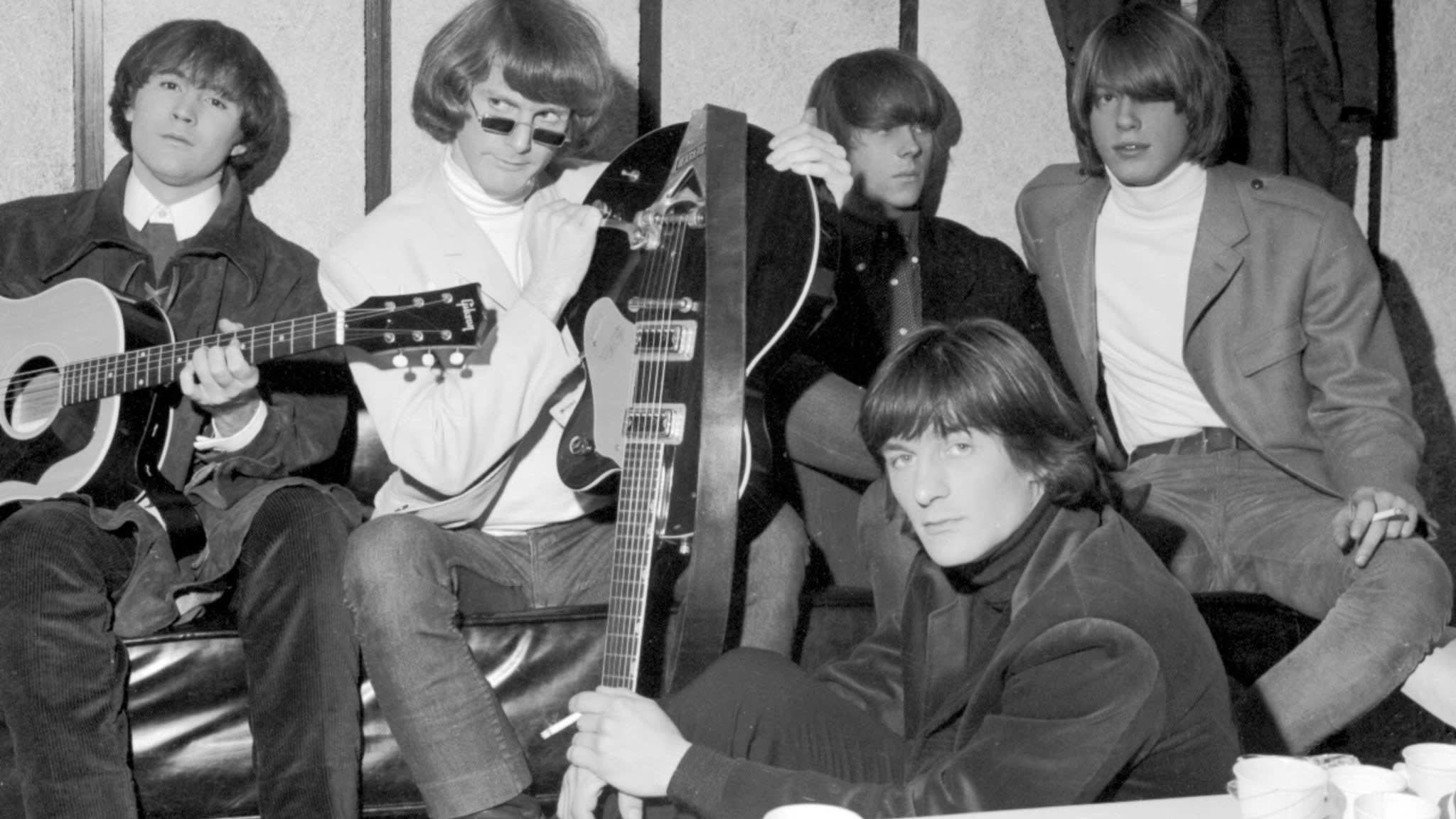
The song reached number one in the US in December 1965. That year, American ground troops arrived in Vietnam, men on campuses burned their draft cards, black civil rights activists withstood fire hoses and police dogs, and President Lyndon Johnson promoted his “great society” reforms. A chorus of shaggy-haired young men pressed the nation to “turn, turn, turn” and accept that change is inevitable, history is a cycle, strife is temporary, and to everything there is a season.
The song also carries the sonic imprints of the era: Byrds frontman Roger McGuinn once called the chord structure “Beatley” and said they borrowed the drum beat from Phil Spector. But the song itself was concocted by the leader of American folk music’s old guard using lyrics that dated back more than 2,000 years.
Pete Seeger composed “Turn! Turn! Turn!” in 1959 in response to a letter from his publisher. “Pete,” it read, “can’t you write another song like ‘Goodnight, Irene'? I can’t sell or promote these protest songs.” ("Goodnight, Irene” was actually written/adapted by Lead Belly, but Seeger had popularised it with The Weavers.) The response from the rabble-rousing troubadour was predictably defiant. “You better find another songwriter,” Seeger wrote. “This is the only kind of song I know how to write.”
He turned to his pocket notebook, where he jotted down pieces of text for recycling. He found parts of the Bible he had copied, “verses by a bearded fellow with sandals, a tough-minded fellow called Ecclesiastes”, Seeger recalled.
Specifically, it was Ecclesiastes 3:1-8, from one of the “wisdom books” of the Old Testament, collections of truths and sayings. The words attributed “a season” to a series of opposing actions: “A time to be born, a time to die; a time to plant, a time to reap; a time to kill, a time to heal,” etc. Seeger took the text almost verbatim. He added the “turn, turn, turn” to build a chorus and tacked on his own hopeful concluding line for cold war audiences: “A time of peace; I swear it’s not too late.”
To Seeger, it was another protest song, a call for transition. His publisher didn’t seem to get it. “Wonderful,” he wrote back, “just what I’d hoped for.”
With just his guitar and ever-gentle vocals, Seeger performed it at a Greenwich Village folk venue for a 1962 live album. His take was plain and simple, readymade for reinterpretation.
A few artists recorded “Turn! Turn! Turn!” before The Byrds. Folk trio The Limeliters brought to it vocal harmonies, bass and banjo lines and a cheery sense of oomph. Judy Collins made it sombre and reflective. Marlene Dietrich released a stately-sounding translated version. “Turn! Turn! Turn!” became “Glaub! Glaub! Glaub!”
McGuinn had shepherded the song as a New York session musician. He backed the Limeliters on their recording and introduced Collins to it. Two years later, he was in teen magazines and on variety shows with The Byrds. Their abridged version of Bob Dylan’s “Mr Tambourine Man” cross-pollinated folk with pop music and reached number one in the US and UK.
Soon afterwards, The Byrds were recording their second album and searching for a potential lead single. McGuinn rejected the idea of using another Dylan song. That would be gimmicky. “Turn! Turn! Turn!” was a favourite of his girlfriend’s. “It was a standard folk song by that time,” McGuinn recalled, “so I played it and it came out rock’n’roll ’cause that’s what I was programmed to do, like a computer.”
The Byrds’ version of the song was the most successful of the many released. But others kept coming: 1966 brought versions by vocal trio The Lettermen and folk quartet The Seekers. Nina Simone added it to her concert repertoire in a gospel-ish take that brought it back to its Biblical roots. The song appeared on her 1969 live album, A Very Rare Evening. But these styles were antiquated compared with The Byrds’ brisk beat, 12-string guitar riff and sense of urgency. Theirs became the version enshrined as an emblem of the era, even though its words are timeless.
Do you have any personal memories of ‘Turn! Turn! Turn!’? Let us know in the comments below.
‘The Life of a Song Volume 2: The stories behind 50 more of the world’s best-loved songs’, edited by David Cheal and Jan Dalley, is published by Brewer’s
Music credits: Columbia/Legacy; Delta; Sandrew/Metronome; Rhino/Elektra; RCA/Legacy
Picture credit: Michael Ochs Archives/Getty Images