
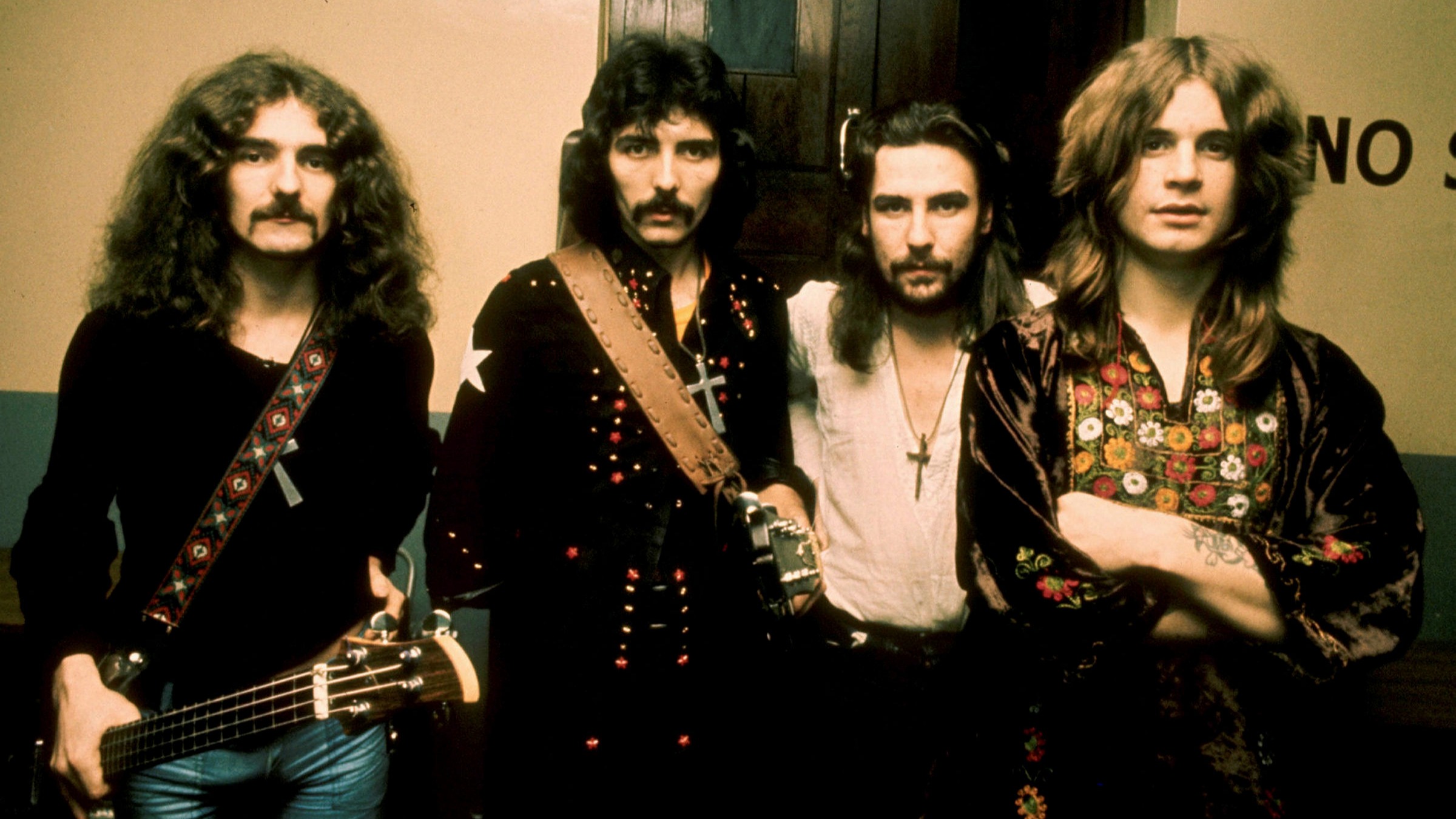
To begin with, the first track on Black Sabbath’s second album, Paranoid, sounds like a segue from its occult-themed predecessor. But then a second world war air raid siren warns of the human violence to come. A tight two-chord power riff shatters the squall and intermittently punctures a tight hi-hat cymbal rhythm while singer Ozzy Osbourne’s rising wail introduces the “Generals gathered in their masses, just like witches at black masses” — an identical rhyme that somehow works — as guitar trills pepper his words.
In little more than a minute, Black Sabbath had pushed a nascent heavy metal genre into a new era. “War Pigs” was their magnum opus. The song, released in 1970, struck a chord with a growing legion of heavy rock fans but also among anti-war activists. Even the folk-oriented US publication Broadside that spurned rock music in favour of protest singers Pete Seeger and Tom Paxton took note.
“War Pigs” suffered a difficult birth. The music was worked up on the road at a “grim place in Zurich”, according to guitarist Tony Iommi’s autobiography and was initially the backdrop for “Walpurgis”, a song about the Satanic Christmas, in line with what Geezer Butler, their bassist and main lyricist, later called the occult “cobblers” that he was reading about in Dennis Wheatley novels. Those “generals” also opened the original song, which was released as a basement tape years later, but its narrative climaxes with the burning of a priest in front of “sinners” who eat “rat’s innards”.
Butler’s mood had changed by the time the album was being recorded. In “War Pigs”, the generals — dubbed “the real Satanists” by the bassist — and warmongering politicians who use the poor as chess pieces became the focal point of the story. Satan was kept on as the architect of the carnage (he escapes) as the war pigs face judgment day.
The complex eight-minute structure of “War Pigs” became highly influential in the heavy rock genre. Bill Ward’s drum fills rain down like mortar bombs during its early stages, but then the music shifts to a metallic funk driven by a swinging rhythm and a new groovier riff. The first guitar solo is laced with a resonating open E string and underpinned by a thundering counter-solo from Butler that is reeled in as the song returns to the more spartan approach of the early verse for the story’s denouement.
However, Iommi is not finished as a coda kicks in. In the US, the track was considered too long and was split into two, with the coda renamed “Luke’s Wall”. Its anthemic guitar line set the tone for subsequent moshpit singalong favourites, such as the mid-section of Metallica’s “Master of Puppets” or Iron Maiden’s “Fear of the Dark”. Finally the recording is artificially sped up in its final seconds, an effect that adds one last hair-raising twist for the listener.
Sabbath’s second album was meant to share the name of its thunderous opening song but the record label changed it to Paranoid, the throwaway single from the record, to avoid antagonising American listeners during the Vietnam war. That was much to the chagrin of the band as the sleeve still featured a sword-wielding “war pig” in tights and a crash helmet.
Over time, other acts released covers of Black Sabbath’s biggest crowd-pleaser. Faith No More recorded a power metal version for their 1989 breakthrough album The Real Thing. The following year, singer Mike Patton tried to outdo Osbourne with a deranged performance to close the band’s Live at the Brixton Academy album.
Zakk Wylde, who played guitar for Ozzy Osbourne, was on safe ground with a live version filled with histrionic guitar effects including pinched harmonics. Foo Fighters over-egged it after teaming up with country singer Zac Brown on David Letterman’s talk show for a truncated version featuring four guitars and bombastic drumming.
The song has also proved fertile ground for indie bands looking for a left-field cover. Oddball rock band Ween regularly performed a chaotic version live while Californian alt-rock band Cake left behind the menace with a snappy take embellished with their trademark trumpet on the “Luke’s Wall” section. Horn-driven takes, including Bonerama’s New Orleans-style stomp and Brass Against’s trombone-heavy protest version, are also unexpectedly successful.
The song struggles in the rootsy blues format attempted in Ruthie Foster’s laboured version, although the calloused hands of Hayseed Dixie make their borderline parody version work.
“War Pigs” has also set the tone for porcine evildoers, with Pink Floyd and Nine Inch Nails both using similar imagery. The song became the centrepiece of Black Sabbath’s reunion tours. Its air raid siren call has attracted a new generation drawn to its anti-war sentiment as the war machine has continued to turn.
What are your memories of ‘War Pigs’? Let us know in the comments section below.
‘The Life of a Song Volume 2: The fascinating stories behind 50 more of the world’s best-loved songs’, edited by David Cheal and Jan Dalley, is published by Brewer’s.
Music credits: Sanctuary Records; Rhino Records; PLG UK Frontline; London Records; Upbeat Records; Footnote Records; Blue Corn Music; Cooking Vinyl
Picture credit: Chris Walter/WireImage