
“Waterloo Sunset” is one of the most celebrated songs in rock’s repertoire. “Waterloo Road”, which came out in 1968, the year after The Kinks’ classic, is not.
It was recorded by a psychedelic group from Tonbridge, Kent, called Jason Crest. With hindsight, it might be judged that a band sounding like a James Bond knock-off was unlikely to be the next psych-rock breakthrough. But Jason Crest was an undoubted improvement on their earlier name of The Spurlyweeves.
Philips Records signed them during a rush by labels to cash in on the psychedelic craze. Marketed as “the first new group of 1968”, they released a series of singles, all of which flopped. Philips insisted they record a song written by Mike Deighan and Mike Wilsh of The Four Pennies. The Crest acceded, though “Waterloo Road” was nothing like their usual garage-band style.
A jaunty affair with roots in music hall, like a crude re-tread of The Beatles’ “Penny Lane”, it opens with a “girl” ushering Jason Crest’s singer Terry Clarke “down Waterloo Road” where “any night or any day/You’ll find what you’re looking for”. A somewhat seedy proposition, but on this occasion what is found is a “happy feller playing cakewalks on his guitar” — the cakewalk being a dance that developed in southern US slave plantations in the 19th century.
A clarinet refrain gives the song a Dixieland swing, although the ambience is as English as a pub singalong. Street voices and traffic sounds are mixed into the music, the hubbub of a bustling working-class thoroughfare. There is a Waterloo Road in the Midlands city Stoke-on-Trent, where the song’s writers Deighan and Wilsh were from. But the song’s Cockney flavourings suggest London’s Waterloo Road, which links to the bridge where The Kinks saw their sunset.
Unhappily for Jason Crest, the song was another flop. The band broke up soon after, having failed to finish a planned debut album unpromisingly titled The Senile Mysteries of Black Mass. Yet a curious twist of fate awaited “Waterloo Road”.
Something about the song — its proximity to the merry bierkeller sound of an oompah band, perhaps — found favour in Europe. In 1969, it turned up in the Netherlands as “Oh Waterlooplein” with new lyrics about a famous flea market in Amsterdam, performed by Dutch comedy duo, Johnny Kraaijkamp and Rijk de Gooyer. It then re-materialised as a number by Slovenian star Majda Sepe, “Sustarski most”, which referred to a medieval pedestrian bridge in Ljubljana.
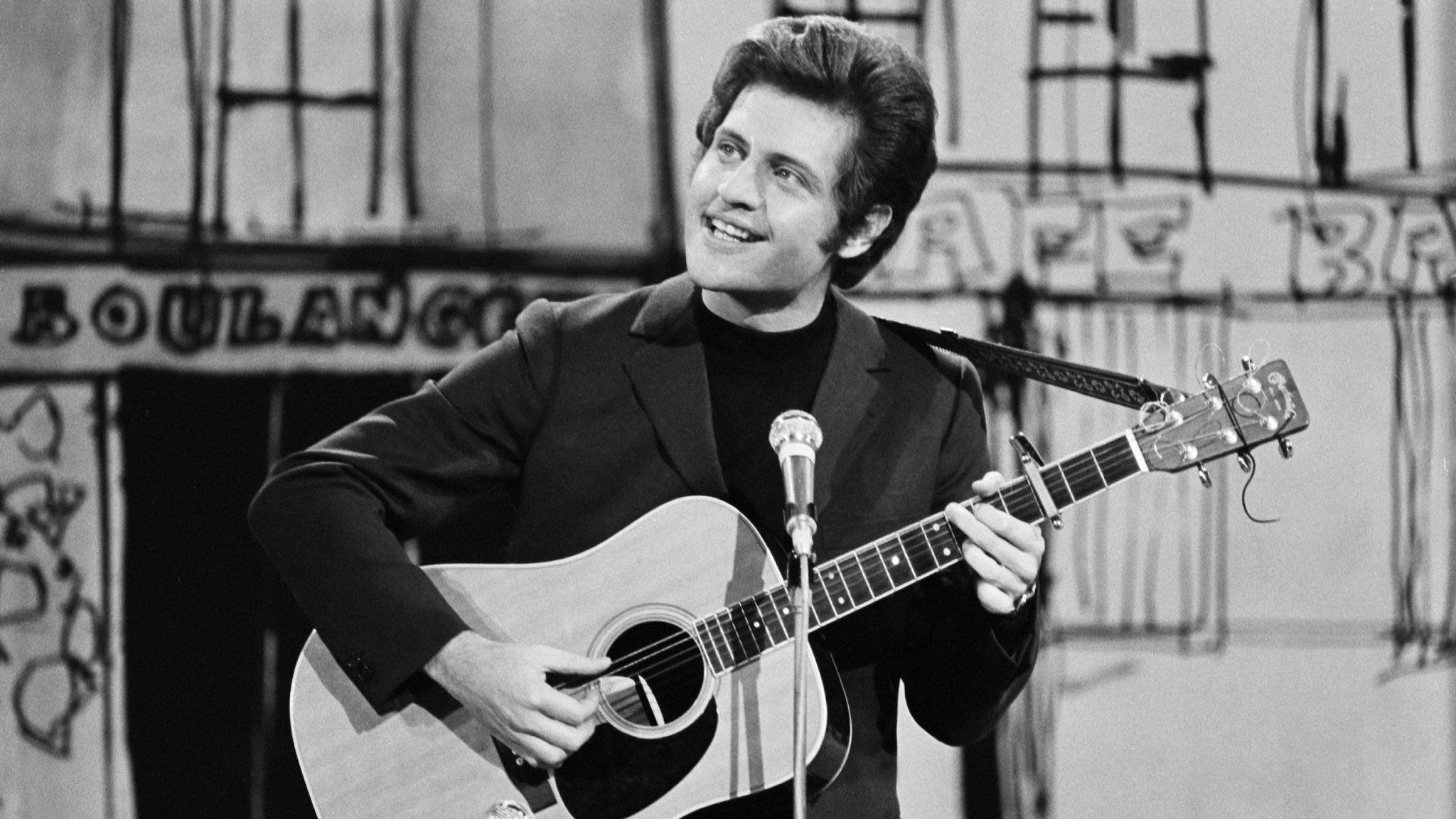
Its apotheosis came in France, however, where the lyricist Pierre Delanoë upgraded “Waterloo Road” into “Les Champs-Elysées”. Sung by the French singer Joe Dassin and released in 1969, it erases the original’s reference to the battle where Gallic military pride took a hammering and re-situates it in the glorious Parisian avenue built to celebrate French force of arms.
The melody is unchanged, but the song has a breezier, more nonchalant air. Dassin plays a boulevardier strolling with his lady friend down the Champs-Elysées, a carefree place where strangers become lovers overnight and basement clubs with crazy guitar-playing hepcats are open until dawn. This is an idealised vision of the Champs-Elysées of the 1960s when it was the epitome of chic, not the sterile parade of chain stores and cinemas that it has become.
Dassin’s song topped French charts and was embraced by musicians around Europe. Danish singer Daimi did a version of it, as did Yugoslavia’s Dragan Stojnic. The Raymond Lefèvre Orchestra turned it into orchestral pops. Dassin himself sang it in Japanese, German and Italian. Rubbing salt into the wounds of the disbanded Jason Crest, he even performed it in English.
“Les Champs Élysées” is now a standard. At last year’s World Cup, football fans adapted its tune into a chant praising France’s midfielder N’Golo Kanté. It has also been adopted as an anthem by the “gilets jaunes” protesters, whose rampages in the actual Champs (from which they are now banned) have triggered a political crisis. It is the most serious confrontation with the French state since 1968, the year of “Waterloo Road”.
The irony of the gilets jaunes singing “Les Champs-Elysées” runs deep. They identify themselves as representing ordinary neighbourhoods like the one celebrated in “Waterloo Road”, not the leisurely and elegant Paris of Dassin’s song. Moreover, they see themselves as engaged in a mortal struggle with an overbearing, Napoleonic leader. If they get their way and become President Macron’s Waterloo, then somewhere in the hereafter of failed and forgotten bands, the ghost of Jason Crest might be forgiven a chuckle.
What are your memories of ‘Waterloo Road’? Let us know in the comments section below.
‘The Life of a Song Volume 2: The fascinating stories behind 50 more of the world’s best-loved songs’, edited by David Cheal and Jan Dalley, is published by Brewer’s.
Music credits: ZKP RTVSLO; Columbia
Picture credit: Aime Dartus/INA via Getty Images