
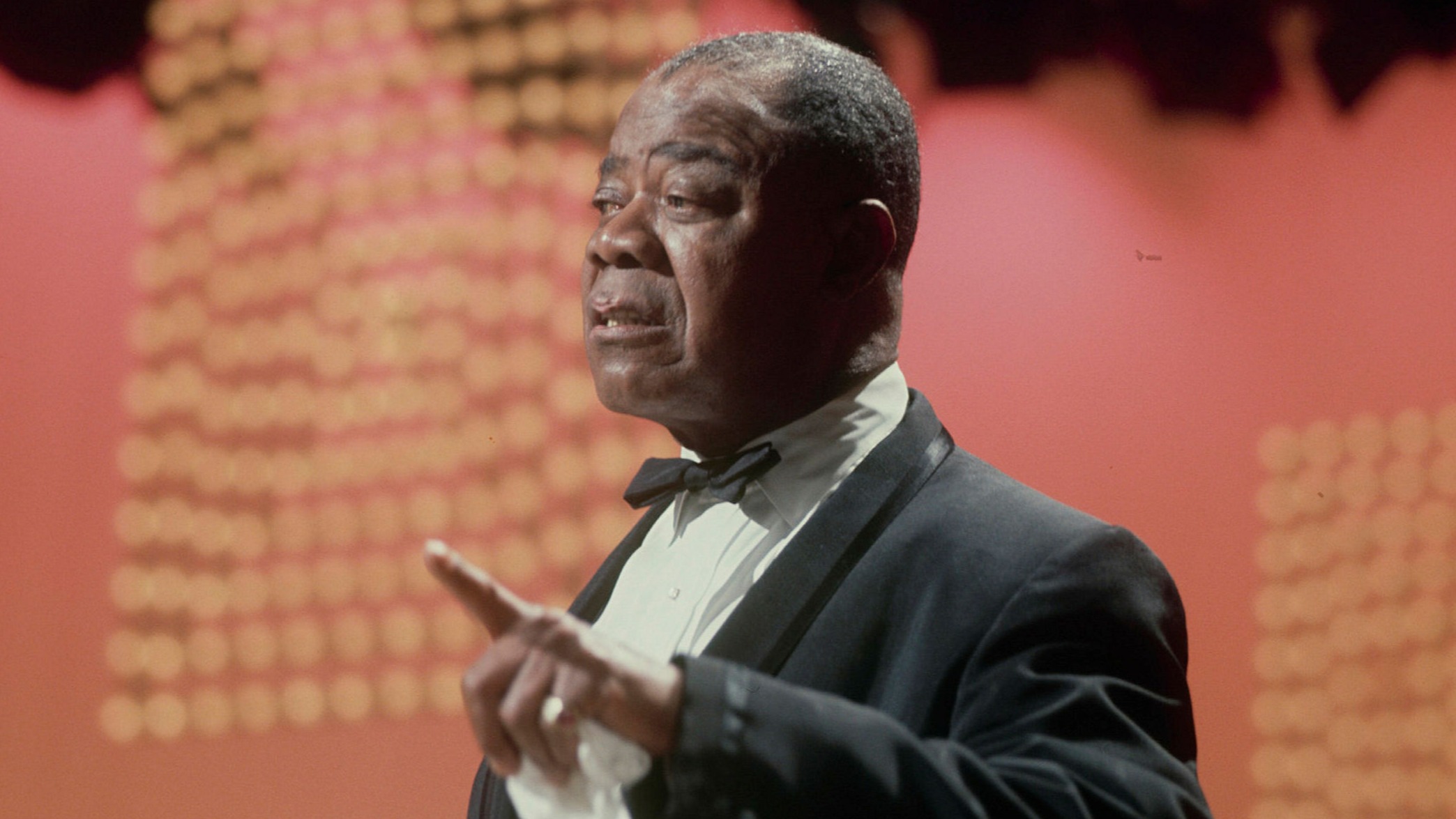
Many classic songs have had difficult gestations. Few songs, though, have had to survive the president of their record label attempting to murder them at birth.
In 1967, legendary US jazz trumpeter and vocalist Louis Armstrong had just signed to ABC Records. His last hit for his previous label had been the jaunty “Hello, Dolly!” and ABC’s chief, Larry Newton, was keen for Satchmo’s follow-up to be in a similar upbeat vein.
When Newton turned up to Armstrong’s 2am recording session, after his new star had played a midnight Las Vegas casino-hotel show, he was thus horrified to find him, with an orchestra, working on a slow, smooth ditty called “What a Wonderful World”. Newton ordered him to junk it.
Bob Thiele, the song’s producer and co-writer (under the name George Douglas) with songwriter George David Weiss, refused, had a stand-up row with Newton, and kicked him out of the studio. Unfazed by the fracas, the cheerily equable Armstrong worked on the track until 6am — although, famously, he didn’t actually play the trumpet on it.
His efforts were rewarded. From Satchmo’s growled opening line (“I see trees of green, red roses too…”), “What a Wonderful World” was a beauteous, beatific jazz-pop jewel, an iridescent glow of sun-dappled positivity. This didn’t stop Larry Newton hating it with a passion.
The ABC boss refused to promote the single. Even as it hit number one in Britain, making Armstrong, at 67, the oldest man to top the UK chart, it sold only a few hundred copies in the US. It was not to be a hit there until 21 years later, when it featured on the soundtrack of the Good Morning, Vietnam (a film that was set in 1965, two years before the track was written).
There’s a curious paradox to “What a Wonderful World”. Although the song is a serene masterclass in life-affirming joy, in the wrong hands it can easily topple into sentimental hokum. Saccharine arrangements can reduce it to the musical equivalent of a Hallmark greetings card.
This was its sorry fate in the 1970s, as it became a syrupy British TV and cabaret staple. Light entertainment stalwarts Vera Lynn, Ken Dodd, Peters and Lee and a 10-year-old Lena Zavaroni all pulped the song to mulch; and it’s best to draw a veil over the efforts of Windsor Davies and Don Estelle.
There were to be further atrocities, including Eva Cassidy duetting from beyond the grave with Katie Melua. Thankfully, not all future interpretations were so limp. In 1988, country legend Willie Nelson caressed the tune, rendering it as craggy yet twinkling as his visage.
It demonstrated an eternal truth about “What a Wonderful World”: it’s a song that comes alive in the hands of people who have lived a bit. Nick Cave and Shane MacGowan’s rich, closing-time croon in 1992 was deeply affecting, two reprobates finding beauty in the gutter.
Alison Moyet wrapped her stentorian pipes around it to tremendous effect, while Marianne Faithfull’s husky, nicotine growl was made for the song. One curious take saw US children’s entertainer Dan Zanes and a drawling Lou Reed turn it into a laconic lullaby.
The core appeal of “What a Wonderful World” is its guileless charm (“I see friends shaking hands, saying ‘How do you do?’ What they’re really saying is, ‘I love you’”). The truest interpretations retain that essence, be it Joey Ramone’s “One-two-three-four!” punky thrash in 2002, or Tony Bennett and kd lang’s unlikely but immaculate duet the same year.
The deeper you dig into “What a Wonderful World”, the more you find. A devastating take by US R&B and neo-soul star Aloe Blacc in 2017 re-illustrated the profundity and poignancy of a song for the ages. Satchmo was right; Larry Newton didn’t know what he was talking about.
What are your memories of ‘What a Wonderful World’? Let us know in the comments section below.
‘The Life of a Song Volume 2: The fascinating stories behind 50 more of the world’s best-loved songs’, edited by David Cheal and Jan Dalley, is published by Brewer’s.
Music credits: Universal Music Group International; Parlophone UK; P&R; BMG Rights Management GmbH; Columbia Nashville; Mute; Festival Five Records; Castle Communications; RPM Records/Columbia; Interscope
Picture: Redferns