
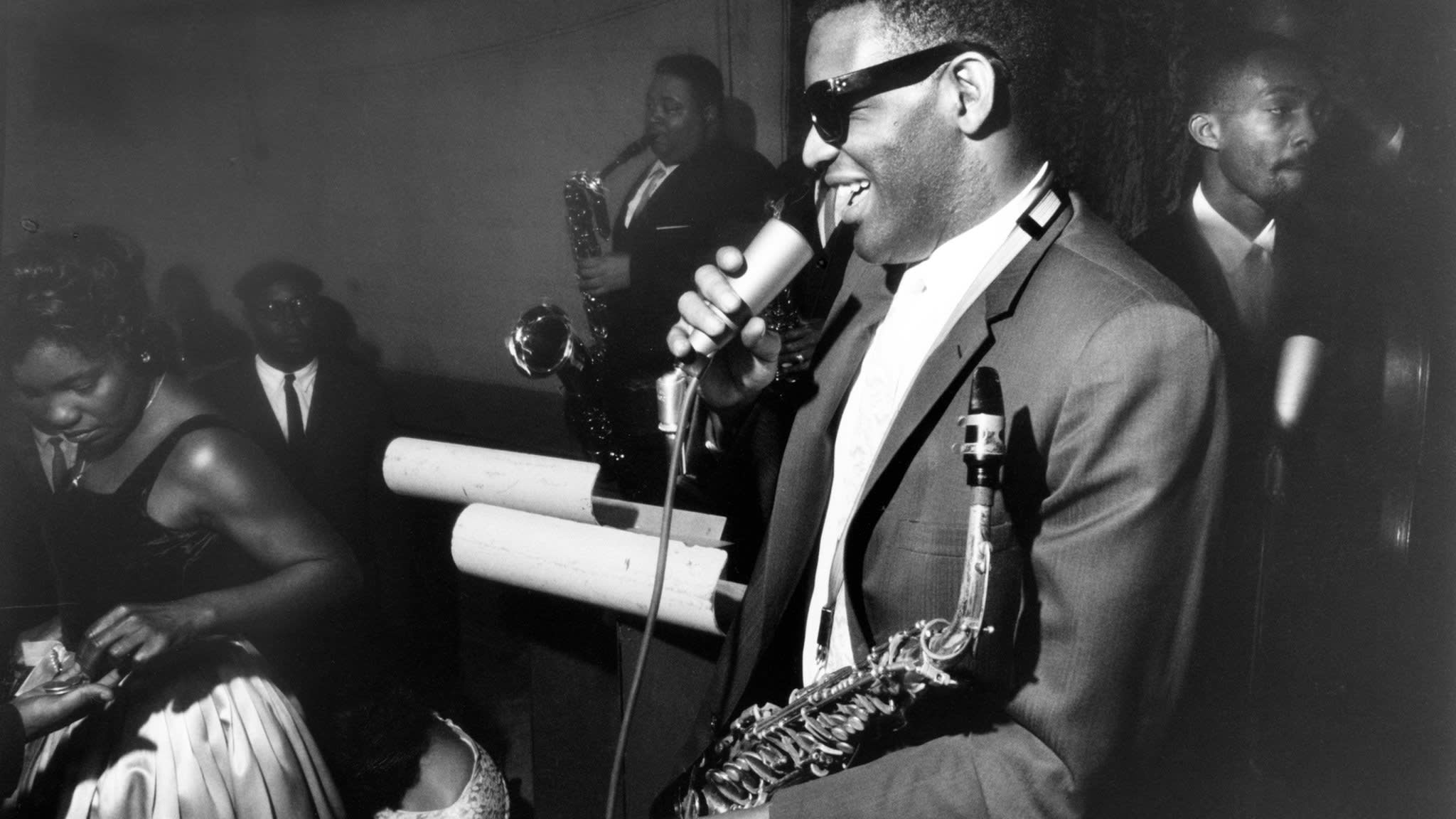
A foundation stone of soul music, “What’d I Say”transformed the way R&B was made and perceived. Its singer, Ray Charles, could be marketed as “The Genius”. It inspired hundreds of musicians to walk in its shadow, among them Paul McCartney, who said the song inspired him to become a musician. It made the electric piano, previously derided as a toy by R&B and jazz pianists, a funky part of pop’s audio palette. It even changed the format of seven-inch singles. And Charles made it up on the spot.
Charles’s songbook is massive, but “What’d I Say” was created when the singer somehow ran out of material near the end of a gig in Brownsville, Pennsylvania. He began playing a rollicking riff, improvising lyrics over it. Telling his backing singers The Raelettes, “I’m going to fool around and y’all just follow me,” Brother Ray delivered an instant classic in the “call and response” style. Perhaps because it was created in a club environment, the lyrics were more lascivious than anything Charles had released until then. The song was long because it had no fixed structure, and Charles, who was blind, could hear and feel the crowd going crazy while he sang it, so why stop?
Charles called Jerry Wexler at Atlantic Records about his hot new tune and on February 18 1959, he cut “What’d I Say” in a handful of live takes. Atlantic’s audio engineer, Tom Dowd, hadn’t realised there was anything game-changing about the song; he was more concerned with how this seven-minutes-plus epic could be released. Dowd chopped it in two, added a false break, and Atlantic put it on both sides of a single, a new option for issuing long songs on seven-inch 45 that James Brown often followed. However, radio proved resistant, so Dowd created an airplay version, excising cries of “Shake that thing!” to save America’s morals. The record hit the US chart in July and stayed there into the autumn, sending Charles’s already impressive career stratospheric.
Fifties R&B singers often drew on a church upbringing when performing for black audiences, but none had yet proved that a gospel-based sound could inform a pop hit, with the likes of Dinah Washington and Bobby Day playing down the spiritual element and preferring lush orchestrations or chirpy ditties to organs and wailing. “What’d I Say” flung open the church doors and let semi-sanctified music out, with Charles as the preacher seeking witness from The Raelettes. It was a midwife to soul, and its echoes rang in everything from Barrett Strong’s “Money” to The Shangri-Las’ “Leader of the Pack” to Bob Marley & The Wailers’ “Rebel Music (Three O’Clock Roadblock)”.
Among its devotees was a generation of British would-be R&B singers. A pre-fame Beatlesrecorded it with Tony Sheridan in 1961. When Mick Jagger first climbed on stage with Alexis Korner’s group at London’s Marquee Club, which led to him joining The Rolling Stones, he sang “What’d I Say”, and its title lurks in “She’s the Boss”, the song that gave a name to his first solo album in 1985. The Animals hired organist Alan Price because of his ability to play “What’d I Say”. John Mayall’s Blues Breakersrecorded it with Eric Clapton in 1966.
An older cadre of rockers covered the song, including Jerry Lee Lewis(1961), Elvis Presleyand Brenda Lee(both 1964). Jazz organist Jimmy Smithalso played it in 1964, flautist Herbie Manncut it in 1971, country guitar picker Chet Atkinsopened an album with it, and The Hep Stars, precursors of ABBA, showcased it in their On Stage LP. There were versions by Nancy Sinatra, power trio Cactus, and, in a much-bootlegged live setting, Prince. And Ray Charles used “What’d I Say” to bring his show to a shattering climax for the rest of his career.
We’re keen to hear from our readers. Whose version of “What’d I Say” is best? Let us know in the comments below.
‘The Life of a Song: The fascinating stories behind 50 of the world’s best-loved songs’, edited by David Cheal and Jan Dalley, is published by Brewer’s.
Music credits: Rhino Atlantic, RR Live Recordings, Decca Music Group Ltd., Not Now Music, RCA/Legacy, Body & Soul, Mojo Jazz, Columbia/Legacy, Legacy Recordings, Shami Media Group 3, Stars Vintage
Picture: Paul Hoeffler/Redferns