
At the turn of the millennium, Carlos Santana staged the most unlikely comeback in jazz-rock-fusion history. In the late 1960s and 1970s, the Mexican-born American guitarist had been a staple of baby boomers’ stereos, propelled into the spotlight by the acid-soaked exuberance of his 1969 Woodstock appearance (Santana later claimed that during the set he was convinced his guitar was a snake). That spotlight went on to shrink and flicker: Milagro, Santana’s last album before a seven-year hiatus in the mid-1990s, missed the Billboard Top 100 altogether.
Then came Supernatural. The 1999 album went 15 times platinum in the US, surpassing anything Santana had achieved in his presumed heyday. The beat-slapping “Smooth”launched his comeback, but it was follow-up “Maria Maria”which confirmed Supernatural as a genuine second coming. The sultry summer strut, which spent 10 weeks at number one in the US, tells the sepia-toned story of a beautiful woman working her way up out of poverty in Spanish Harlem. R&B duo The Product G&B and Wyclef Jean carry the lyrics, while Santana’s strumming lends the single the feel of a gypsy ballad. “Yo Carlos, man, you’re making that guitar cry,” Jean announces approvingly during his closing verse. (While the string- and heart-twanging resonance was indeed Santana’s own, the chord progression of the chorus had a stranger heritage: Jean, who co-wrote the song, revealed in a recent interview that he borrowed it from Wu-Tang Clan’s 1993 hit “Wu-Tang Clan ain’t nuthing ta f’ wit”.)
Supernatural was precision-targeted to shake Santana of his veteran status by attaching a mainstream star of the booming late-1990s pop industry to almost every song: Jean brought the cool factor to “Maria Maria”, while artists including Lauryn Hill, CeeLo Green and Eagle-Eye Cherry freshened up other tracks. For the oldest millennials — those born in the early 1980s — the record dropped just in time for college and became the soundtrack to stoned dorm-room parties, passionate first loves and turn-of-the-new-century festivities.

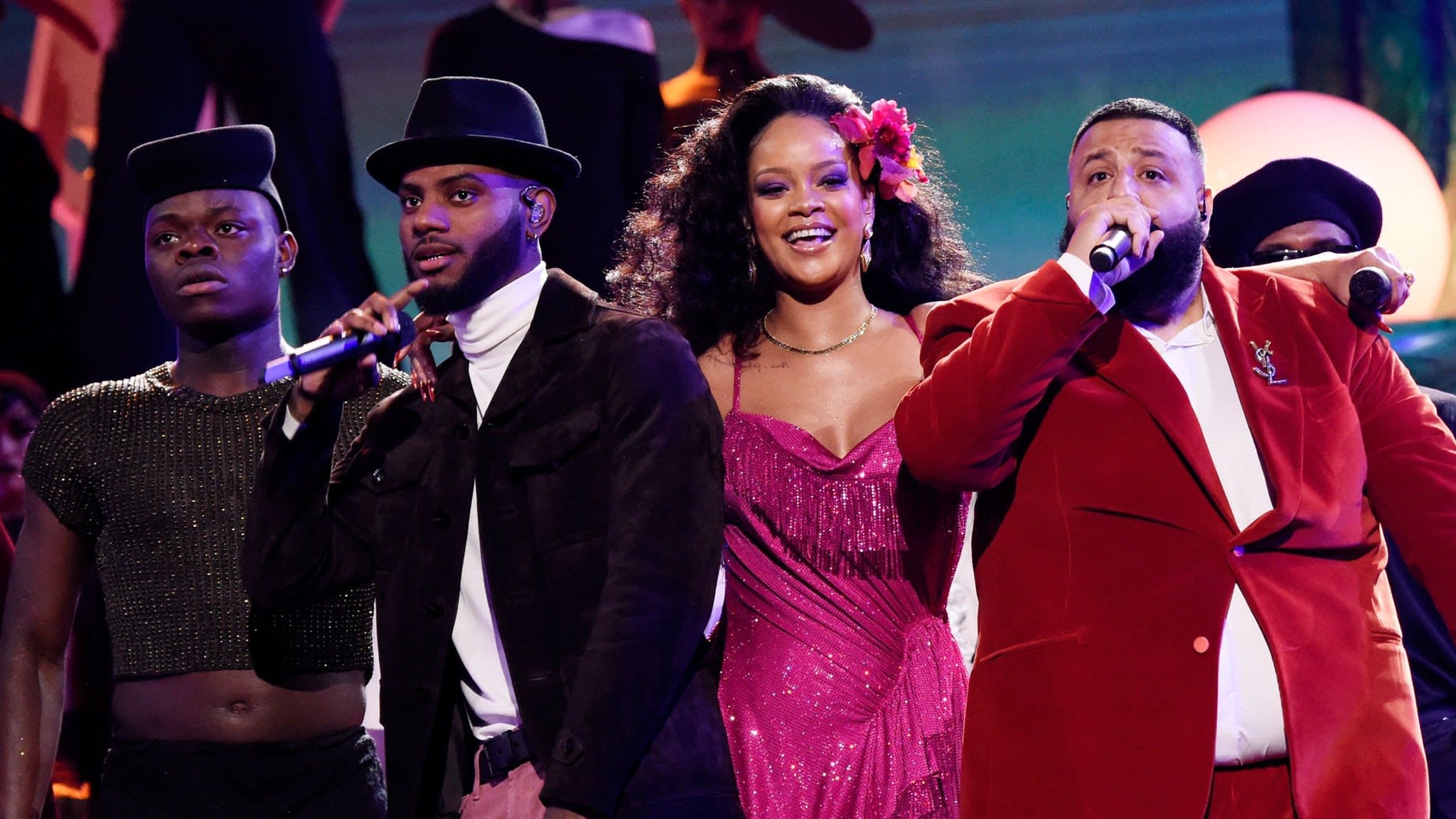
Eighteen years later, with those first millennials now in their mid-thirties and the youngest reaching college age in their turn, “Maria Maria” made a triumphant return to the charts. DJ Khaled’s “Wild Thoughts”, released in 2017 and featuring Rihanna and Bryson Tiller, leaned so heavily on the melody and mood of the 1999 hit that White Stripes frontman Jack White (whose audience skews towards the older end of the demographic) used a Rolling Stone interview to snipe that “[It’s] just Santana’s song in its entirety”.
Santana himself was thrilled by the reboot; a funky R&B track whose beach party vibe is mellowed out by the cool, almost careless vocal stylings of its guest stars. “The groove and essence of the song is still intact,” he told Billboard approvingly. Like “Maria Maria”, “Wild Thoughts” suggests balmy nights, feet sore from dancing and yearning — only this time for sex, rather than a way out of El Barrio; when ex-One Direction heart-throb Harry Styles covered “Wild Thoughts” in the BBC Live Lounge last year, he wisely left out Tiller’s more explicit descriptions of what exactly he had planned for Rihanna during their night of passion.
In latching himself to DJ Khaled, Santana once again demonstrated a surprisingly canny ability to seize the zeitgeist. The 42-year-old producer is a figure who epitomises the shift in millennial sensibilities from one pole of the generation to the other. He went from radio DJ to the (self-styled) Quincy Jones of hip-hop thanks to the runaway popularity of his Snapchat channel. Khaled uses the social media feed to broadcast quasi-sincere motivational posts: unflattering pictures of the mogul praising the virtues of mouthwash (“The key to more success”), drying after showering (“It’s a cold world out there”) and getting in lifts (“Wise up, rise up, bless up”). The advice — which Khaled amalgamated in New York Times-bestselling book The Keys in 2016 — mixes banality with surrealism and irony with sincerity. It will be a critical primary source for any future scholars interested in the strange phenomenon that is millennial humour.
But in their approach, if not their personalities, Santana and DJ Khaled are hardly poles apart. Both men have built a career on hitching themselves to a younger generation via collaboration (Grateful, the album on which “Wild Thoughts” appears, includes contributions from Beyoncé, Justin Bieber, Calvin Harris and fellow millennial meme-machine Drake), and both have built their public persona on spiritual teachings. Two years before The Keys was published, Santana — or “Cosmic Carlos” — released The Universal Tone: his own account of how spiritualism set him on the path to fame and longevity. “When people call me cosmic or crazy I take it as a compliment and say, ‘Well — behold. My craziness is working. How’s your sanity doing?’,” he writes.
As the zeitgeist shifts once again — from millennials to the generation coming up underneath them — ageing musicians everywhere would do well to consider this 70-year-old as a professional, if not spiritual, prophet.
PODCAST: Sincerity or self-branding: what defines millennial music? Harriet Fitch Little talks to India Ross and Griselda Murray Brown about DJ Khaled, Drake, Cardi B — and the ‘millennial whoop’. Listen at ft.com/loas-podcast
Does ‘Wild Thoughts’ epitomise the millennial moment? Do you have particular memories of Santana’s ‘Maria Maria’? Let us know in the comments below.
‘The Life of a Song: The fascinating stories behind 50 of the world’s best-loved songs’, edited by David Cheal and Jan Dalley, is published by Brewer’s.
Music credits: Columbia/Legacy, Columbia/Legacy, SBME Strategic Marketing Group, Epic/We The Best
Picture: Kevin Mazur/Getty Images for NARAS, Tim Mosenfelder/ImageDirect