

The secret life of a skyscraper
Emma Jacobs and Andrew Hill meet the people who work in western Europe’s tallest building. Photographs by Charlie Bibby
One day soon you may find yourself working in a skyscraper. As developers in cramped cities build upwards and ambitious planners and architects vie to construct trophy properties, more of us will be working in the clouds, high above city life.
In the City of London, more and more high-rise office blocks are scrambling for position against the skyline. In defiance of short-term economic cycles, four towering new structures are under way: 22 Bishopsgate (272m); 52-54 Lime Street (206m); 100 Bishopsgate (184m) and 120 Fenchurch Street (68m). All will take their place against 52 tall buildings over 75m. Another eight are under construction. Over to the east, Canary Wharf, London’s second financial district, is thick with supersized buildings.
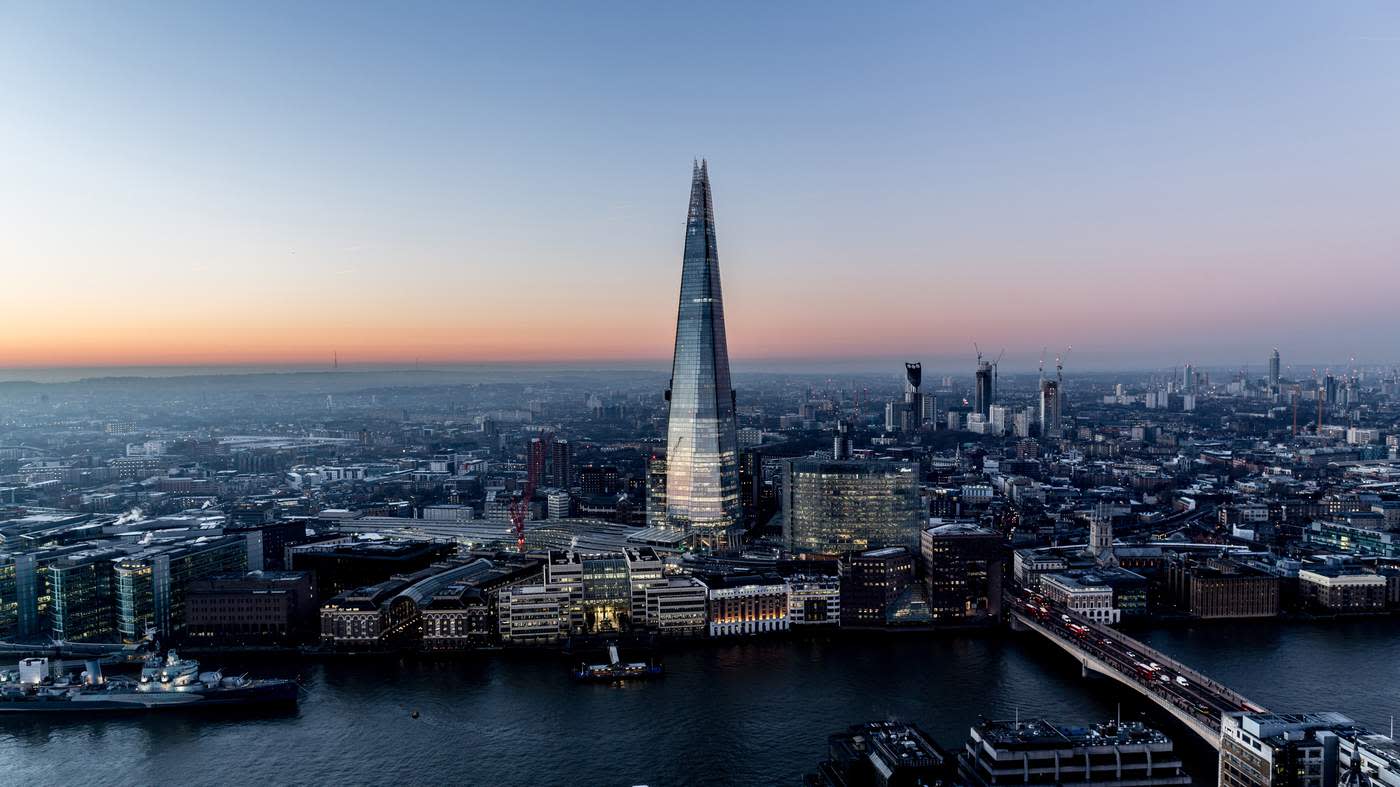
Yet none will be taller than the Shard, which towers over the City from its position on the south bank of the River Thames. At 310m and with 95 storeys, it is the tallest building in western Europe, already integral to the capital’s skyline after only four years and visible from vantage points across distant suburbs, from Primrose Hill to Richmond.
The Shard is the work of Renzo Piano, the Italian starchitect, who once told Irvine Sellar, the building’s developer and joint owner: “You know, I hate tall buildings - they are arrogant, aggressive, like fortresses.”
Piano’s fortress is forged by eight sloping glass facades - the shards. It opened to tenants in 2013 after a difficult start. In 2008, a consortium of state-backed Qatari funds rescued the project when investment fell away during the global economic crisis. At the time, many saw the funds' investment as a bold way for Qatar to show off its considerable financial muscle. The cost came to about £1.5bn.

Cleaning the Shard’s wall of windows
Sellar died in February aged 82. He said bringing the project to completion was “like swimming all the way across the Atlantic”. After a slow start in letting the space, today the Shard houses a fashion retailer headquarters, five restaurants, a television studio, a law firm and a luxury hotel, among others. The flats are still unoccupied, but more than 5,000 people work within its walls, navigating 36 lifts. The subterranean post room handled 44,000 letters last Christmas.
Many Shard workers are from overseas, attracted to London’s career prospects and entrepreneurial energy. For Alina Artamonova, a guest ambassador who welcomes paying customers to see the views on the 72nd floor, working at the Shard is a meditative experience. “Up so high is very peaceful. It makes you think about your life... and what you want to do one day.”
What does it take to make a superstructure like the Shard run 24 for hours a day? What is it like to spend your working life in a landmark building? To find out, we talked to people who earn their livings at the Shard - from executives and news anchors to physiotherapists, maintenance staff, window cleaners and post room workers.
Some speak of their pride or love of the building's glamour, others say the excitement fades. In the coming decades, thousands more Londoners will find working life shaped by high-rise office spaces. The way people in the Shard think and work today may be a guide for what these new cloud-workers can expect in future.
Loading bay supervisor
4.56AM

When most Londoners are sleeping, Bennett is meeting deliveries of meat, fish and milk for the tenants - from expensive restaurants to law firms. One of the worst aspects is being surrounded by the smell of rubbish waiting to be collected. “You get used to it”, he says.
Skyscrapers are targets for terrorist attacks, and staff must be vigilant. It is Bennett and his team who are responsible for checking vehicles for improvised explosive devices and other weapons. Before he worked here, he served in the British Army’s Rifles reserve regiment, where he completed a six-month tour of duty in Afghanistan between 2011 and 2012. He was 20.
He also points out the way for VIPs heading to the hotel, restaurants and media events, who make their way via a secret entrance through the loading bay, hidden from public view. But Bennett is far too discreet to reveal which stars have come through the building.
From his home in Canning Town, east London, he can see the Shard. His working days are 12 hours long. “You don’t have any social life, just work, go home, shower, wash.” The trick to changing from night to day shifts is to “fight through” fatigue, he says.

7.33AM

Kyle Russouw
Post room manager
The post room handles 700 packages on a quiet day. In the run-up to Christmas, 44,000 letters were delivered. Russouw is sanguine about workers’ personal shopping arriving in sheathes of parcel paper and jiffy bags, which he and his colleagues deliver to their offices. He says the mountains of packages are a byproduct of the punishing hours of modern working life.
Russouw and eight colleagues handle the post for 31 companies. There are frustrations. Some office workers think their package should take priority, such as the man who wanted his video game to arrive at his desk as a matter of urgency.
Like Bennett in the loading bay, the 29-year-old must be vigilant for suspicious packages. But Russouw seems unfazed.
The Shard offers its tenants panoramic views and the dazzling natural light, but the basement post room is dark and windowless. Russouw, originally from sunny Durban in South Africa, insists that he does not care. “I’ve never been a lover of heights,” he says.
Window cleaner
9.51AM

When Andone lived in his native Romania, he thought he would become a theologian. The catholic-turned-protestant studied theology at university in Bucharest. Yet his complicated relationship with God and struggles with addictions put a brake on his progress. “I realised my life was a bit of a mess.”
The 30-year-old came to the UK “for more money, for a better life”. First he found construction work, then industrial cleaning. In April 2015 he was hired as a Shard window cleaner. The team of 12 clean the 11,000 panes of glass in daily rotation.
Most of his day is spent in cradles on the outside of the top floors. “It’s very exciting.”
He does not worry for his own safety, but for those working alongside him. “If I fell down I’d be dead.” He is not afraid of death, but he does fear the afterlife.
When Andone showed his mother in Romania pictures of his workplace she was concerned about his safety. “She’s not worried now. She knows I’m in a country with lots of regulations. It’s not like Romania. She trusts in God more than me.”
There is no miracle window cleaner - the secret ingredient is washing up liquid, he says.
Physiotherapist
10.48AM

Ehiogu used to work in a city basement, often for long hours and without daylight. His employer, a private healthcare company, moved to the Shard in 2016. Today, looking out from the fifth floor, he can watch the seasons change across London and the hills beyond.
The Londoner, born to Nigerian parents, once worked as a physio in the British Army. He served twice in Afghanistan. “If we were being mortared it was scary,” he says, with understatement. “I would say a prayer and hope it wasn’t me.”
Most of Ehiogu’s clients work in the financial districts of the City or Canary Wharf - he can see their clumps of offices to the north and the east. Yet despite their high salaries, he is not envious, because he knows how stressful their lives can be. “Most are not the most relaxed people,” he says.

12.09PM

Andy Ansah
Entrepreneur
Ansah was diagnosed with a kidney condition when he was 15, which meant regular trips to Guy’s Hospital, south of the river Thames. Today, the infirmary sits in the shadow of the Shard. He remembers how the run-down area held little allure for visitors in the mid-1980s. Today, outside, on the pavement, crowds of tourists are posing for selfies.
Ansah wishes his mum, a factory worker who died four years ago and used to accompany him to his appointments, could see him now, working on the 24th floor of the Shard and running his sports business. “It would be brilliant,” he says.
Ansah left school to become a professional footballer, playing first for Crystal Palace, then Southend United and Brighton. His starting salary was £75 a week, his peak earnings, just under £1000 a week. Deciding to leave the sport (in 1999) before it rejected him, he joined the football drama, Dream Team on Sky 1, as an extra. While working there, he spotted a gap in the market: “football choreography”.
Today the 47-year-old’s company choreographs footballers, including Wayne Rooney and Lionel Messi - in other words, guiding the sports stars so their kicks and slide tackles appear realistic on commercials and in televised dramas.
He started the company from a bedroom in the house he shares with his wife and three children in Mottingham in south-east London (“a lot less glamorous”). Ansah moved to the Shard last April. The chic new location means his famous clients are more likely to visit him.
General manager
2.19PM

‘All eyes are on the Shard. The shop is open every minute of the day’

2.53PM

Marcos Aurelio-Panzin
Cleaner
Aurelio-Panzin left Belo Horizonte in south-east Brazil, where he had worked as a shoe and clothing salesman, in 2000. He came to London to find a “new challenge”.
The day he arrived he got a job in construction. Without time to attend language school, he taught himself English with books and by trial and error.
Aurelio-Panzin became a housekeeper in 2003 after meeting a Brazilian office cleaner, who later became his wife. Today he is the housekeeping duty manager at the Shard, responsible for cleaning and overseeing the team that looks after the communal parts of the building.
Most of his colleagues are men from Colombia, Bolivia and the Philippines. For the most part he likes his job, despite being frustrated by office workers failing to sort the recycling properly.
When he sees rubbish on the floor he despairs: “How can people do it?”
Banqueting manager
4.14PM

Hill sometimes leaves his home in Canary Wharf at 5am, arriving at the Shard just as the sun comes up. He has worked at the hotel for two years, and it is his job to make sure events run smoothly.
Hotel guests, he says, sometimes go to bed with the blinds open in order to see the sunrise.
One aspect of the job he had not anticipated was dealing with people who stay in the hotel in an attempt to conquer their vertigo. “We see guests who are afraid of heights… they pause and freeze.”
Often, they end up leaving by the windowless service lifts.
Guest ambassador
5.14PM

Artamonova, originally from Latvia, grew up in a small town near Lake Maggiore in Italy, where according to her, nothing much happened. She came to London in 2011 in search of action and adventure.
Her job, greeting visitors to the Shard’s viewing platform, has immersed her in the capital’s history and geography. A trip to see the panorama from the View from the Shard on the 72nd floor costs £30.95.
On a clear day she can see Windsor Castle, the royal residence more than 20 miles from the skyscraper to the west. Now Artamonova has ambitions to become a tour guide.
Her job includes helping to set the scene for after-hours marriage proposals, playing romantic songs for couples stepping out of the lift. John Legend’s “All of Me” is a popular choice. One St Valentine’s day, 29 couples became engaged at the top of the Shard. “We have bets on how many people will propose,” she says.
One man took 50 minutes to summon the courage to deliver his proposal. Another’s partner panicked when she saw a sign daubed with the words “Will You Marry Me?”
“I think she said no,” says Artamonova.
Executive chef
7.08PM

‘Logistically, it’s not the most straightforward restaurant’

8.36PM

Crawford Spence
Associate dean
Spence was offered the chance to manage Warwick Business School’s London operation within a year of making professor in 2013. The appointment was a step up for the Edinburgh-born accounting expert, but now he prefers coming to the Shard to going to the Warwick campus: “You feel like you’re at the centre of the universe.”
At the time the Shard was new, and many thought the business school’s campus was a vanity project. But the move turned out to be “a master stroke”. Potential clients and students, mostly part-time executive MBA candidates, are “seduced by the building”, Spence says. “We built it, we fitted it out, and they came.”
The “vibe we’re getting from [the London MBAs] is a bit different” from the Coventry cohort, Spence has noticed: “They’re more demanding, they’re snappier, and it’s forcing us to keep ourselves on our toes.”
Spence has seen parts of the building his colleagues have not. In his first two weeks in the job, he was told those working in the Shard could visit a particular floor for lunch, so he invited a distinguished guest of the school.
“We took the service elevator and ended up on a floor that was full of guys in high-vis vests and all they served was sausages and beans - it was basically a workies’ canteen”.
They stayed and ate off paper plates.
News presenter
9.09PM

Barr joined Al Jazeera English from ITV when the station launched in 2006. It broadcast from a basement in Knightsbridge in west London.
The Shard premises - larger, bespoke - make life easier. Once you are in the studio “you focus on the camera and running order… but you have a bigger space, better views and it makes a massive difference.”
“People tell me the sunrise is beautiful, but I never see that,” says Barr, who starts work around 1pm for a 5pm broadcast.
The crowds of tourists can be a problem: “I’m not anti-people, but when I get here I just want to power-walk up the escalator and get into work - and they’re all taking selfies.”
Sometimes she works a later shift, when the building is quieter. From the washrooms, she can hear the Shard’s structure creaking in the wind.
On such nights, after midnight, she likes the feeling of being one of the last people to leave.
Written by Emma Jacobs and Andrew Hill
Photographs and video by Charlie Bibby
Timelapse by Chris Batson and Charlie Bibby
Edited by Helen Barrett
Subedited by Janina Conboye
Design by Kari-Ruth Pedersen
