


In April, acting director of US Immigration and Customs Enforcement Todd Lyons told a roomful of military and tech companies what the US government wanted America’s deportation system to look like.
It needs to be like “Amazon, trying to get your Prime delivery within 24 hours” but applied to “human beings”, he told the 2025 Border Security Expo. He hoped AI could soon help “fill up airplanes” with deportees.
Donald Trump has made no secret of his desire to supercharge immigration enforcement. The US president swept back into office on a strong anti-immigration platform at a time of widespread public discontent over a surge in illegal border crossings under President Joe Biden.
His promised crackdown is now under way and his “big beautiful bill” provides the Department of Homeland Security (DHS) with $165bn in additional funding — the single biggest increase in immigration enforcement cash ever in the US. Some $45bn of that, allocated through September 2029, will be spent on new detention centres.
“We are putting the American people first by removing illegal aliens who pose a threat to our communities,” DHS assistant secretary Tricia McLaughlin tells the FT.
The US had the largest immigration detention apparatus in the world even before the president set out his mass deportation plans. Having grown steadily since the 1980s, spanning both Republican and Democratic administrations, it cost the government $3.4bn in 2024.
It is largely run by the private sector. About 85 per cent of people in immigration custody are held in places run for profit, according to Syracuse University’s Transactional Records Access Clearinghouse (TRAC), an archive of government data and reports.
Most of the large, private detention facilities are located in the south


Graphic: Map of the US showing locations and size of immigration detention facilities, categorised by ownership type (Public, CoreCivic, Geo, Other private). Circle sizes represent the average number of detainees, ranging from 5 to 2,000 people. Notable centres labelled include Adelanto ICE Processing Center, Adams County Detention Center, Stewart Detention Center, Krome North Service Processing Center, and Guantanamo.
But the extraordinary escalation of Trump’s immigration policies has put fresh scrutiny on the industry as it scales up in response — and sees revenues surge as a result. Current policies have driven detention numbers to record levels — 18,000 more people than when Trump came to power.
Critics of the detention system, which holds people while deportation and associated legal proceedings are under way, say private contractors have sometimes put their desire to turn a profit ahead of ethical standards – with the tacit support of lawmakers on both sides of Congress.
“Republicans have no solo claims to taking lobbying dollars from private companies to expand prisons, to expand detention,” says Nancy Hiemstra, associate professor and co-author of a book on the industry, Immigration Detention Inc, pointing out Democratic administrations have also been involved. “But lobbyists and companies are much more excited about people like Trump and Republicans because they are more openly aggressive and willing to state those goals.”
The US immigration detention population is at a record high
Average daily population in immigration custody


Graphic: Chart showing the average daily immigration detention population in the US from 2019 to 2025, with numbers falling under Biden and then rising sharply to a record high under Trump's 2025 term.
Detention contractors say they are providing a cost-effective service in support of US law enforcement and are able to respond more easily to fluctuating demand for capacity. They also point out that they do not oversee immigration laws or have a say in any individual’s deportation or release.
But increasing levels of incarceration are leading to deteriorating conditions, legal representatives and detainees say.
Maurilio Ambrocio, a 42-year-old undocumented father of five, spent a night sleeping on the floor at a facility in Florida after being taken into ICE detention in April. Ambrocio, an evangelical pastor and handyman, says some of his fellow detainees spent weeks without a bed, with some sleeping in bathrooms, in spaces meant for lawyers and even on a bus due to overcrowding.
“In a little room that’s for five people, they put in up to 30, 40, 50,” says Ambrocio, originally from Guatemala but who has lived in the US for 20 years. “Everything is chaos.”
More immigrants, more profit
On a quarterly earnings call in May, CoreCivic CEO Damon Hininger told shareholders that Trump’s election heralded a “significant moment” for his company, one of the US’s two largest prison contractors. “Never in our 42-year company history have we had so much activity and demand for our services as we are seeing right now.”
The prospect of Trump’s record-breaking deportation drive has seen the market value surge of the two biggest immigration detention companies: Tennessee-based CoreCivic, and its principal rival, Geo Group, based in Florida.
The two companies depend on Immigration and Customs Enforcement (ICE) for a large chunk of their income: Geo Group received almost $1bn from immigration detention contracts in 2024 — 42 per cent of its revenue and more than double what it was in 2015. CoreCivic relies on ICE for almost a third of its revenue.
The climate under Trump means that there is a readiness to discuss the financial and political capital to be gained from tough immigration measures, says Hiemstra. “I think there is a real shift now to many more industries, many more communities, many more politicians, more openly recognising that detaining immigrants is not only a way to score political points but is a way to bring revenue into our companies, into our communities.”
Prison operators make a large share of revenue from ICE contracts . . .
Annual revenue in $bn


. . . and their stocks shot up after Trump’s election wins
Market cap by company, $bn


Graphic: Two charts showing market capitalisation of private prison firms Geo Group and CoreCivic from 2015 to 2025. Both companies saw sharp spikes in value after Trump’s 2016 and 2024 election wins.
The facilities run by Geo Group and CoreCivic, alongside smaller contractors such as Management and Training Corp, LaSalle Corrections and Akima Global Services, are in rising demand.
Companies are racing to reopen unused facilities and expand capacity in existing ones to reach a government target of around 100,000 beds across the US . The Trump administration has modified dozens of current contracts and entered into no-bid agreements to accelerate the process.
In total, companies are reactivating shuttered facilities or opening new ones in at least five states. An additional nine centres, totalling about 16,000 beds, will mean at least $500mn in extra annual revenue for Geo Group and CoreCivic, according to investor news announcements analysed by the FT .
Geo has ramped up spending as a result. In its first-quarter results of 2025, the company said it expected capital expenditure for the year to rise from $79mn in 2024 to $120mn-$135mn in order to expand detention capacity and provide other ICE services.
In May, CoreCivic raised its profits guidance for 2025 by a minimum of 50 per cent — to between $91mn and $101mn — due to higher bed occupancy rates and the reactivation of previously idle facilities.
Geo Group and CoreCivic run far more facilities than other contractors


Graphic: Illustrated polygons comparing the size and number of immigration detention facilities run by private contractors. Geo Group operates 22 facilities, CoreCivic 17, LaSalle Corrections 6, and Management & Training Corporation and other private firms 5 each. Notable centers like South Texas ICE Processing Center and Eloy Federal Detention Center are labelled.
Geo Group has announced plans to create the country’s biggest ICE facility in south Georgia by combining the 1,118-bed Folkston ICE Processing Center and the neighbouring former 1,868-bed prison D Ray James — a move the company says will bring in an additional $66mn in annual revenue alone.
The government is also contracting with local jails and using so-called soft-sided facilities, including one run by the state of Florida on an airstrip in the Everglades, dubbed “Alligator Alcatraz” by administration allies because of the nearby presence of dangerous wildlife.
A number of people are also being held at Guantanamo Bay Naval Base, a military facility originally established to hold suspects captured in counter-terrorism operations and now run by the Virginia-based company Akima.
US immigration authorities are building a number of temporary structures


Graphic: Satellite images showing the setup of temporary immigration detention structures in Florida. At Dade-Collier Airport, a December 2024 image shows an abandoned runway; by June 2025, tents are set up. Trucks and equipment are visible along the runway. At Krome North Service Processing Center, a May 2025 image shows a new tent installed on a former football field.
In total, the current population of 57,800 detainees is being held in at least 200 detention facilities, up from about 144 in the final days of the Biden administration, according to ICE figures. The number rises to 500 sites when all locations, such as hold rooms and smaller units, are taken into account.
These rapidly rising detention populations are putting the system under strain, with some individual facilities running close to or exceeding their individual capacities.
Half of the 50 largest facilities have reported record populations since Trump entered the White House and at least 15 have exceeded their capacity, according to FT analysis of ICE detention statistics and data obtained by the Deportation Data Project through a Freedom of Information Act lawsuit.
In the past few weeks, a number of sites have been consistently operating with hundreds more people than they were designed to hold.
Several ICE detention centres are operating significantly over capacity
Seven-day rolling average of detainee population


Graphic: Three area charts showing the seven-day rolling average of detainee populations at three ICE detention centres — Stewart, Krome North, and Prairieland — from November 2024 to June 2025. All three centres show populations rising after Trump takes office in early 2025, with each exceeding their respective capacities.
Rebekah Wolf, attorney and director of the American Immigration Council’s Immigration Justice Campaign, says that she had been told of people sleeping on floors and in hallways at some facilities, as well as difficulty accessing attorneys.
But a major concern is the provision of medical care. “People who would previously have been released because of severe medical issues are just not being released,” she says. The families of two detainees told the FT about similar experiences of poor medical access.
At Geo Group’s Adelanto facility in California, numbers have soared from three to more than 1,200. Detainees told Democratic lawmakers they had slept on the floor, with some not receiving a change of clothes in 10 days.


Since the start of Trump’s second term, numbers at the Stewart Detention Center in Georgia, operated by CoreCivic, have also surged, from around 1,500 to more than 2,200 in early June — almost 500 more people than the facility is designed to handle.


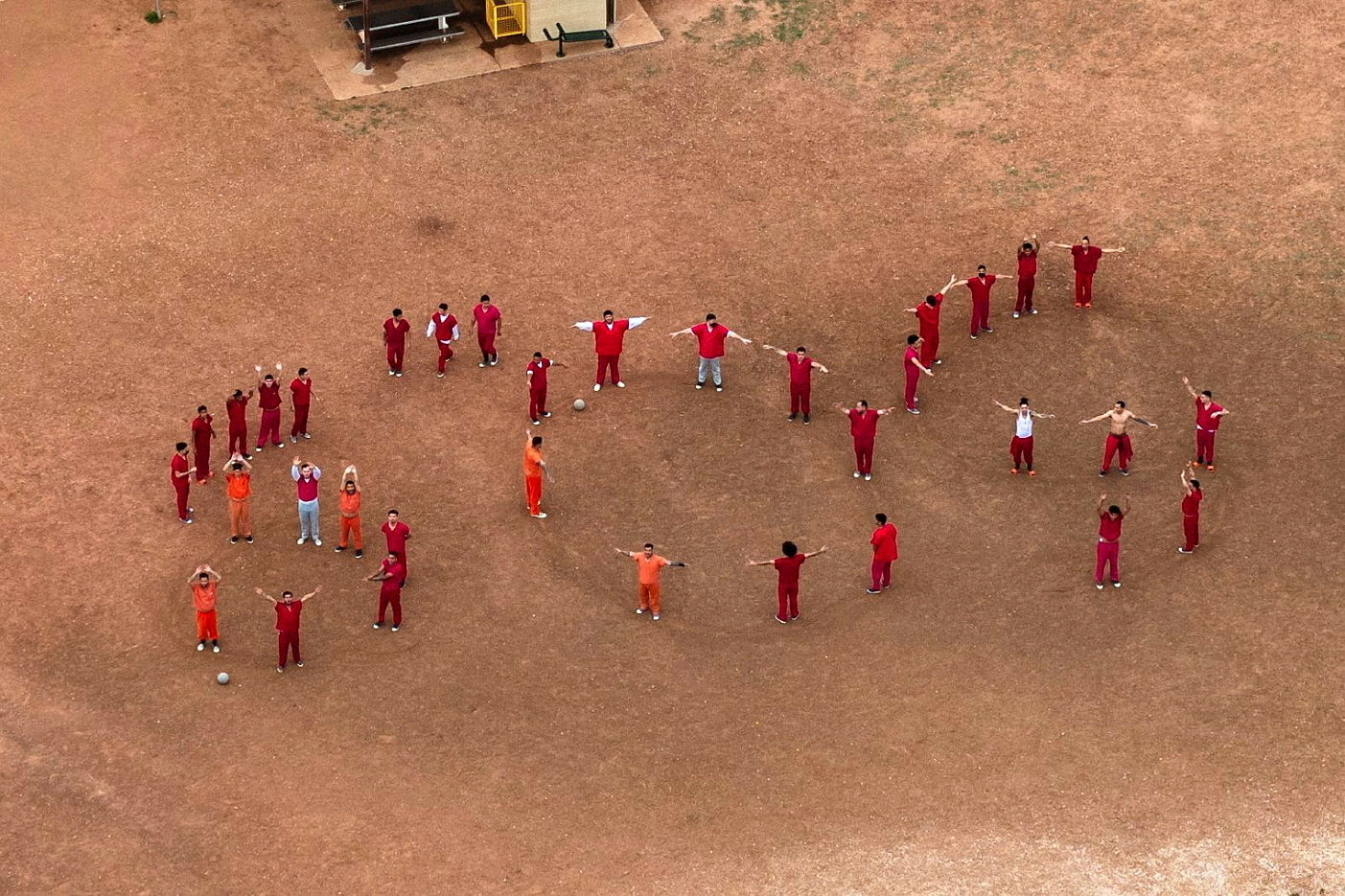
Overcrowding at Akima’s Krome North Service Processing Center in Florida, which is designed to hold 580 people and in March had more than double its emergency capacity of 850, has led ICE to erect temporary structures in its grounds. Detainees formed a human “SOS” sign in the facility’s yard last month.


The DHS’s McLaughlin disputes claims of overcrowding and poor conditions at facilities, describing them as “categorically false”. “ICE has worked diligently to obtain greater necessary detention space while avoiding overcrowding,” she says, adding that those held are given proper meals, medical treatment and are able to contact family and lawyers.
CoreCivic also denies there are facilities with unsuitable conditions and says every detainee is offered a bed. Those held are provided with clothing, toiletry kits and blankets as well as three meals a day and have access to high-quality medical care, says Ryan Gustin, senior director for public affairs. “Our responsibility is to care for each person respectfully and humanely while they receive the legal due process that they are entitled to.”
Geo Group says its facilities have strict limits on capacity and are “never overcrowded”, while detainees have access to “round-the-clock” medical care.
Trump is calling for yet more arrests, a move that is likely to further increase the pressure on capacity. The White House set ICE a new quota at the end of May of 3,000 arrests a day — a number border tzar Tom Homan later suggested should be raised to 7,000.
Although being an undocumented migrant in the US is not a crime, it is a civil offence — and ICE has been widening the pool of people it detains. Homan has suggested anyone without documentation is now “on the table”.
Loading
In 2024, ICE officers carried out an average of 300 immigration enforcement arrests per day.
Since Trump’s inauguration, ICE has arrested more than twice as many people. In the first 10 days of June, the latest period covered, the agency’s arrest rate shot up to 1,100.
But even following this sharp increase, the totals are around a third of the administration’s target — with a further rise likely to put added strain on detention capacity.
The higher arrests target, alongside the $45bn funding windfall from Trump’s “big, beautiful bill”, is expected to further add to detention numbers.
But even with the extra cash, finding the required detention capacity will still be difficult, says Joe Gomes, senior research analyst at Noble Capital Markets, an investment bank and advisory firm.
“They don’t have anywhere near the capability to handle the numbers of people they’re talking about,” he says, pointing out that, on top of finding beds, qualified workers will also need to be recruited. “It’s easy to update the facility and turn the lights on . . . but then you have to staff it and . . . that might be a challenge.”
The business model
With overall US crime rates dropping, private prison companies have increasingly turned to immigrant detention centres for income.
The immigration detention population began to rise sharply in the 1990s, hitting historically high levels on either side of the Covid pandemic and is currently at an all-time record.
“These spaces, the communities, the companies — all of the people who are invested — are strongly incentivised to fill the spaces they’ve built,” says Brianna Nofil, historian and author of The Migrant’s Jail. “And they have built a lot of space.”
The private detention industry also has a history of seeking to influence US immigration policy through lobbying and campaign cash. Companies have contributed millions of dollars to congressional campaigns and party committees.
This close relationship between private companies and the government can be seen inside detention facilities, with federal bodies working side-by-side with contractors.
Loading
Contract detention facilities used by the DHS are required to follow a set of standards, including for their layout.
DHS documentation uses a facility with a capacity of about 2,000 beds as an example. The centre has two key buildings surrounded by a patrol road, with space for visitor and staff parking.
Separate dormitories for men and women are run by the contractor in a secure zone. Services, such as the kitchen, laundry, library and maintenance, are also overseen by the company.
ICE oversees detainee processing and contract administration areas.
Other government bodies run the legal and medical facilities.
Geo Group says it is proud of this 40-year role supporting government policy. “Over the last four decades, our innovative support service solutions have helped the federal government implement the policies of seven different presidential administrations,” the company says.
But critics argue that having almost all of it in private hands means profit is inevitably prioritised over care. “Their goal is to make money and so they cut corners wherever they can,” says Setareh Ghandehari, advocacy director at Detention Watch Network.
Companies are not just making money from facilities. Geo Group and CoreCivic both have transportation divisions, while a Geo Group subsidiary is contracted by ICE to digitally track those with pending immigration cases using ankle monitors and a smartphone app.
"It’s a huge, profitable business . . . the medical care in detention centres is privatised, the phone access is privatised — all these ancillary things,” says Wolf of the American Immigration Council. “It incentivises more people, but also disincentivises providing resources.”
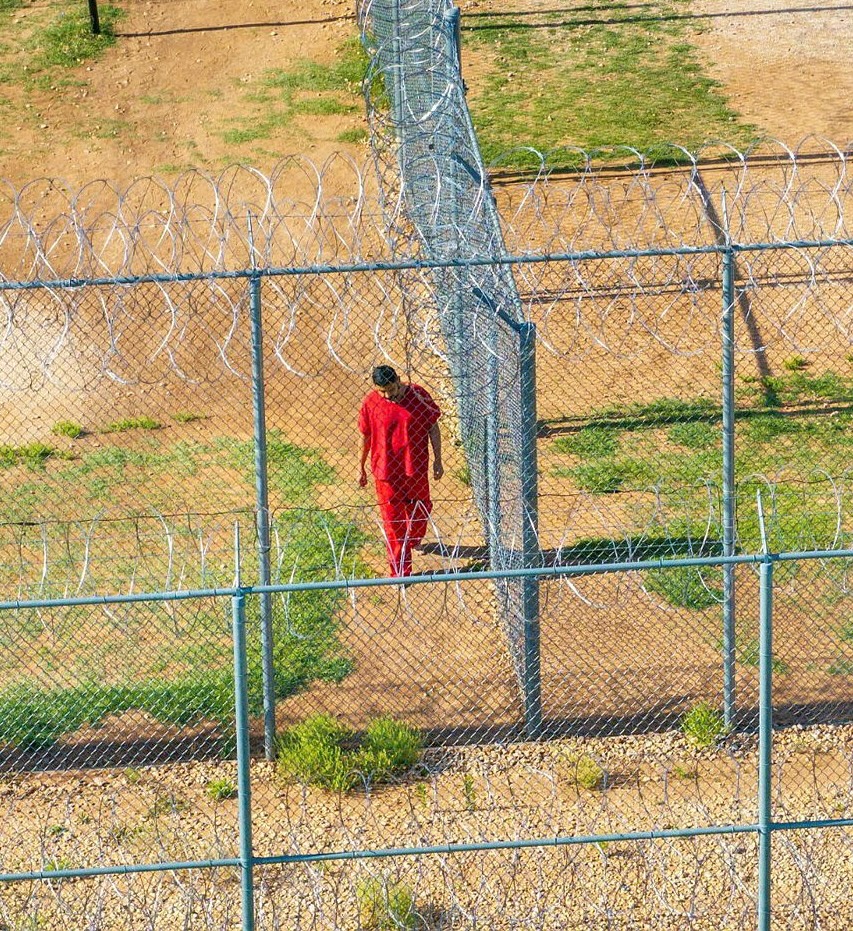
Detention centres have long been shadowed by reports of abuse and neglect, including providing inadequate nutrition, sanitation and medical help.
The DHS released a report in September, before Trump took office, that found that while ICE and facility staff “generally complied” with some standards, they “struggled to comply” with others.
Some of the oversight that existed before has also now disappeared. Two watchdog bodies at the DHS responsible for investigating complaints — the Office for Civil Rights and Civil Liberties and the Office of the Immigration Detention Ombudsman — have been shut down under Trump.
“They’re essentially cancelling the already poor system of accountability in the name of expediency and fast expansion,” says Hiemstra. “So any type of guardrails or the appearance of guardrails are being torn down.”
Detainees and families appear to have shared experiences in Google reviews
Name surname
2 months ago
People are placed there and their existence is forgotten.
Name surname
2 months ago
It’s almost a week since I’m trying to get in touch with my husband but no one answers customer service.
Name surname
3 months ago
When my family member tried to call me, it costed me $54 dollars. That is insane.
In response, the DHS’s McLaughlin says that the safety, security and wellbeing of people in ICE custody is “a top priority”.
For their part, the private companies say they are able to build and operate facilities more cheaply than the government and uphold standards via regular inspections.
Gustin says CoreCivic has “deep experience” in helping US law-enforcement adapt to changing circumstances and the company upholds “rigorous federal immigration detention standards” to ensure federal contracts are renewed. “CoreCivic has every incentive to provide outstanding service to our government partners, just as any other business must meet and exceed the expectations of its clients.”
Geo Group says its support services are monitored by ICE to ensure strict compliance with standards on detainee treatment and services. The company adds that it works to “quickly resolve” any concerns according to ICE requirements.
Detention Watch Network’s Ghandehari also points out that it is not just private facilities that have had poor practice flagged. Breaches in standards have been documented at ICE-run facilities and county jails.
Politicians at all levels also point out that detention centres can be a source of employment and economic investment in local communities, with many towns relying on the money and jobs they generate.
“There’s a symbiotic relationship: they’re [private companies] doing their lobbying; they’re super excited when Trump wins,” says Ghandehari. “But they’re also responding to what the government is asking of them. There’s a greater politics here.”
The human toll
Ashley Ambrocio knows the terror of having a loved one in ICE detention.

The 19-year-old had no idea where her father, Maurilio, had been taken when he was arrested at one of his regular immigration check-ins after two decades in the US.
“I’m like, are they going to deport him? What’s going on?” she says.
During his 10 weeks at three detention centres — two privately run — Ambrocio describes overcrowding, inadequate food and abuse from staff, with some referring to detainees as “pigs”. “All detention centres treat us like animals,” he says.
The FT has spoken to the relatives of two other detainees in private detention and seen testimony provided by lawyers from a further two people. All describe similarly poor conditions.

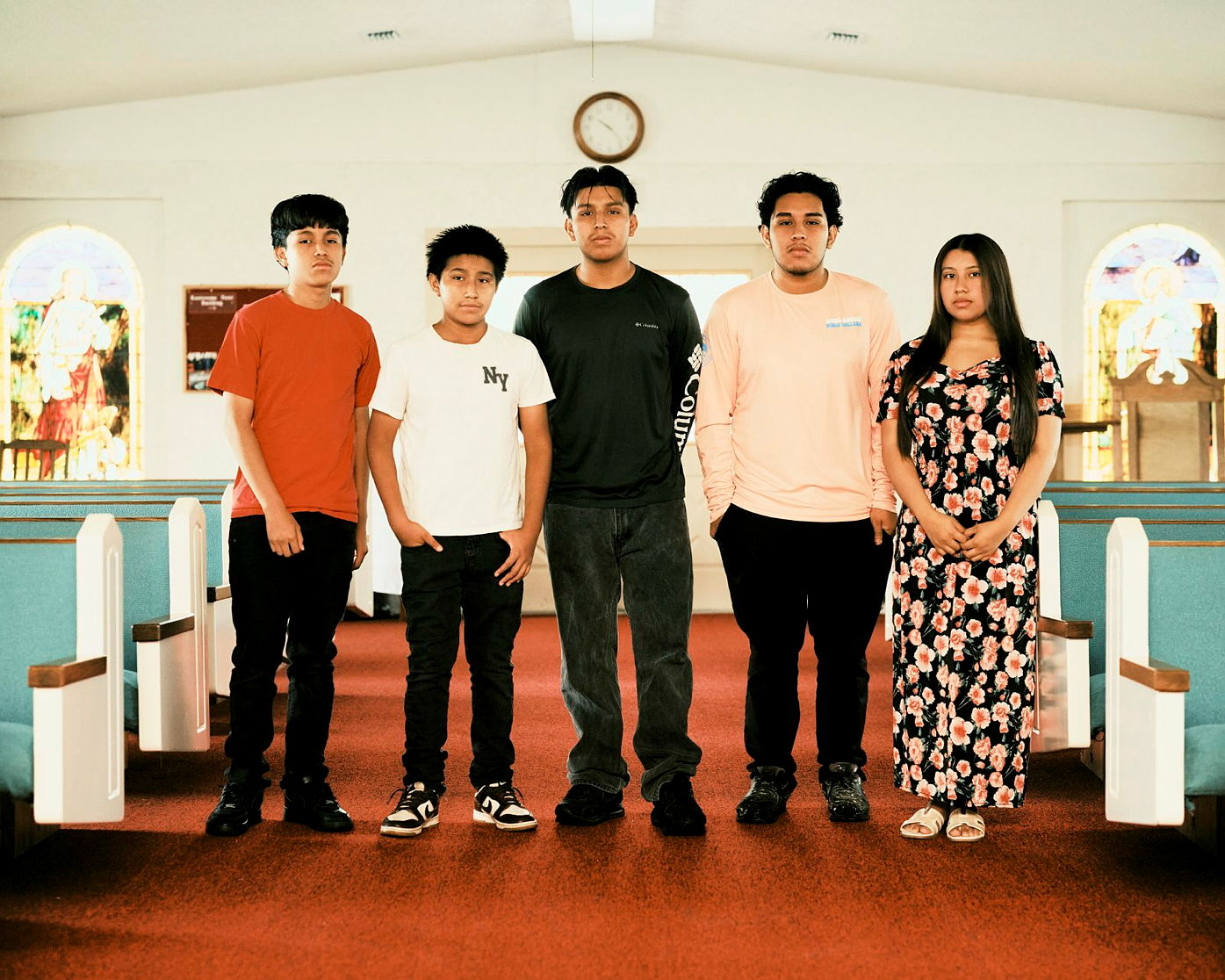
Maurilio Ambrocio also says his fellow detainees were coming and going regularly, often not knowing how long they would stay. “You don’t know what’s going to happen to you,” he says.
The challenge for bedspace as well as the logistics of deportation flights means tens of thousands of those held are being shuttled between both private and public sites.
The average number of transfers per person is up significantly since Trump took office — an increase that is making it increasingly difficult for families to keep track of their loved ones.
Loading
Nearly half of those entering the system after Trump’s inauguration have been transferred at least twice, with more people moved five or more times since January 21 than in the whole of 2024, FT analysis shows.
More than 20,000 transfers across state borders have been to Louisiana, highlighting its role as a detention hub. While thousands were moved from the East Coast, most came from neighbouring southern states.
The most transfers within state boundaries occurred in Texas, with many of those journeys ending at the privately-run Prairieland Detention Center and Bluebonnet Detention Facility.
Some people have been moved repeatedly. In the period from his arrest in the San Francisco area on February 3 to June 10, this 21-year-old Peruvian man has been transferred 12 times — including between California, Louisiana, Arizona and back to Louisiana.
Heidi Altman, vice-president of policy at the National Immigration Law Center, suggests such transfers are also used by ICE as a form of punishment or as a way of placing detainees distant from legal representation.
Immigration lawyer Marty Rosenbluth, who has been representing people in the system since 2008, also says it can be deliberate: “It keeps them disoriented. It makes it difficult for their attorneys to contact them. Their families can’t keep track of them,” he says.
McLaughlin describes suggestions that transfers are being used strategically as “categorically false”, adding that ICE makes custody decisions based on available bedspace, location of court hearings or deportation flights leaving the US.
A typical journey through the deportation system


Graphic: Flowchart showing the typical deportation process in the US, starting from arrest and notice to appear, moving through detention, court hearings, and judge decisions, with possible outcomes including deportation, voluntary departure, case termination, appeal, or approval for legal status.
Democratic lawmakers are seeking to monitor the situation by gaining access to facilities, something they are permitted to do under law without prior notice. But, after a number of confrontations, new DHS guidance now requires seven days’ prior notice and gives ICE sole discretion over whether to deny or cancel a visit.
A group of Florida lawmakers were denied entry to so-called Alligator Alcatraz shortly after it opened at the beginning of July. In a post on X, Miami-Dade County Mayor Daniella Levine Cava said she was “gravely concerned” about the number of deaths and medical emergencies at facilities in Florida and elsewhere.
Name surname
4 months ago
How do I know if my brother is there? How can I contact him?
Name surname
4 weeks ago
Apparently they’re only supposed to hold them for 72 hours because it’s a temporary stay for a facility. But my fiance has been in there for more than a week.
Name surname
a month ago
I have a friend registered there, I already deposited money for her, she calls me, I accept the call and then it just hangs up, could they help me with what’s going on?
For Maurilio Ambrocio, the long wait to hear what will happen to him is over. On July 1, he received the news that he would be deported. Two days after hearing of the decision, he was on a flight to Guatemala City with more than 100 other detainees. His hands and feet were shackled.
“It’s sad to be far from family, without knowing what’s going to happen,” he says.
For his teenage daughter Ashley, a US citizen, seeing community figures like her father taken and held in detention without explanation has forever changed how she views her home country.
“Many of these people are not criminals — they’re workers, they’re people, they’re fathers, they’re mothers. They just want a better life, and that’s the point of the United States, to have a better life.”
Data sources and methodology
Satellite images of facilities from Google Earth. Layout of an example facility from DHS standards documentation.
Some background testimony on the physical experience and psychological impact of arrest and detention from sworn detainee declarations provided, with consent, by legal services provider RAICES.
The number of detainees at each facility represents the average daily population for the period between June 9-23 2025, calculated using the fiscal year averages released by ICE. The analysis is based on a methodology provided by Austin Kocher, a professor at Syracuse University who researches the US immigration enforcement system.
To identify facilities operating over capacity, the FT used the design capacity of each site, where available. This was sourced from company documents, government contracts and inspection reports or audits published by the Department of Homeland Security. Capacity figures for 53 facilities were compared with the headcount at midnight for each location. These numbers were calculated using data obtained by the Deportation Data Project through a Freedom of Information Act (FOIA) lawsuit and analysed by the University of Washington Center for Human Rights. Facilities that had multiple days where their population exceeded their design capacity were judged to have operated over capacity. This analysis was also conducted using the two-week average population data from the ICE detention statistics, with comparable results. Additionally, the figures were checked against maximum or emergency capacity totals, where available. Population numbers were also above these measures.
Data on arrests, also obtained via FOIA, from ICE’s Enforcement and Removal Operations division. Apparent duplicate records — less than 1 per cent of the total number — were excluded. The chart showing daily ICE arrests uses a seven-day rolling average.
FOIA data on individual detention records was used to analyse transfer patterns. A transfer was counted as any move between two detention facilities recorded by ICE, including those from hold rooms to larger detention centres nearby. Detention records without a unique identifier, as well as those that appeared invalid, were removed from the analysis.
The increase in transfers since Trump took office was calculated using the average number of moves between facilities in each person’s stay in detention from January 20 to June 10 2025, and comparing those figures with 2024. To control for the different length of time people spent in detention, the number of transfers during an individual’s first 60 days in detention during the first three months of the Trump administration was also compared to the equivalent time period in 2024. Using both methods, the average number of transfers in each detention stay was found to have increased by more than 75 per cent.
To map the transfers, detention facilities were matched with locations provided by the Vera Institute of Justice. Additional sites were manually located. Approximately 3 per cent of valid transfers were not visualised in the map due to missing start or end location data.
Phil Neff, research coordinator at the University of Washington Center for Human Rights, and Noelle Smart, principal research associate at Vera provided assistance with the methodology for analysing ICE datasets.
Deirdre Conlon, associate professor at the University of Leeds and co-author of Immigration Detention Inc, also provided background.
Additional work by James Sandy. Drone footage by David Taylor