
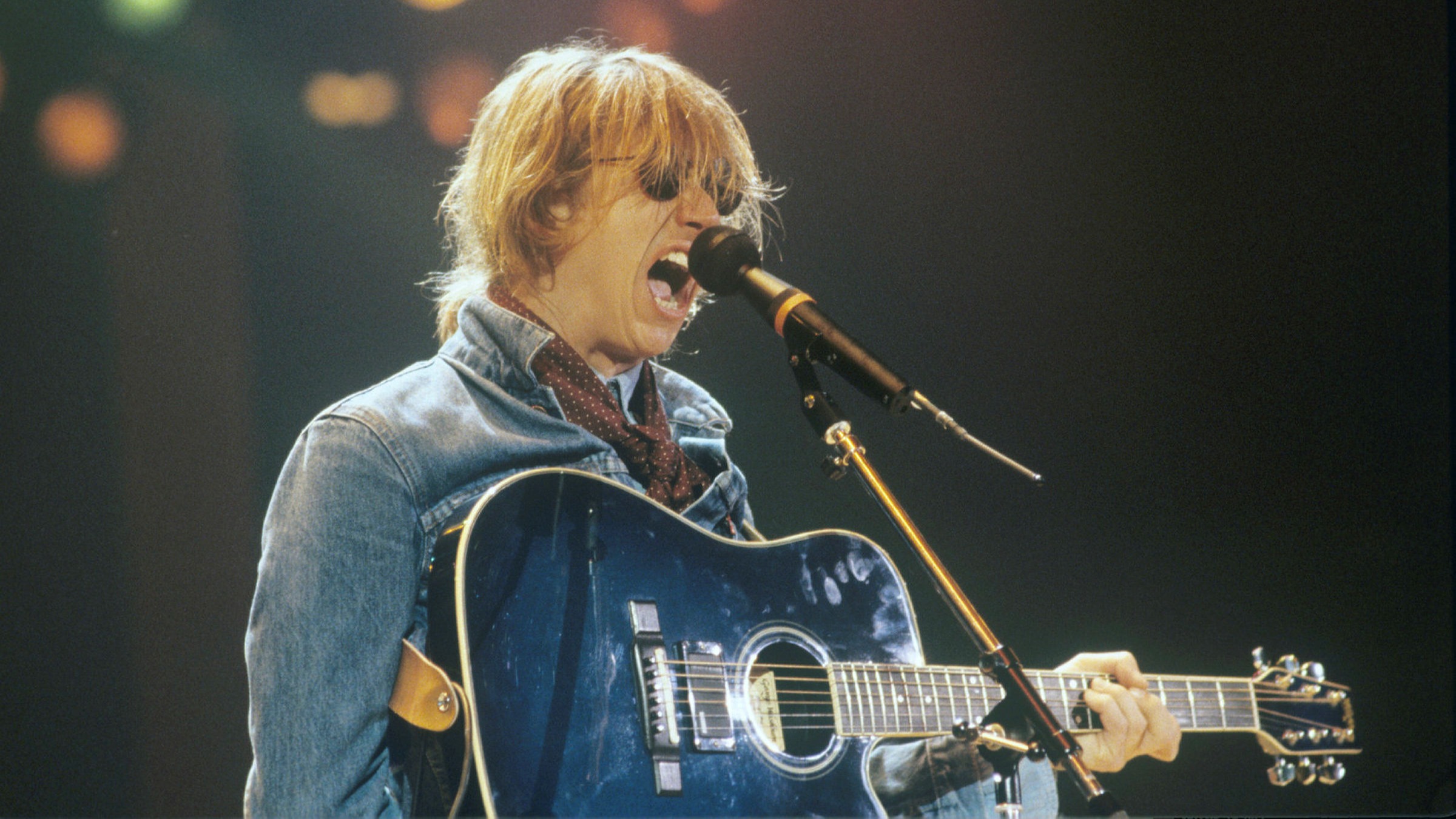
Talk Talk are one of the most critically admired British bands of the 1980s and early 1990s: art-rock pioneers who count Radiohead, Blur, Elbow and St Vincent among their fans. Their career ended with two masterpieces of jazz-inspired experimentalism (1988’s Spirit of Eden and 1991’s Laughing Stock). But it began with poppier songs such as “It’s My Life”, first released in 1984, a flop to begin with but now a fixture on classic radio station schedules.
Its catchy chorus has an empowering message (“It’s my life/don’t you forget”), but elsewhere in the song its lyrics point towards the more complex, nuanced band that Talk Talk would become. Their frontman Mark Hollis sings of the difficulties of falling in love to a backing of the swoops and stabs of the era’s cutting-edge synthesisers, which replicate animal noises; chord changes also shift thrillingly, against an addictive bassline. “I love contrasts, sharp contradictions,” Hollis told Dutch music magazine Oor in 1984. That approach would go on to define his career.
The band’s first work with Tim Friese-Greene (whose biggest success to that point had been Tight Fit’s 1982 single “The Lion Sleeps Tonight”), “It’s My Life” was greeted by derision by most of the British music press. Many critics viewed Talk Talk as has-beens whose eponymous 1982 mini-album hadn’t had the same crossover success as other British synth-based bands such as Duran Duran and Tears for Fears. “Totally, totally unexceptional,” railed the NME of their new single. “A band awash in mediocrity,” wrote Carole Linfield in Sounds, although she acknowledged that the song showed their propensity for an “occasional flash of inspiration”.
Talk Talk’s crime was to be content to stand apart from the mainstream. In interviews early in his career, Hollis would reference Debussy and jazz musicians such as Pharoah Sanders, rather than his pop peers. His passionate, reedy vocals also added to the unusual flavour of “It’s My Life”. In Oor magazine, he explained how he switched his tone from sarcasm to calmness in the first verse, then to excitement then anger by the chorus. Otis Redding and Traffic’s Steve Winwood were among his biggest influences in this regard: “Their ideas come from the soul… [they] cry out in faith and trust, but on the other hand, they also have their serene voices,” Hollis said. Winwood went on to play organ on Talk Talk’s next album, The Colour of Spring.
“It’s My Life” stalled at number 46 in the UK charts; a 1985 reissue did even worse, faltering at 95. But outside the UK, it took off. In the US, it got to number one on the US Hot Dance Club Play charts, a list determined by tracks DJs played around the country. It was also a huge hit in Germany and Italy, and became a high point of their 1986 live film, Live at Montreux, showcasing a British pop band crossing over to play a celebrated European jazz festival.
Talk Talk’s success continued to grow in mainland Europe, giving them the confidence — and the money — to make their next albums how they wanted, with Friese-Greene becoming Hollis’s most trusted collaborator. Talk Talk’s 1990 best-of, Natural History, saw “It’s My Life” finally achieve chart success in the UK, reaching number 13, and later that decade, Eurodance groups Gigabyte and Scanners released their own turbocharged, trance-inspired versions.
But it was the crunchy 2003 cover by US ska-pop band No Doubt that made “It’s My Life” a classic for perpetuity. “It’s the first cover we've ever [recorded]”, the band’s singer Gwen Stefani told Billboard magazine at the time of its release; they had tried “hundreds” up to that point. “It’s the one that kept hitting us in the heart.” A global smash hit, the song was nominated for best pop performance at the 2004 Grammy Awards.
By then, Hollis had effectively retired from the music industry: his last release was an eponymous solo album in 1998. He was last seen publicly in 2005 when the performing rights organisation BMI gave him its highest accolade, the Robert S. Musel Award for Most-Performed Song of the Year, in recognition of “It’s My Life”’s continuing success. Such an appearance wasn't the reclusive singer’s style. Ben Wardle, author of a new biography on Hollis, A Perfect Silence (to be published in April by Rocket 88), speculates that the singer may have agreed to attend as Winwood was also being recognised that night.
The success of “It’s My Life” continues online. First-reaction videos to the song from YouTubers proliferate, while Canadian singing group Choir! Choir! Choir!’s version from 2019 has had almost 60,000 views on YouTube. Hollis died that same year, at 64, his music continuing to defy the critics who had dismissed it, its contrasts lighting up so many lives.
What are your memories of ‘It’s My Life? Let us know in the comments section below.
‘The Life of a Song Volume 2: The fascinating stories behind 50 more of the world’s best-loved songs’, edited by David Cheal and Jan Dalley, is published by Brewer’s.
Music credits: Parlophone; Sena; Divucsa Music, SAU; Interscope; Twentieth Century Fox Film Corporation