
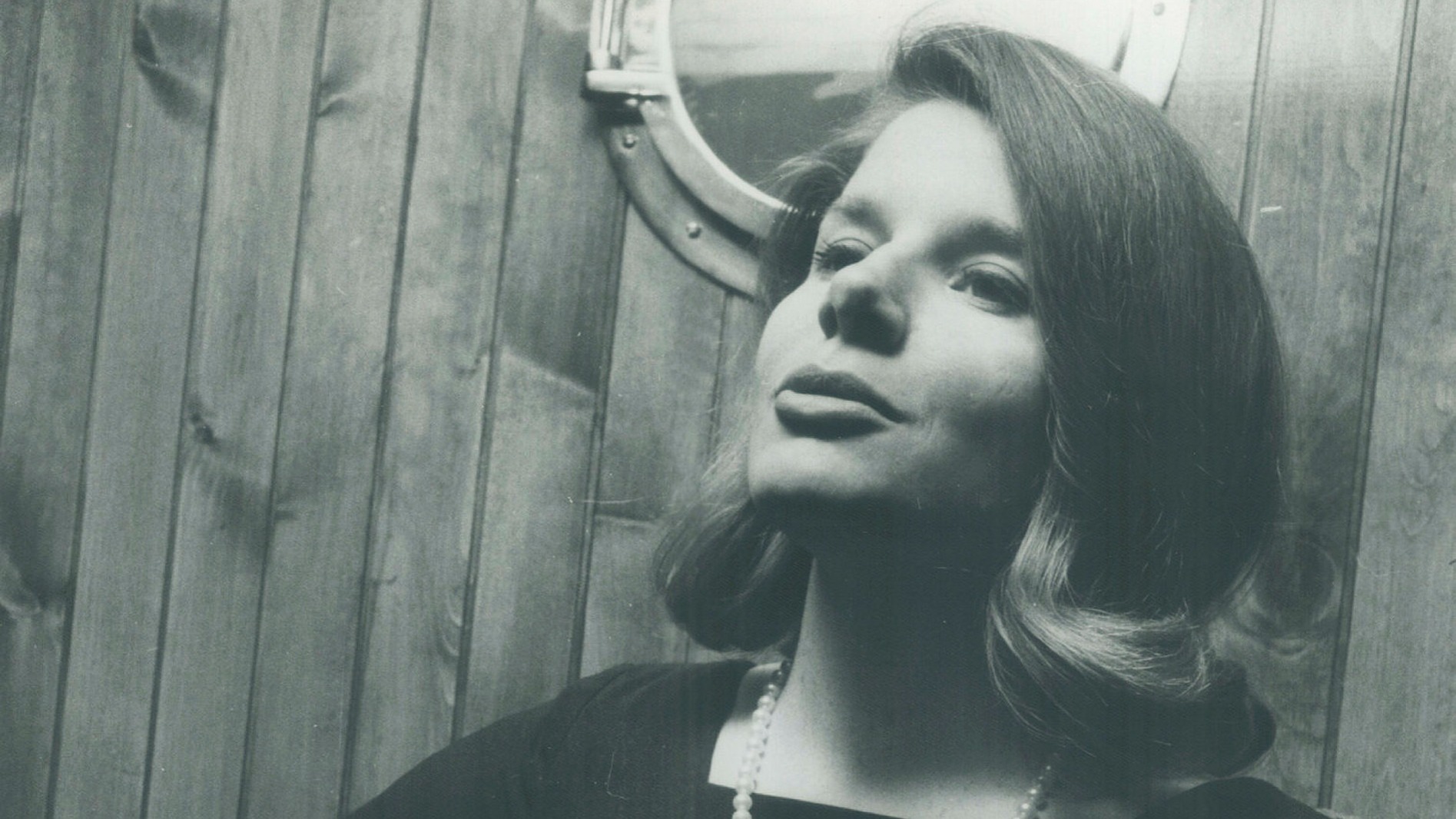
It is difficult to separate the intriguing life of “Morning Dew” from that of its composer, Bonnie Dobson.
Few hit the jackpot with the first song they write, but that was the case in 1961 for the then unknown, 20-year-old Canadian folk singer. Her chilling, atmospheric anti-war song was part of the era’s folk and protest music scene, and her contemporaries were Bob Dylan, Joan Baez, Judy Collins and Phil Ochs.
She was inspired to compose “Morning Dew” by the film of Nevil Shute’s novel On the Beach, which is about the aftermath of nuclear apocalypse. Her lyrics, which she sang in a pristine soprano to her own acoustic guitar accompaniment, are a dialogue between the last man and woman alive after the world has been blanketed in deadly nuclear fallout.
Both singer and song gained further popularity. Dobson enjoyed an eight-album US career and “Morning Dew” was recorded by such luminaries as folk singer Fred Neil, Grateful Dead, Lulu, Lee Hazlewood, and Jeff Beck (with Rod Stewart on vocals).
Neil made a crucial change to the opening line, transforming Dobson’s “Take me for a walk in the morning dew my honey” into the more declamatory “Walk me out in the morning dew my honey” — a switch adopted on most subsequent recordings.
Grateful Dead made a relatively succinct version for their eponymous debut album, but YouTube offers some of their live, lengthy extemporisations of the song as it became a concert staple throughout their career. Lulu, who had a minor US hit with “Morning Dew”, and Hazlewood both used similar arrangements, veering between slow and quicker tempos, while Beck and Stewart gave it the full 1960s rock and wah-wah guitar treatment.
At the end of the decade Dobson put her music career on the back burner, moved to London to marry and raise children and eventually settled for obscurity, first as a student and then an administrator at London’s Birkbeck College.
Part of her disillusionment with the music industry resulted from “Morning Dew”’s success being soured for her in 1967 when fellow artist Tim Rose, taking advantage of a loophole in US copyright law, tricked her out of full composition rights to her song. He had form here, also making dubious claims regarding the authorship of “Hey Joe”, the song made famous by Jimi Hendrix. Dobson’s anger over Rose taking false credit and royalties for the song lasted 30 years, and in 1998 she even heckled him about it as he performed at London’s Half Moon venue.
While she was largely forgotten, her song lived on through the likes of heavy rockers Nazareth (their volcanic bass riff is spoilt by excessive guitar doodling); Duane and Greg Allman (a mid-tempo version that captures the song’s foreboding); German experimental band Einstürzende Neubauten (nightmarish spoken vocals over a horror-film backing); Devo (a typically strident, jerky rendition); Clannad (an overly saccharine return to the song’s folk origins); and Robert Plant (a sublime, atmospheric delivery with oriental flourishes).
Grateful Dead also included it in their farewell concerts during 2015, and a year later came a glorious, stirring version from The National as part of a tribute album to the Dead.
By this time, however, restorative recognition for the song’s composer had finally arrived. In 1998 Dobson took legal action against Rose that resulted in her being identified as sole author of “Morning Dew”. And in 2007 Jarvis Cocker, a fan of her music, persuaded her out of retirement to perform at his Meltdown Festival at London’s Southbank Centre. This was followed by two albums from her in 2010 and 2014, the latter titled Take Me for a Walk in the Morning Dew and containing a fresh recording of her famous song.
On one night in particular, she felt she had completely reclaimed it. In 2013 Robert Plant asked her to sing it during his performance at London’s Royal Festival Hall. She received huge audience acclaim, and as she explained to RnR magazine: “[Robert] gave me back my song that night.”
What are your memories of ‘Morning Dew’? Let us know in the comments section below.
‘The Life of a Song Volume 2: The fascinating stories behind 50 more of the world’s best-loved songs’, edited by David Cheal and Jan Dalley, is published by Brewer’s.
Music credits: RCA/Legacy; Rhino/Elektra; Rhino/Warner Records; Rarity Music; Parlophone UK; Union Square Music; Allman Brothers Band Recording Company; Some Bizzare; UMC (Universal Music Catalogue); Es Paranza; 4AD
Picture credit: Toronto Star via Getty Images