
Decades before the opening scenes of Ridley Scott’s film Alien (1979) showed astronauts smoking, chatting and drinking coffee, before John Carpenter’s 1974 sci-fi classic Dark Star depicted a spaceship’s crew bored and listless, science fiction writer Ray Bradbury had the prescience to realise that one day going into space would just be a job. His short story The Rocket Man, part of his 1951 collection The Illustrated Man, tells of a man who works in space for three months at a time, coming home to an anxious wife and a curious teenage son. Sniffing his father’s space uniform, the son finds that it smells of “fire and time”.
Today, specialist and risky though it remains, going into space has become a job: more than 500 people have done it.
In 1972, Bernie Taupin, Elton John’s lyric-writing partner, was heading home to see his parents in Lincolnshire. He had read Bradbury’s story and was musing on it when a lyric popped into his head, about a man preparing to head off to his job in space: “She packed my bags last night pre-flight, zero hour 9am...” Taupin normally used a notebook to jot down ideas but as he was driving he had to spend the rest of the journey anxiously memorising the lines before he could finally commit them to paper. He sent the finished lyric to Elton John (they mostly work separately), who set them to music.
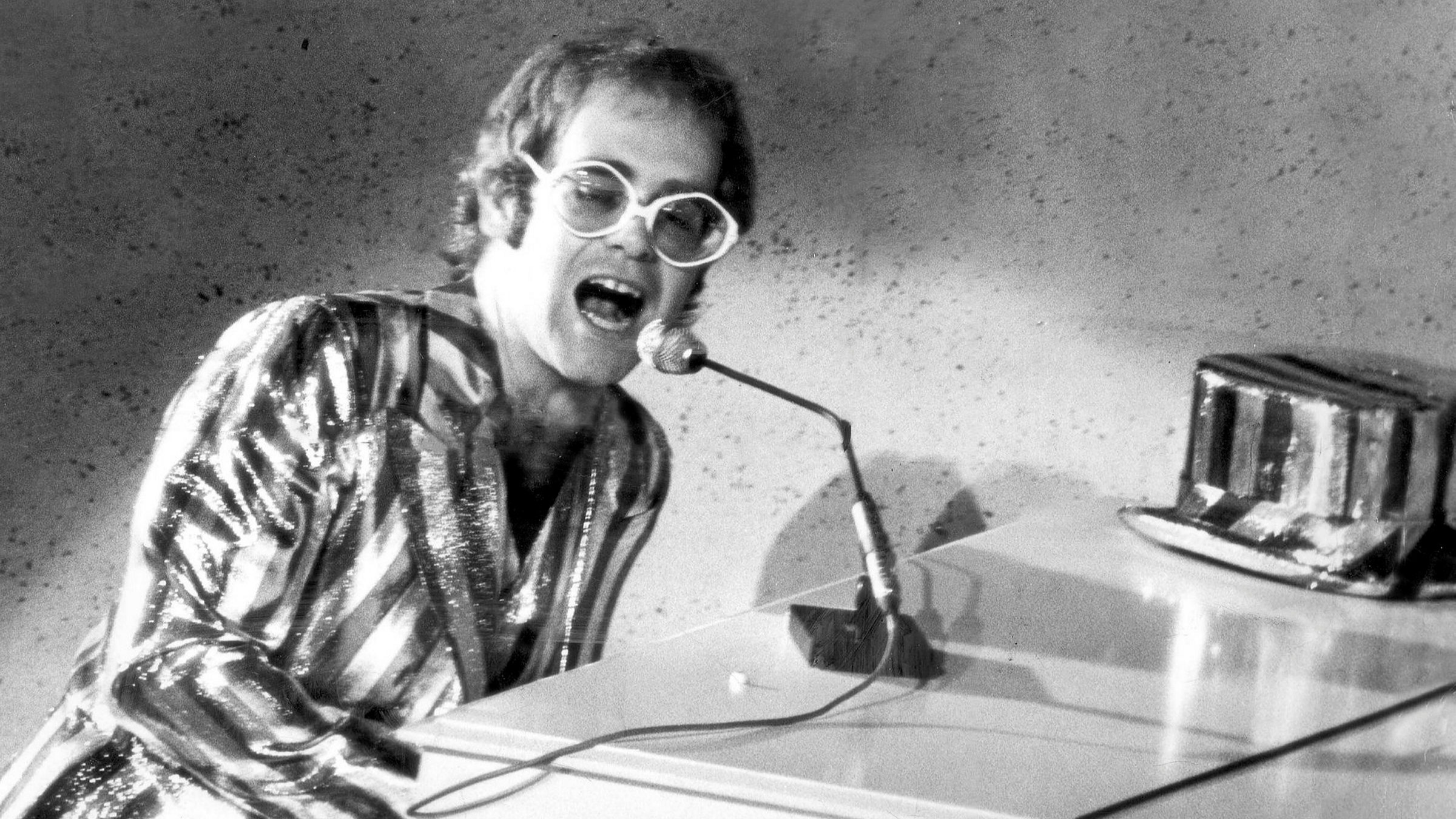
The resulting song, “Rocket Man (I Think it’s Going to Be a Long, Long Time)”, appeared on Elton John’s 1972 Honky Château album. Its producer, Gus Dudgeon, had worked on David Bowie’s “Space Oddity” in 1969, and many assumed that Taupin had been inspired by Bowie’s song, when the spark was in fact Bradbury’s story. The track’s lonely mood — “I miss my wife” — is heightened by the use of swooping slide guitar and ARP synthesiser, and by the spaces between instruments, between splashy syncopated piano chords. It became John’s biggest hit to date and its lyrics came to serve as a metaphor for his stratospheric career and troubled life. Like the Rocket Man of Bradbury’s story, who longed to be on Earth when he was in space and longed for space when he was on Earth, he came to belong nowhere.
No surprise, then, that last year’s Elton John biopic, Rocketman, took its title from the song, while in the film’s narrative, the track features in a moving montage, showing the singer (played by Taron Egerton) being dragged from the bottom of a swimming pool to world-conquering stadium-status superstardom.
Over the years, “Rocket Man” has been widely covered and sampled. Perhaps the best-known version was recorded in 1989 by Kate Bush for an Elton John tribute album, Two Rooms, put together by John and Taupin and released in 1991. Her version has a gentle reggae sway, perhaps an odd choice for such a sad song, but Davy Spillane’s uilleann pipes add a wistful air.
Kentucky band My Morning Jacket’s version — from 2004’s Early Recordings album of previously unreleased material — sounds as though it was recorded in a gigantic tin can: the effect is haunting.
In 2015 electro veterans Heaven 17 contributed a version to the compilation album 80s Re:covered; their approach is to whack up the bass and the beat, switching, like Bush, to a reggae-ish lilt during the chorus; singer Glenn Gregory handles the vocals stentorianly. The opening lines from “Space Oddity” are sung towards the end.
In 2018, John and Taupin each put together another tribute album of cover versions of their songs: Revamp and Restoration. US country band Little Big Town tackled “Rocket Man” on the Taupin-selected Restoration in a memorable performance: big, stately, steady drums, and rich gospel-country vocal harmonies. Strikingly good.
Most striking of all, though not necessarily in a good way (but who can tell?), is the spoken-word version by Star Trek’s William Shatner, delivered to the Science Fiction Film Awards ceremony in 1978, introduced by Taupin. Shatner had already made several albums, featuring his idiosyncratic, hammy, spoken delivery, of songs such as “Lucy in the Sky with Diamonds”. His performance of “Rocket Man” features three versions of Shatner (created with video separation), channelling what he saw as different aspects of the song, with brassy musical backing. His delivery is both earnest and cheesy, dead straight and ridiculous; it’s hard to know how seriously he is taking it (though he has been known to spoof his own performances). Shatner’s “Rocket Man” became a cult classic, admired, ridiculed and parodied. Present in the audience, and later announcing the award for best film (to Star Wars), was one Ray Bradbury.
What are your memories of ‘Rocket Man’? Let us know in the comments section below.
‘The Life of a Song Volume 2: The fascinating stories behind 50 more of the world’s best-loved songs’, edited by David Cheal and Jan Dalley, is published by Brewer’s.
Music credits: Virgin EMI; Noble & Brite; Darla Records; Music Brokers; UMG Recordings
Picture credit: Northcliffe Collection/ANL/Shutterstock