
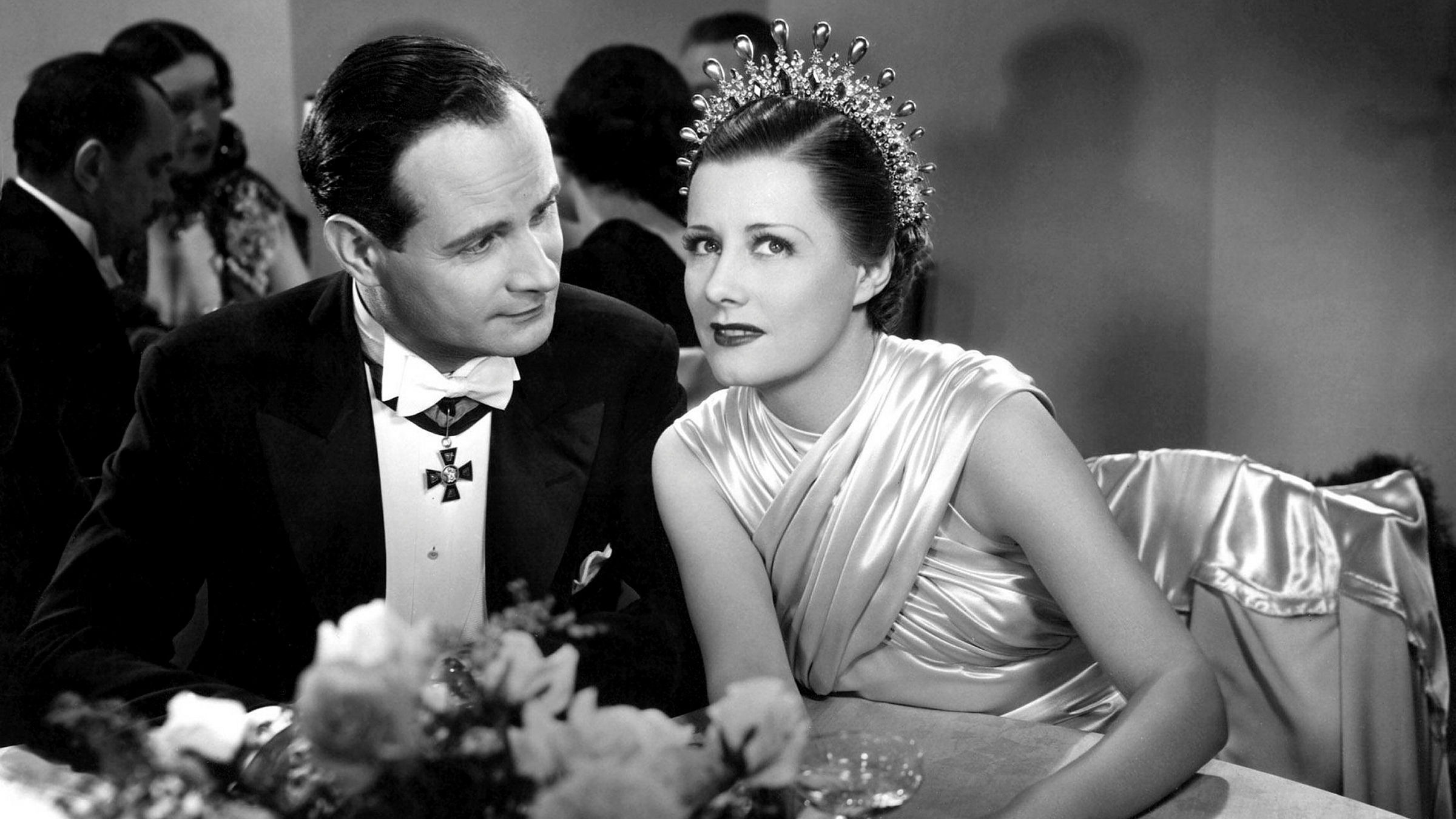
If there were an actual Great American Songbook, a substantial chapter could be devoted to Jerome Kern. Born in 1885, he was one of the elders of the early 20th-century titans of tune. A founding father. With no shortage of lyricists happy to work with him, such as PG Wodehouse, Oscar Hammerstein, Dorothy Fields, Ira Gershwin or Johnny Mercer, Kern wrote more than 700 songs, including “A Fine Romance”, “Pick Yourself Up”, “Ol’ Man River”, “The Way You Look Tonight”, “All the Things You Are”, and, with Otto Harbach, “Smoke Gets in Your Eyes”.
The tune itself was not an immediate success. Composed to accompany a tap-dance in the original stage production of Showboat in 1927, it didn’t make the cut. Kern tried again in 1932, this time as a march, for the theme tune of an aborted radio series. By the time the song did gel in 1933, it was as the ballad we’re familiar with — now with Harbach’s words — for the stage show Roberta, where it was performed by Tamara Drasin, playing a Russian princess. The line, “When your heart’s on fire, smoke gets in your eyes” is apparently from a Russian proverb; the word “chaffed’, which also occurs in the song, isn’t (“So, I chaffed them/As I gaily laughed”).
Within a month of the initial stage performance in October 1933 (the show was originally called Gowns by Roberta), the first sound recording appeared. Sung by Gertrude Niesen, it now sounds comically archaic, with throaty delivery and muffled brass backing.
Hollywood’s 1935 movie version of Roberta, from the RKO studio, starred the excessively talented Irene Dunne, who sang “Smoke” beautifully and — in their third film together — Fred Astaire and Ginger Rogers, who danced to it just as beautifully. Roberta was completely refashioned by MGM in 1952, and retitled Lovely to Look At, with Kathryn Grayson warbling “Smoke” in vivid Technicolor.
Meanwhile, the recordings stacked up. Jeanette MacDonald gave us a Disneyfied chirrup in 1946; in 1950, Jo Stafford flaunted her breathtaking breath control. My word, could she hold a note! In 1956 Dinah Washington showed that songs like this were written for voices like hers. There were a couple of smoky nightclub torch-song treatments from Gale Storm in 1956 and Jeri Southern in 1957 — the latter with some great trombone — but, in 1959, Sarah Vaughan overdid it, with way too much style going on.
If 1950s rock’n’roll was a slab of scorched meat, its flipside, doo-wop, was an over-egged confection equally efficient at stimulating those effervescing teenage taste buds. In February 1958 Richard Barrett bridged the divide by way of a strolling-style “Smoke Gets in Your Eyes”, with a big flabby drumbeat and a rock’n’rollish plink-plink-plink piano. But in November of that year The Platters took the song to unimagined doo-woperatic heights, lead singer Tony Williams magnificently wrenching every ounce of drama from the lyric as the rest of the group wooh-ed and wah-ed over swirling strings — complete with harp — atop the stateliest of drumbeats. The Platters set the charts ablaze and made the song their own. Hard to believe, but, though Otto Harbach was impressed by The Platters’ recording, Kern’s English widow Eva certainly was not, threatening legal action to prevent its release. Her mood was no doubt ameliorated when informed of the substantial royalties likely to accrue from the record’s enormous sales.
“Smoke” continued to be rekindled. In 1959, Keely Smith, despite her usual sterling work with husband Louis Prima, produced something of a damp squib. Dirk Bogarde talked his way through the song in 1960. Very thespy, and very funny.
Each musical genre tackled the song. Jazz of course; and reggae: Byron Lee & the Dragonaires (dull), Blue Haze (better, danceable), both from 1972, and a poor one from Berni Flint in 1978.
All decent songs end up on the pyre of rock, producing plenty of “Smoke”. Bryan Ferry’s heavy-handed re-make re-model from 1974 wasn’t great, but it was immeasurably better than the twiddly mess Jerry Garcia wailed dismally over in 1995, during the closing credits of a film called Smoke. By the way, Jerome Garcia was named after Kern.
“Smoke Gets in Your Eyes” has spread far and wide through popular culture. It gets a mention in Salinger’s The Catcher in the Rye. It was the title of the pilot episode of Mad Men in 2007, alluding to Lucky Strike cigarettes. Smoke Gets in Your Eyes & Other Lessons from the Crematory is a 2014 book by Caitlin Doughty of her experiences working in crematoria.
As beautiful a tune as has ever been written, “Smoke Gets in Your Eyes” will glimmer and smoulder for as long as humans have ears to listen to it.
What are your memories of ‘Smoke Gets in Your Eyes’? Let us know in the comments section below.
‘The Life of a Song Volume 2: The fascinating stories behind 50 more of the world’s best-loved songs’, edited by David Cheal and Jan Dalley, is published by Brewer’s.
Music credits: Flyright Records; SMD Music; Sinetone AMR; Shellac Revival; ubiquitous; 104pro Media; EXCESS MUSIC; M&J Music; Recovery Recordings; Spectrum; GRR Music; Master Classics Records; Classic Records; Virgin UK
Picture credit: Alamy Stock Photo